
SmartPath
Summer 2016ActiveFinancial wellness for the middle class
Pressure-test this opportunity
Turn this teardown into a decision-ready prompt for ChatGPT, Claude, or your agent.
Financial wellness for the middle class
Turn this teardown into a decision-ready prompt for ChatGPT, Claude, or your agent.
If you only have a few minutes to spare, here’s what investors, operators, and founders should know about SmartPath (S16).
SmartPath was a financial wellness company founded in 2010 by Alok Deshpande, a Bain & Company alum who left corporate consulting to teach personal finance after watching the 2008 recession devastate his community. The company built a workplace financial wellness program centered on 1-on-1 human coaching, combining a data-driven education platform with live coaches who helped employees manage debt, build savings, and make better financial decisions. After going through Y Combinator's Summer 2016 batch and raising $2.7M in 2019, SmartPath grew to serve over 1,000,000 users across Fortune 500 employers by 2025.
SmartPath's core problem was structural: its product depended on expensive human labor per user, making it a services business dressed as a tech company. The company's own founder articulated the tension — "you can't solve everyone's financial situation just with a bot" — but the human-coach model that made the product effective also made it impossible to scale to venture-grade returns. The late pivot to an AI product called Frank, launched after a decade of operation, came too late to change the company's trajectory.
The company never announced a formal shutdown or acquisition. It appears to have been absorbed into the broader trend of employers adopting cheaper, automated financial wellness tools, with the Frank pivot representing the team's final attempt to escape the unit economics trap of human coaching.
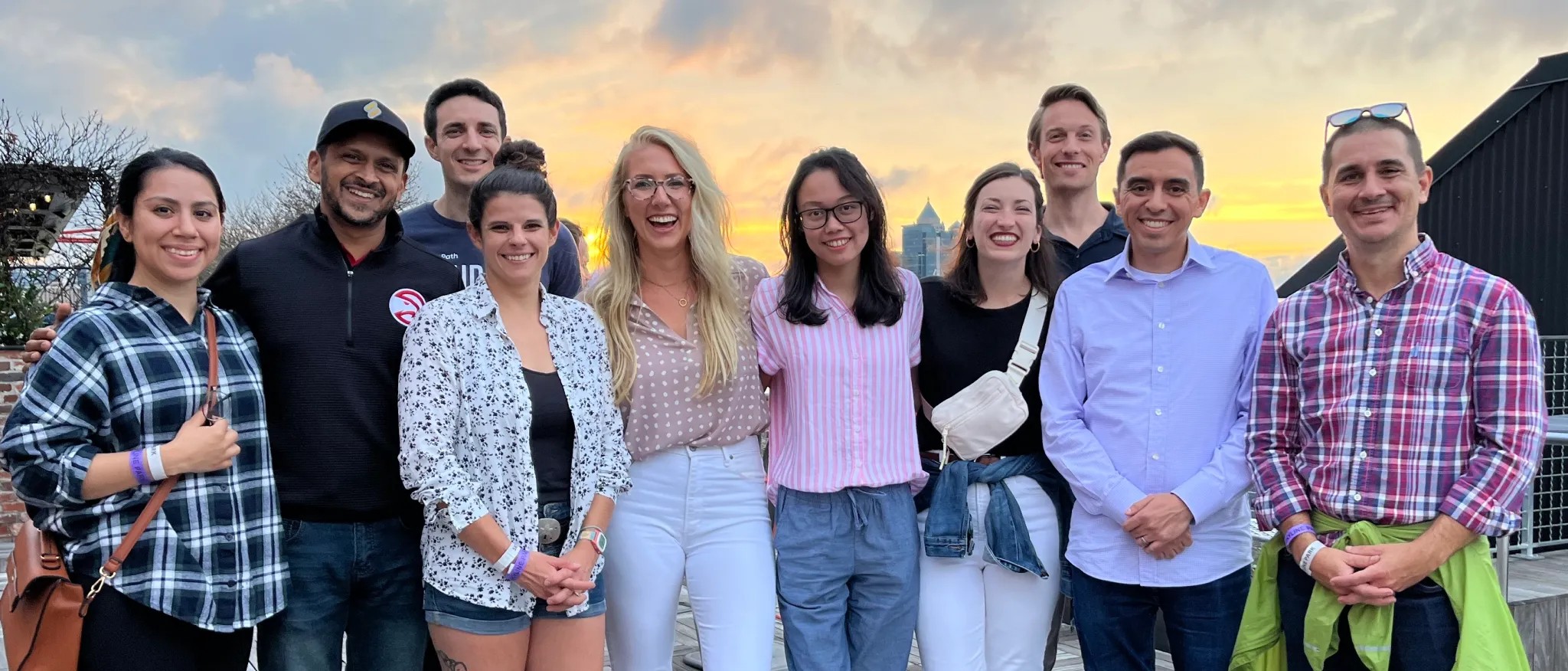

Image 1 / 2
Alok Deshpande's path to SmartPath began with a crisis of conscience. After the 2008 financial recession, he watched friends, family, and his community in Atlanta struggle with financial decisions they were never equipped to make. "Most people were only getting financial advice from someone who was trying to sell them a product...I really wanted to teach people," he told Woodward Academy's alumni spotlight.[42] Deshpande had the credentials to do something about it: a BBA from Emory (1999), an MBA from Harvard Business School (2005), and senior roles at Bain & Company, Actis Capital, and Kurt Salmon Associates.[3]
The decisive push came from his wife, who offered what Deshpande later called "the cleanest possible strategic advice: do something."[49] He quit consulting and began teaching free weekend personal finance classes. The first iteration of SmartPath was six people in a room in downtown Atlanta, with Deshpande teaching them about money.[50]
The co-founding team assembled organically. Stuart Lawder, who would become CPO/COO, attended a SmartPath seminar at Pardot in 2012, where he and his wife reviewed their finances with Deshpande while paying off a car and student loans; within a couple of years they were debt-free.[4] Lawder, formerly a Senior Manager of Product at Pardot, joined as a true believer — a customer converted into a builder. Jon Pokrzyk, a former software engineer at General Dynamics and McKesson, rounded out the founding team as CTO.[4]
Deshpande's philosophy was behavioral, not strategic. His FUEL framework — the amount of money you spend less than you make — was published as a book in 2015/2016, and his core claim was that "reaching your goals is 95% behavior and 5% strategy and information."[18] This belief in behavior change would define the product: SmartPath wasn't selling financial planning, it was selling accountability.
Read the complete post-mortem, the rebuild playbook, and the exact reasons SmartPath is still worth studying now.