Overview
Software Applications Incorporated built Sky, a Mac assistant that connected plain-language requests to work inside desktop apps. OpenAI acquired the company on October 23, 2025, and said the entire team would join. It intended to bring Sky's macOS integration into ChatGPT.[1]
Sky's value lay in connecting screen context, existing automation tools, and a native interface. Its acquisition demonstrates buyer demand for that expertise. It does not establish a successful standalone subscription business.
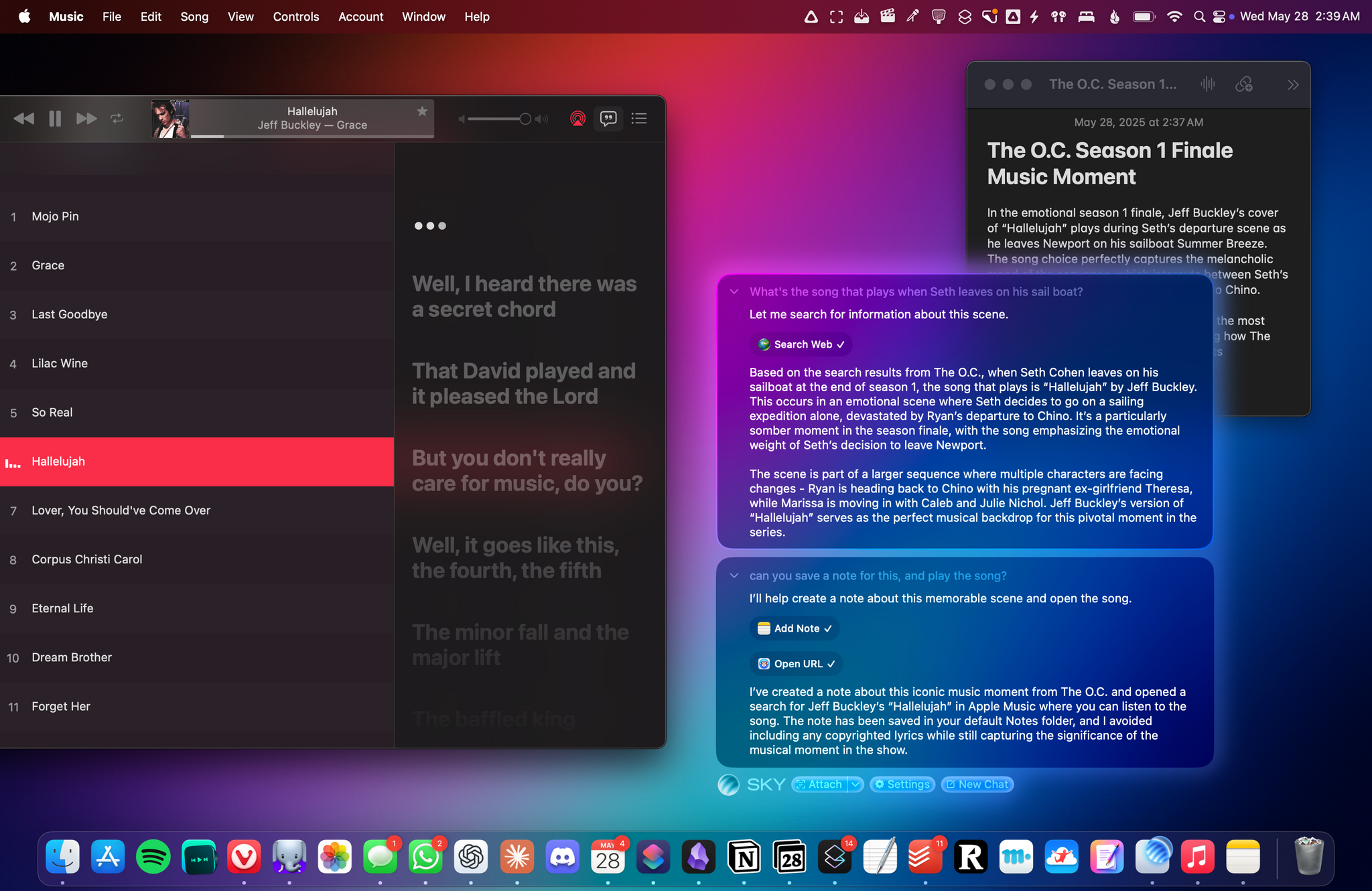
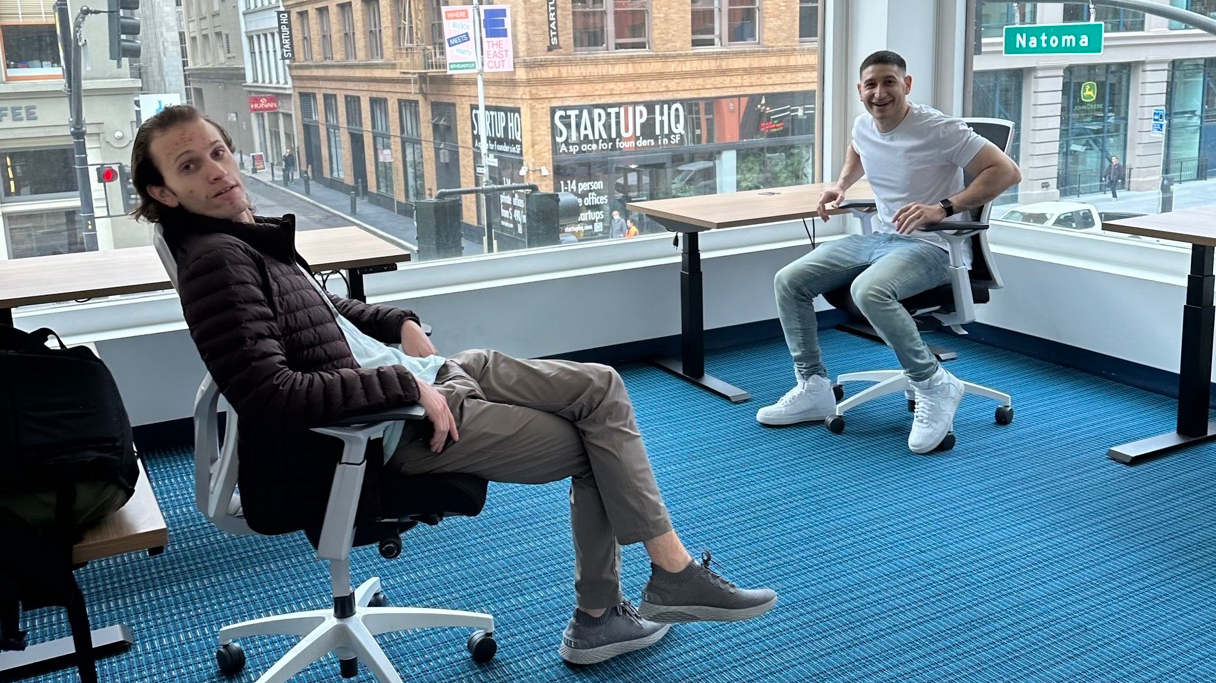
Image 1 / 2
Founding Story
Ari Weinstein and Conrad Kramer had already built Workflow, which Apple acquired in 2017 and developed into Shortcuts. Kim Beverett joined their new company after a decade at Apple. Her work included Safari, Messages, FaceTime, and privacy. In their November 2023 interview, Weinstein told The Verge: “So saving people time on the desktop is really exciting to us.”[2]
The founders' earlier collaboration gave them experience with a stubborn problem: powerful automation often requires users to translate their intentions into rigid steps. Language models suggested another entry point. In OpenAI's acquisition announcement, Weinstein said: “With LLMs, we can finally put the pieces together.”[1]
Former Workflow colleague Matthew Cassinelli documented the new company's November 2023 debut. The founders worked from downtown San Francisco and launched a website that recreated an older Mac desktop. That presentation expressed a concrete product ambition: give ordinary users more control over their computers.[3]
Timeline
- 2017: Apple acquired Workflow, the founders' earlier automation product.[2]
- November 2023: Software Applications Incorporated emerged publicly. Context VC investor Tim Hsia confirmed $6.5 million in funding and named Sam Altman and Dylan Field among its backers.[4]
- May 2025: MacStories published a hands-on preview of Sky's closed alpha.[5]
- October 23, 2025: OpenAI announced the acquisition. Seller counsel Goodwin independently confirmed advising on the sale.[6]
- April 16, 2026: OpenAI launched background computer use in Codex.[7]
- May 2026: Cassinelli documented Weinstein's walkthrough with Romain Huet and linked the former Sky team's work to Codex computer use.[8]
What They Built
Sky appeared as a small floating interface summoned with a keyboard shortcut. It could read the current window, understand a request, and choose tools to act. Built-in tools covered Calendar, Messages, Notes, browsing, Finder, email, and screenshots. More advanced users could connect Shortcuts, AppleScript, shell scripts, and custom prompts.[5]
Federico Viticci tested an early build for two weeks. One example combined identifying the current webpage, summarizing it, finding a contact, and sending a message. He also reported bugs that the team fixed during the preview. This is evidence of working alpha behavior, rather than proof of production reliability across every Mac app.[5]
The design joined two kinds of software. A language model interpreted a flexible request. Existing tools performed concrete operations. That division could make familiar automation accessible without requiring every user to write a workflow first. It also made tool permissions and result checks central to the user experience.
Market Position
Target Customers
The company's own profile described everyday Mac users who wanted help across apps, alongside advanced users who could supply custom tools. Its examples included scheduling meetings, searching email, and sending messages.[9] The public evidence supports this intended audience; it does not establish which segment would retain or pay most.
Market Size
No verified addressable-market estimate or customer count surfaced. A broad count of Mac owners would overstate Sky's reachable paying market. The useful commercial question was narrower: how many people would trust an assistant with recurring cross-app work and pay for that convenience?
Competition
The competitive boundary moved while the company developed Sky. By April 2026, Codex offered background computer use, plugins, and an in-app browser. OpenAI described agents working without interfering with a user's activity.[7]
Apple's Shortcuts also remains a relevant alternative for predefined automation. Apple's current documentation explains that users can import shortcuts and convert supported Automator workflows.[10] Sky therefore competed both with direct automation tools and with broader assistants that could absorb a similar interface.
Business Model
The observed record establishes venture funding and an acquisition. Hsia's investor account confirms the $6.5 million raise and explains that he had backed the founders' earlier company.[4] That continuity helps explain access to capital, but it cannot establish customer demand.
No dependable public figures for revenue, paid users, inference cost, or retention surfaced. The retained company website still offers a waitlist.[11] An old waitlist is weak evidence of current product availability. No standalone Sky price or acquisition consideration is asserted here.
Post-Mortem
Operating-system expertise became an acquisition asset
The central mechanism was the gap between understanding a request and completing it inside existing software. Models supplied flexible interpretation. Sky supplied a Mac interface and connections to practical actions. OpenAI bought a team that had already worked across that boundary.
The buyer's stated integration plan supports this interpretation. ChatGPT head Nick Turley said the acquisition would help it “get things done.”[1] The later Codex release provides evidence that desktop action became a shipped product capability.[7] Cassinelli connects Weinstein's team to that sequel; OpenAI's release itself does not provide a component-by-component Sky attribution.[8]
The alternative explanation remains open
A simpler account is that OpenAI chiefly wanted experienced Apple-platform engineers. The entire team joined, and commercial terms remain undisclosed. Public sources cannot divide the purchase value among talent, code, product design, or time saved. Goodwin's sale confirmation establishes a company transaction, without answering that valuation question.[6]
There is also no basis for a claim that Sky failed commercially. Its standalone economics were not publicly demonstrated. The acquisition moved the work into a larger product before the available evidence could settle that question.
Governance deserves precise language
OpenAI disclosed a passive investment by a fund associated with Sam Altman. It said Nick Turley and Fidji Simo led the acquisition, with approval from its independent Transaction and Audit Committees.[1] That disclosure documents a potential conflict and the stated approval process. It does not prove preferential terms or misconduct.
Key Lessons
- Prior work shortened the credibility gap. Workflow gave the founders relevant experience and repeat investors. Those assets helped finance an ambitious desktop product before public commercial proof.
- Integration had strategic value. Sky connected an open-ended language request with tools that could act inside apps. Product teams need to test the whole path from request to verified result.
- An acquisition leaves economic questions unanswered. A company sale can reward useful technology or a strong team without revealing whether the standalone product could retain paying customers.
- Follow the work after the announcement. The Codex sequel changes what a founder should build today. A new general Mac assistant would enter a category already served by a large platform.
Sources
- OpenAI acquisition announcement
- The Verge founder interview, November 2023
- Matthew Cassinelli on the company's launch
- Context VC investor Tim Hsia on funding and the founding team
- MacStories hands-on Sky preview
- Goodwin's sale confirmation
- OpenAI's April 2026 Codex update
- Matthew Cassinelli on Weinstein's Codex computer-use walkthrough
- Software Applications Incorporated company profile
- Apple Shortcuts and Automator import documentation
- Software Applications Incorporated's retained HTML website