
SpaceRyde
Winter 2019InactiveThe Rocket Network: Sustainable & On-Demand Delivery Anywhere in Space
Pressure-test this opportunity
Explore the risks and possibilities with a prompt for ChatGPT, Claude, or your agent.
The Rocket Network: Sustainable & On-Demand Delivery Anywhere in Space
Explore the risks and possibilities with a prompt for ChatGPT, Claude, or your agent.
SpaceRyde tried to make small-satellite launches behave like private taxis. Its Ryder rocket would rise beneath a stratospheric balloon, ignite above most of the atmosphere, and deliver a customer's payload to a chosen orbit. The husband-and-wife team of Sohrab Haghighat and Saharnaz Safari founded the company in 2018, joined Y Combinator's Winter 2019 batch, raised about $10 million, and grew to roughly 30 people.[1][6]
The immediate failure was terrestrial. SpaceRyde relied on one rural Ontario site for full-scale engine tests. After residents complained, Trent Hills asked the company to stop testing on October 7, 2022. Deloitte's trustee report says that loss made continued operations impossible. SpaceRyde filed for bankruptcy four months later, before completing an orbital launch.[3]
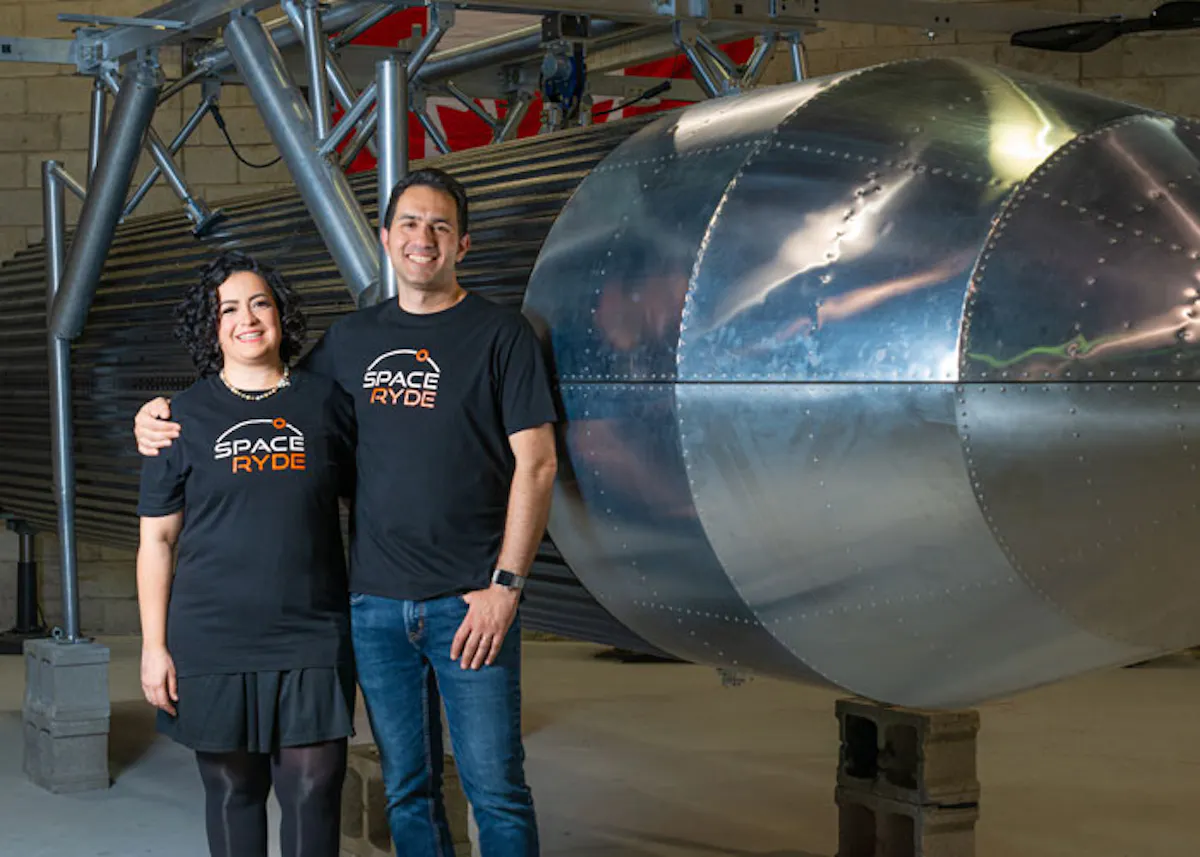
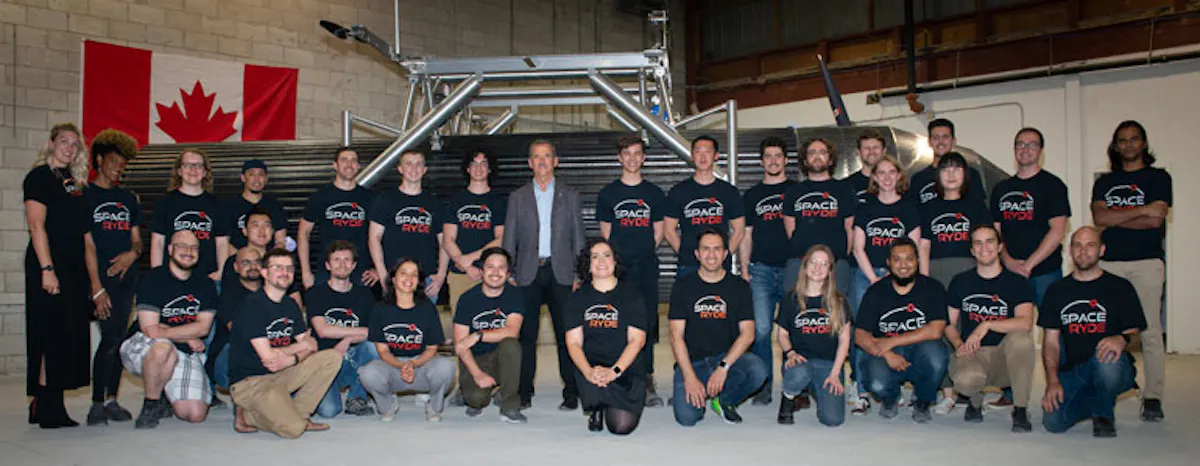
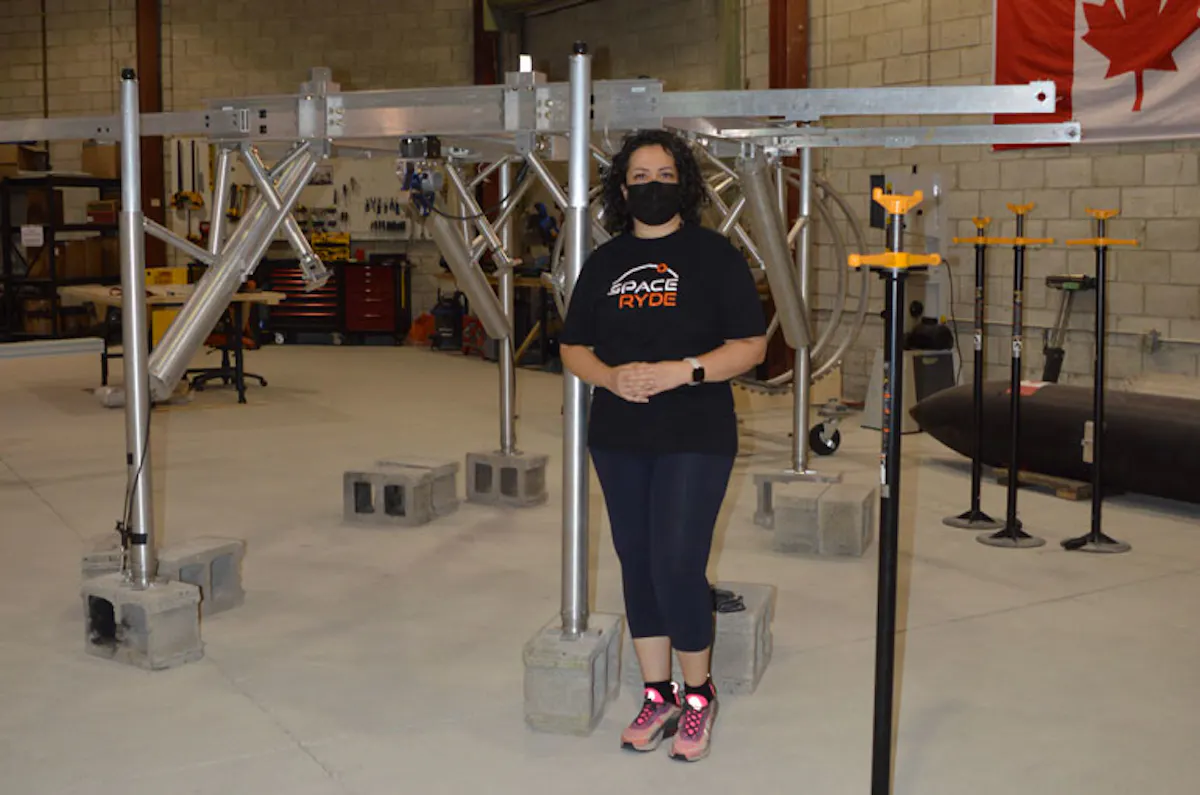
Image 1 / 3
SpaceRyde began as Loonify Space Inc., incorporated federally on May 9, 2018.[3] Public accounts identify Safari and Haghighat as a married couple but do not say when or how they met. Their skills divided along the company's two hardest fronts: building an unusual vehicle and getting permission to operate it.
Haghighat held a PhD in aerospace engineering and had run planning and controls teams as an early Cruise employee.[1] His autonomous-vehicle work transferred to a balloon carrier whose exact location changed with the wind. Safari had earned a master's degree in bioanalytical chemistry from the University of Waterloo, spent about a decade in healthcare and product launches, and later completed an MBA at UC Berkeley.[4]
Their customer insight was that low launch prices did not solve scheduling and orbit constraints for small payloads. “Just getting a ride to orbit for these small satellite, even if they have the money, or they want to pay as much as they’re getting charged right now, on big rockets, is a big problem,” Safari said in a 2019 interview.[5] Rideshare customers waited for a primary mission whose date, inclination, and destination happened to fit.
SpaceRyde proposed a small dedicated rocket lifted through the dense atmosphere by balloon. Haghighat told Machine Design, “From the get-go, the rocket starts operating in a vacuum condition.”[6] That allowed vacuum-optimized engines and a lighter structure. Software would point the carrier before release.
The company entered Creative Destruction Lab's space cohort, joined YC's Winter 2019 batch, and changed its name from Loonify to SpaceRyde.[9][1] Its vision expanded from dedicated CubeSat launches to a “Rocket Network” whose upper stages would stay in orbit for refueling, transfers, and debris removal. The early customer problem was concrete. The later roadmap required several unproven systems to work in sequence.
The launch system had four major pieces. A hydrogen-filled stratospheric balloon lifted the stack for about an hour. The Flying Spider carrier stabilized and pointed the rocket despite an uncertain drift path. The three-stage Ryder rocket then ignited at altitude. Its Black Bay upper stage was designed to stay powered in orbit for later transport or de-orbiting tasks.[6]
The balloon was meant to bypass roughly 99% of Earth's atmosphere. Ryder could therefore use a short, wide structure and vacuum-optimized propulsion instead of carrying the mass required to survive maximum aerodynamic pressure near the ground. SpaceRyde built hybrid engines that combined solid paraffin fuel with a liquid oxidizer and moved the nozzle to control thrust direction.
Flying Spider made the old “rockoon” concept more controllable. Its aluminum frame carried sensors, GPS, microcomputers, and software for filtering and fusing position data. Once the balloon reached the target region, the carrier would calculate and hold a launch orientation. The team also designed it to steer back to Earth with the rocket still attached if a launch could not proceed.[6]
Testing advanced in layers. The June 2019 North Bay flight carried a scaled system. The orientation technology worked, while a modification to an off-the-shelf engine failed.[9] SpaceRyde later tested a carrier under a helicopter, a rocket-release mechanism, and a larger hybrid engine. The November 2021 demonstration achieved ignition, a ten-second burn, and shutdown.[8]
The commercial offer was dedicated orbit and schedule control at prices beginning around $250,000 per customer. Safari described a payload range around 82 to 100 kilograms for polar or sun-synchronous missions, while later materials discussed configurations up to 150 kilograms.[4][11] None of those configurations completed an orbital mission before bankruptcy.
SpaceRyde targeted operators of small satellites and robotic payloads in telecommunications, Earth observation, and remote sensing.[4] Their problem was mission fit. A cheap slot on a large rocket could still arrive late or in the wrong orbit. A dedicated launch promised control over date, inclination, and fairing.
The most credible commercial relationship was ISILaunch, a Dutch launch integrator whose parent had already sent hundreds of satellites on Electron, PSLV, and Vega missions. It agreed to four SpaceRyde launches beginning in 2024.[11] SpaceRyde also claimed a broader backlog, but contract quality and deposits were never disclosed.
No reliable revenue estimate for SpaceRyde's narrow dedicated-balloon launch segment exists. The company cited broad small-satellite growth figures, but those projections did not measure the number of payloads willing to pay for a new Canadian vehicle with no orbital record.
The stronger evidence is current government commitment. In March 2026, Canada's Department of National Defence said the 2025 budget allocated C$182.6 million over three years for sovereign launch capability and infrastructure.[14] Demand for domestic launch infrastructure is real. It arrived after SpaceRyde failed and does not prove that its vehicle would have won.
SpaceRyde faced large rideshare rockets, dedicated small launchers, and more than 100 announced launch startups when it ran its first test.[9] SpaceX-like rideshare services won on price and flight history. Dedicated launchers offered orbit control with proven vehicles. SpaceRyde tried to win on both customization and low price using a balloon to shrink the rocket.
Its proposed geographic flexibility was weaker than advertised. Balloon launch reduced fixed pad needs, yet engine development still required a compatible test property, municipal land-use authority, neighbors willing to tolerate noise, and enough time for approvals. NordSpace's current approach makes the contrast plain: it owns a secure propulsion range in northeastern Ontario and tested a new cell there in May 2025.[16]
Canada's federal pathway is clearer today. Transport Canada now describes an interim program that can involve up to 15 federal departments, a provincial or territorial government, and detailed site review.[13] The Canadian Space Launch Act was still at second reading in April 2026, so regulatory work remains unfinished.[15]
SpaceRyde planned to sell dedicated launch capacity. The ISILaunch agreement described prices starting at $250,000 per customer and booking as late as four weeks before flight.[11] A 2021 company statement claimed more than ten customers in a US$45 million backlog.[8] Those numbers cover different scopes and cannot be reconciled without payload counts, flight commitments, and contract terms.
About $10 million of equity and government funding supported vehicle work, a 30-person team, and a 25,000-square-foot factory.[6] One documented federal contribution was C$50,000.[12] Revenue, gross margin, annual burn, deposits, and refund obligations were not disclosed.
The bankruptcy statement listed C$3.491 million of asset cost and C$2.061 million of estimated realization. Machinery that cost about C$1.070 million was expected to realize only C$50,000.[3] Specialized hardware preserved little value in liquidation.
SpaceRyde demonstrated several subsystems, built a factory, attracted government grants, and reached 33 people by YC's count.[1] Its 2019 carrier flight was partly successful, and the 2021 engine test burned cleanly for ten seconds. The company said that engine had fired successfully several times.[8]
Commercial evidence included the self-reported US$45 million backlog and ISILaunch's four-mission agreement. The latter was announced after the testing dispute had already stopped engine work, leaving every planned flight dependent on restoring a critical development path.[11]
No completed orbital launch or recognized launch-service revenue was found. SpaceRyde had demand signals and engineering progress; it had not crossed the proof point that changes a launch contract from an option on future capability into a repeatable service.
SpaceRyde began engine testing at Trent Hills in August 2021. Residents objected to the noise, a petition collected more than 700 signatures, and the municipality alleged that rocket testing had not been disclosed in the property's planning application.[7] SpaceRyde replied that tests were brief, roughly 100 decibels, announced to neighbors, and allowed as an accessory use.
That interpretation did not preserve access. Trent Hills asked the company to cease on October 7, 2022. Deloitte's named trustee report states the result directly: “SpaceRyde was not able to test its rocket engine and continue operations.”[3] The company filed bankruptcy on February 10, 2023.
The structural mechanism was dependency inversion. SpaceRyde marketed a launch system untethered from a conventional spaceport, but the development program depended on one ground-test property. A mobile launch concept still needed fixed, locally permitted infrastructure before it could become mobile.
The team tried to finance credibility through milestones and contracts. It completed a carrier flight, a release test, and a ten-second engine firing. Safari announced more than ten customers and US$45 million of backlog in 2021. ISILaunch signed for four missions in November 2022.[8][11]
The sequencing left those contracts contingent on unfinished hardware and lost test access. SpaceRyde signed its largest named agreement after the municipality's cease request. The commercial signal could not substitute for a qualified engine or produce launch revenue before the cash and creditor structure failed.
The first customer promise was a dedicated ride for small satellites. By 2022, the roadmap included a 20-meter three-stage rocket, a controllable balloon carrier, proprietary hybrid engines, an orbital upper stage, refueling, lunar transport, and debris removal.[6]
The team did address failures in sequence. After the 2019 engine modification failed, it built and fired a larger engine. It redesigned the carrier and opened a full factory. Each solution increased the capital tied to the next test. At bankruptcy, equipment with a C$1.070 million cost basis was expected to bring C$50,000. Hardware progress could not be converted back into runway.
SpaceRyde's premise addressed a real rideshare constraint, but small launch was already crowded and capital-intensive. A first-time vehicle needed to beat established providers on schedule control while overcoming their flight heritage, insurance record, and customer trust. The balloon architecture added a different approval problem because its position depended on weather and airspace.
Canada's policy shift came later. The federal government now funds sovereign launch and has an interim review process, while current developers such as NordSpace secure their own ranges.[13][14][16] Better national policy would not have erased local land-use duties. It could have made the full approval map visible earlier.
YC's current founder biography says Haghighat later sold SpaceRyde's IP, but no buyer, price, or asset list is public.[1] The operating company and launch program ended in bankruptcy.