Sycamore (W17) at a glance
- Subsidized liquidity trap. Attempting to balance two-sided marketplace supply and demand requires massive capital reserves to bridge early gaps. Without deep pockets to subsidize drivers and merchants during low-volume periods, churn destroys unit economics before network effects can stabilize the platform.
- Commoditized delivery infrastructure. DoorDash Drive and Uber Direct now offer white-label APIs with nationwide driver liquidity. Building a proprietary supply side is obsolete. Modern startups should aggregate these existing networks via API rather than recruiting independent contractors from scratch.
- Aggregation over creation. The viable rebuild angle is a multi-carrier rate shopping engine. Connect merchant POS systems to multiple delivery providers. Automatically select the cheapest or fastest option for each order. This solves fragmentation without the heavy operational burden of managing drivers.
- Negative unit economics. On-demand B2B delivery margins were negative at Sycamore’s scale. Competitors burned cash to capture market share, making profitability impossible for underfunded entrants. Entering winner-take-all logistics markets without a distinct technological moat or massive war chest remains a fatal strategic error.
Overview
Sycamore was a Y Combinator-backed startup from the Winter 2017 batch that attempted to solve the last-mile delivery crisis for small and medium-sized businesses. Founded by George Lawrence and Justin Mares, the company positioned itself as an on-demand marketplace where businesses could "add a delivery driver in 5 minutes." The premise was to provide flexible, scalable logistics infrastructure without the overhead of maintaining a private fleet, targeting retailers and restaurants that needed immediate delivery capacity but lacked the volume to negotiate contracts with major carriers or the capital to hire full-time staff.
The company failed because it attempted to operate a capital-intensive, two-sided B2B marketplace for last-mile delivery without sufficient funding to subsidize the liquidity and churn inherent to the model. The founders discovered that the unit economics of on-demand delivery were negative at their scale, and they lacked the war chest required to bridge the gap between supply (drivers) and demand (merchants) while competitors like UberRUSH and DoorDash Drive subsidized losses to capture market share.
Sycamore shut down in February 2018, less than a year after completing Y Combinator. The shutdown served as a stark case study in the dangers of entering winner-take-all logistics markets without deep pockets. The founders moved on to different sectors, with Justin Mares co-founding the consumer goods brand Kettle & Fire and George Lawrence transitioning into product management in fintech, leaving behind a cautionary tale about the hidden capital requirements of "asset-light" marketplace models.
Founding Story
Sycamore was founded by George Lawrence (CEO) and Justin Mares (CTO), who joined the Y Combinator Winter 2017 batch [1]. The duo entered the accelerator with a vision to democratize logistics for small businesses, a sector that was increasingly pressured by the "Amazon effect" consumer expectations for same-day or instant delivery. While specific details on how the founders met are sparse in public records, their complementary skill sets—Lawrence in business strategy and operations, Mares in technical execution—allowed them to rapidly prototype a solution for on-demand staffing in the delivery vertical.
The initial insight driving Sycamore was the observation that small retailers and restaurants were losing customers to larger competitors who could offer faster, cheaper delivery. These smaller entities often relied on ad-hoc solutions: asking employees to make deliveries, using expensive courier services, or simply not offering delivery at all. Lawrence and Mares believed that a technology platform could aggregate independent drivers and match them with businesses in real-time, creating a flexible labor pool that acted as an extension of a merchant’s existing staff.
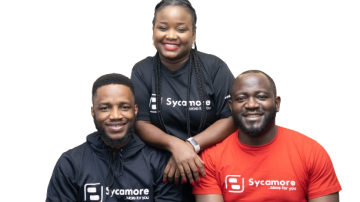
The company’s early development was characterized by a rapid pivot. Initially, the team explored a B2C on-demand delivery service, directly competing with emerging giants in the food and package delivery space. However, they quickly realized that acquiring individual consumers was prohibitively expensive and that the B2C market was already consolidating around well-funded incumbents. In response, they pivoted to a B2B model, positioning Sycamore as an infrastructure layer for businesses. The value proposition shifted from delivering packages to consumers to providing businesses with instant access to delivery labor.
This pivot was driven by the belief that businesses had higher lifetime value and more predictable demand patterns than individual consumers. The founders assumed that by focusing on B2B, they could achieve better unit economics and reduce churn. However, this strategic shift did not eliminate the fundamental challenges of the logistics industry. The team entered Y Combinator with the mandate to build a "marketplace for companies to add a delivery driver in 5 minutes," a slogan that encapsulated their promise of speed and flexibility [2].
Despite the clarity of their pitch, the founders faced an uphill battle from the start. The logistics sector is notoriously low-margin and operationally heavy. Unlike pure software marketplaces, Sycamore had to manage physical realities: driver reliability, vehicle maintenance, insurance liabilities, and the geographic density of both supply and demand. The founders’ background in tech did not fully prepare them for the gritty operational realities of managing a fleet of independent contractors in a market where trust and reliability were paramount. As they would later admit, the complexity of balancing a two-sided marketplace in such a fragmented industry was underestimated.
Timeline
- January 2017: Sycamore joins Y Combinator’s Winter 2017 batch, beginning intensive development of their on-demand delivery platform [1].
- March 2017: The company publicly describes its product as a marketplace enabling businesses to add a delivery driver in under five minutes, signaling their B2B focus [2].
- June 2017: Sycamore raises $1.2 million in seed funding from Y Combinator, SV Angel, and other angel investors, providing initial runway to scale operations [3].
- Late 2017: The company struggles with unit economics and liquidity issues, attempting to optimize driver matching and merchant acquisition costs without significant success.
- February 2018: CEO George Lawrence publishes a post-mortem detailing the company’s failure, citing the inability to sustain a two-sided marketplace without massive capital subsidies [4].
- February 2018: Sycamore officially ceases operations and shuts down, less than 13 months after joining Y Combinator [5].
What They Built
Sycamore built a digital marketplace platform designed to connect businesses needing immediate delivery services with independent drivers available in their local area. The core product was a mobile and web application that allowed merchants to request a driver on demand, with the promise of a match within five minutes. This was not a simple job board; it was an algorithmic matching engine that handled dispatch, tracking, and payment processing in real-time.
For the business user, the experience was designed to be seamless. A restaurant owner or retail manager could log into the Sycamore dashboard, input the pickup and drop-off locations, and specify any special handling instructions. The platform would then broadcast the job to nearby drivers. Once a driver accepted the request, the merchant could track their location in real-time, similar to the experience offered by consumer-facing apps like Uber or Lyft. The interface prioritized speed and simplicity, recognizing that busy merchants did not have time to navigate complex logistics software.
On the supply side, drivers used a companion mobile app to receive job notifications, accept deliveries, and navigate to pickup and drop-off points. The app included features for proof of delivery, such as photo capture and signature collection, which were critical for B2B transactions where accountability was higher than in casual peer-to-peer exchanges. Drivers were classified as independent contractors, allowing Sycamore to scale its workforce without the burden of employee benefits or fixed salaries.

Technologically, Sycamore relied on geospatial indexing to efficiently match drivers with jobs. The architecture had to handle high-frequency location updates from thousands of drivers while simultaneously processing incoming requests from merchants. The system needed to calculate estimated arrival times, optimize routes, and manage dynamic pricing if demand spiked. While the technical implementation was sound, the product’s value was entirely dependent on network effects: enough drivers had to be online to ensure the "5-minute" promise was kept, and enough merchants had to be using the platform to keep drivers engaged and earning.
The product evolved from a broader B2C delivery concept to a focused B2B tool. In its early B2C iteration, the app likely resembled standard food delivery interfaces. However, the B2B pivot required additional features tailored to commercial users, such as bulk ordering capabilities, integration with point-of-sale systems, and detailed reporting for business expenses. The team attempted to build these features rapidly, but the complexity of integrating with diverse merchant systems proved challenging.
What made Sycamore different from alternatives like UberRUSH or Postmates was its exclusive focus on the B2B segment and its promise of extreme flexibility. Unlike contracted courier services that required long-term commitments, Sycamore offered true on-demand access. However, this differentiation was also its weakness. By not owning the customer relationship with the end consumer (since the merchant was the customer), Sycamore lacked the brand recognition and consumer data that fueled its competitors. It was a utility layer, invisible to the end user, which made it difficult to build a defensible moat.
Market Position
Target Customers
Sycamore’s primary target customers were small and medium-sized businesses (SMBs) that required last-mile delivery services but lacked the infrastructure to manage it internally. This included independent restaurants, local retail stores, florists, and pharmacies. These businesses were under increasing pressure to offer delivery options to compete with e-commerce giants and large chains. They were price-sensitive, operationally constrained, and often lacked the technical sophistication to integrate with complex logistics APIs. Sycamore aimed to serve as the "easy button" for these merchants, providing a plug-and-play delivery solution.
Market Size
The market for last-mile delivery was exploding during Sycamore’s operational period. The rise of on-demand commerce meant that consumers expected faster delivery times for everything from food to retail goods. The total addressable market (TAM) for last-mile logistics was valued in the billions, with significant year-over-year growth. However, this market was highly fragmented. While the overall pie was growing, the segment accessible to a startup like Sycamore—SMBs not already locked into contracts with major players—was contested and difficult to capture profitably.
Competition
Sycamore operated in a hyper-competitive landscape dominated by well-capitalized incumbents and aggressive new entrants. The competitive dynamics were structurally unfavorable for a seed-stage startup.
Incumbents with Distribution Advantages: The most significant competitors were UberRUSH (part of Uber) and Postmates (later acquired by Uber). These companies had already built massive networks of drivers for their consumer-facing food and package delivery services. They could leverage this existing supply base to offer B2B services at a marginal cost. For Uber, adding a B2B layer was a way to monetize idle driver capacity. For Sycamore, every driver had to be recruited and retained specifically for their platform, resulting in much higher customer acquisition costs (CAC) for supply.
Platform Moves and Native Integration: Another critical competitive threat came from platforms that integrated delivery natively. DoorDash, for example, began expanding beyond restaurant food delivery into retail and convenience stores with DoorDash Drive. By controlling the consumer app, DoorDash could drive demand directly to merchants, offering a bundled solution of discovery and delivery. Sycamore, by contrast, was purely a logistics provider. It did not bring new customers to the merchants; it only fulfilled orders for existing customers. This made it harder to justify fees to merchants who were already paying high commissions to discovery platforms.
Axes of Competition: The market competed on two main axes: Distribution Reach and Product Depth/Reliability.
- Distribution Reach: Uber and Postmates had nationwide, even global, reach. Sycamore was limited to specific cities where it had managed to build liquidity. Merchants preferred providers that could scale with them across multiple locations.
- Product Depth/Reliability: Large players invested heavily in technology to optimize routes and predict demand. They could subsidize losses to ensure reliability. Sycamore, with limited funding, could not guarantee the same level of service consistency. If a driver didn’t show up, the merchant’s reputation suffered. Trust was paramount, and Sycamore struggled to build it at scale.
Structural Disadvantage: Sycamore was competing on a dimension where incumbents had a natural advantage: existing liquidity. In two-sided marketplaces, the side with the larger network wins. Uber had millions of drivers; Sycamore had hundreds. This meant Uber could offer faster pickup times and lower prices due to economies of scale. Sycamore’s attempt to compete on "flexibility" was insufficient because the incumbents were also flexible, backed by deeper pockets. The competitive landscape shifted as major platforms began to view last-mile delivery as a strategic infrastructure play, leading to consolidation and price wars that squeezed out smaller, independent players like Sycamore.
Business Model
Sycamore operated on a transactional marketplace model, charging merchants a fee for each delivery completed. The revenue model likely consisted of a base fee plus a variable component based on distance or time. In some marketplace models, a percentage of the order value is also taken, though for pure logistics, flat fees or distance-based pricing are more common. The company may have also explored subscription models for high-volume merchants, offering discounted rates in exchange for monthly commitments, though public data suggests the primary focus was on on-demand transactions.
The unit economics of this model were challenging. For each delivery, Sycamore had to pay the driver a significant portion of the fee to ensure they remained active on the platform. After paying the driver, the remaining margin had to cover technology costs, customer support, insurance, and customer acquisition. In the early stages, it is common for marketplaces to subsidize both sides—paying drivers more than the merchant pays to ensure supply, and charging merchants less than the true cost to ensure demand.

Based on the $1.2 million seed raise and the typical burn rate of a YC startup with a small team (estimated 5-10 employees), Sycamore’s annual burn rate was likely between $1 million and $1.5 million. This implies a runway of approximately 12-18 months. However, in a capital-intensive business like logistics, cash burn can accelerate quickly if subsidies are required to maintain liquidity. If Sycamore was subsidizing deliveries to gain market share, their effective burn rate would have been much higher, shortening their runway significantly.
The absence of disclosed revenue figures is itself a signal. In post-mortems, founders often highlight user growth or transaction volume if revenue is not impressive. The fact that Sycamore’s failure was attributed to unit economics and capital constraints suggests that they were unable to reach a point where the contribution margin per delivery was positive. They were likely losing money on every transaction, hoping to make it up in volume—a strategy that requires vast amounts of capital to sustain until network effects kick in. Without a clear path to profitability or a large enough war chest to outlast competitors, the business model was unsustainable.
Post-Mortem
Sycamore’s failure was not due to a lack of effort or technical competence, but rather a fundamental misalignment between the capital requirements of their business model and the resources available to them. The post-mortem published by CEO George Lawrence provides a candid look at the structural traps of two-sided marketplaces in the logistics sector.
The Two-Sided Marketplace Liquidity Trap
The primary cause of Sycamore’s failure was the inability to solve the "chicken and egg" problem of marketplace liquidity without substantial subsidies. In a two-sided marketplace, you need enough drivers to ensure fast pickup times for merchants, and enough merchants to keep drivers busy and earning. If either side is thin, the experience degrades. If a merchant requests a driver and no one accepts, they lose trust and churn. If a driver logs on and receives no jobs, they delete the app and churn.
Sycamore found itself in a vicious cycle. To attract merchants, they needed reliable drivers. To attract drivers, they needed consistent volume. Achieving this balance required subsidizing both sides. For example, they might have to pay drivers a guaranteed minimum hourly rate even if there were no jobs, or offer merchants deep discounts to encourage usage. George Lawrence noted that they "tried to build a two-sided marketplace in a market with low liquidity and high churn, without sufficient capital to subsidize both sides" [4].
The team attempted to address this by focusing on specific neighborhoods to build density, a common strategy known as "bowling alley" expansion. However, even within these focused zones, the churn was too high. Drivers would join, realize the volume wasn’t sufficient to make a living, and leave. Merchants would try the service, experience a delay or a missed pickup, and revert to their previous methods. The cost to reacquire these users was higher than the lifetime value they generated.
Capital Insufficiency in a Winner-Take-All Market
The second major factor was the sheer amount of capital required to compete in last-mile delivery. Sycamore raised $1.2 million in seed funding [3]. While this is a respectable amount for a software startup, it is negligible in the logistics industry. Competitors like Uber, Postmates, and DoorDash had raised hundreds of millions, if not billions, of dollars. They could afford to lose money on every delivery for years to capture market share.
Sycamore’s founders realized too late that they were playing a different game. They were trying to build a sustainable business from day one, while their competitors were building monopolies. The market dynamics favored the player with the deepest pockets, as they could outspend others on driver incentives and merchant acquisitions. Lawrence admitted that they lacked the "war chest" to sustain the subsidies needed to achieve critical mass. By the time they recognized this, their runway was exhausted. They could not raise a Series A because investors saw the unit economics and the competitive landscape and deemed the risk too high.
Structural Industry Challenges: Low Margins and High Churn
Beyond capital, the logistics industry itself presented structural hurdles. Last-mile delivery is a low-margin business. The cost of labor is the primary expense, and there is limited room for efficiency gains without massive scale. Unlike software, where marginal costs approach zero, each additional delivery for Sycamore incurred a direct cost (driver pay).
Furthermore, the churn rate in the gig economy is notoriously high. Drivers are multi-homing, meaning they work for Uber, Lyft, Postmates, and Sycamore simultaneously. They have no loyalty to any single platform and will go wherever the incentives are highest. This meant Sycamore was constantly competing for driver attention against deeper-pocketed rivals. Merchants, too, were price-sensitive and had low switching costs. If UberRUSH offered a slightly lower price or faster service, merchants would switch immediately.
The team tried to address this by building better technology and offering superior customer service. They hoped that a better product would retain users. However, in a commodity market like delivery, price and speed are the primary drivers of choice. Product differentiation was minimal. A delivery is a delivery. Unless Sycamore could guarantee significantly better service, which required more drivers (and thus more money), they could not differentiate on product alone.
The Pivot That Wasn’t Enough
Sycamore pivoted from B2C to B2B, hoping that business customers would be more loyal and have higher volume. While this was a logical strategic move, it did not change the underlying unit economics. B2B customers still demanded low prices and high reliability. The pivot required rebuilding parts of the product and sales process, which consumed valuable time and resources. By the time the B2B model was fully implemented, the company was already running out of cash. The pivot was a reaction to market feedback, but it was too late to alter the trajectory. The core issue—insufficient capital to subsidize liquidity—remained unresolved.
In summary, Sycamore failed because it entered a capital-intensive, winner-take-all market with seed-stage funding. The founders underestimated the amount of subsidy required to build liquidity in a two-sided marketplace and overestimated their ability to differentiate on product in a commodity service. The structural advantages of incumbents, combined with high churn and low margins, created an insurmountable barrier to success.
Key Lessons
-
Marketplace Liquidity Requires Subsidies: Sycamore learned that building a two-sided marketplace in a fragmented industry like logistics requires significant capital to subsidize both supply and demand until critical mass is reached. Without the ability to lose money on early transactions to build network effects, the marketplace remains illiquid and unattractive to users. This is not just a execution error but a structural requirement of the model that must be funded accordingly.
-
Seed Funding is Insufficient for Logistics Wars: Raising $1.2 million was adequate for a software prototype but woefully inadequate for a logistics company competing against billion-dollar incumbents. Sycamore’s failure highlights the importance of matching funding strategy to market dynamics. In capital-intensive sectors, startups must either secure massive early funding or find a niche so specialized that incumbents ignore it. Sycamore did neither.
-
B2B Pivot Does Not Fix Unit Economics: The pivot from B2C to B2B was a logical attempt to find better customers, but it did not solve the fundamental unit economics problem. B2B customers in logistics are still price-sensitive and demand high reliability. Sycamore’s experience shows that changing the customer segment does not automatically improve margins if the underlying cost structure (driver pay) remains the same.
-
Differentiation is Hard in Commodity Services: In last-mile delivery, the service is largely a commodity. Sycamore struggled to differentiate itself from UberRUSH and Postmates because the core value proposition (moving a package from A to B) was identical. Without a unique technological advantage or exclusive partnerships, competing on price and speed against subsidized incumbents is a losing battle. Startups in commodity markets must find a defensible moat beyond just "better service."