Overview
tbh made giving a compliment easy by removing the blank text box. Users answered positive multiple-choice questions about friends. The app came from Midnight Labs, an app studio whose investor dates its beginnings to 2010. tbh itself launched in 2017. [1]
Facebook acquired it that October, then announced its closure in July 2018 because usage was low. The trajectory separates three achievements: creating an appealing interaction, launching a dense social network, and sustaining that network. tbh demonstrated the first two. Its short life under Facebook leaves the third unresolved as a repeatable business. [2]
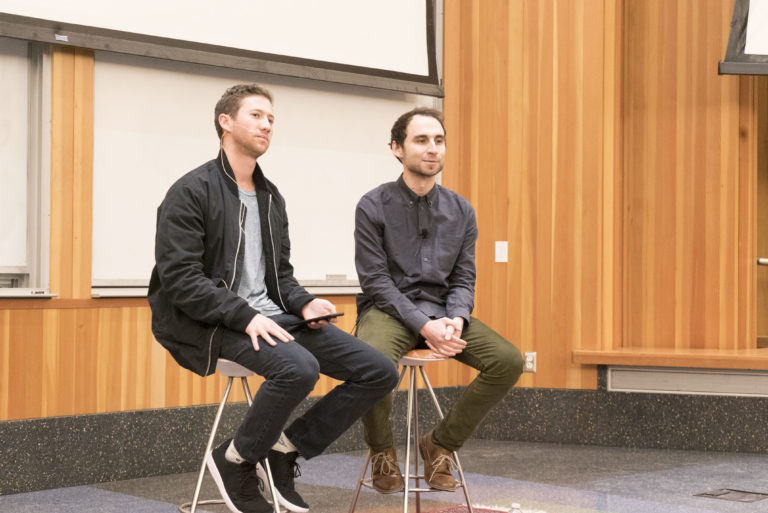
Image 1 / 1
Founding Story
Bee Partners names Nikita Bier, Erik Hazzard, Kyle Zaragoza, and Nicolas Ducdodon as tbh's cofounders. Its account describes years of earlier experiments, including finance, college chat, and personality products. Funding in 2013 sustained that search, but the studio was close to exhausting its cash by 2017. [1]
Bier had previously built Politify while studying at UC Berkeley. The product helped users examine the personal financial effects of political policies. His later app studio tried many consumer ideas before finding tbh. At a 2018 Berkeley event, Bier said: “I got really good at shutting down apps, really good at failing.” He also advised students: “Expect the first idea to be wrong”. His account describes repeated experiments before a workable interaction emerged. [3]
The surviving accounts establish the four-person founding team but do not explain how every member met. The useful connection is between repeated product work and a narrower design choice. Instead of asking users to invent anonymous messages, the team supplied the questions and constrained the answers. That reduced both writing effort and opportunities for overt abuse.
Timeline
- 2010: Investor-reported beginning of Midnight Labs, the parent app studio. [1]
- 2013: The studio obtained venture funding. [1]
- Summer 2017: tbh launched with a school in Georgia. [3]
- October 16, 2017: Facebook acquired tbh; terms were not disclosed. [4]
- July 2, 2018: Facebook announced that tbh would close due to low usage. [2]
What They Built
A question presented four friends as possible answers. The selected friend received a notification without the voter's identity. The keyboard restriction made it harder to turn an anonymous response into an insult. Berkeley's event account describes this as Bier's central product choice. [3]
The constraint also shaped the experience's limits. Receiving praise could be rewarding immediately, while repeat use required more questions and continuing participation from familiar people. An anonymous poll about strangers has far less personal meaning. The relevant network was therefore the user's own social group, rather than the total installed audience.
In October, tbh added direct messaging and optional identity disclosure. That widened the interaction beyond polls. [5]
There is no evidence here that this feature either caused or solved the later usage problem. A broader conversation feature can increase utility, but also changes the moderation burden that the original constraints reduced.
Market Position
Target Customers
tbh targeted teenagers who already knew one another. Its launch concentrated on individual schools. Bee Partners describes limited invitations and a staged rollout; both could make participation feel timely within a local group. These tactics helped assemble a useful audience together instead of scattering isolated users across unrelated places. [1]
Market Size
The addressable audience was narrower than everyone with a smartphone. The product needed enough classmates participating together to make a question personally relevant. No verified paying-customer base or defensible revenue-based market estimate is available. App downloads alone do not measure either.
Competition
The team was responding to anonymous apps such as Secret, Yik Yak, and Sarahah. Its difference was the positive, prewritten interaction rather than unrestricted anonymous speech. Existing social networks already held the friend relationships, however. tbh had to create a new habit around those relationships without owning the main place where users communicated. [1]
Distribution involved more work than a chart position suggests. A memo reproduced by The Next Web describes school-specific private Instagram profiles, following students, then opening the profile after classes. The tactic sought simultaneous attention from classmates. This is a reported internal account, rather than an independently measured acquisition experiment. It supports a local-density explanation of launch success. [6]
Business Model
The launch team said it had not prioritized monetization. [7] Verified revenue, operating margins, and retention cohorts remain unavailable. The studio raised its earlier funding before tbh existed.
An acquisition supplied an outcome for the company and team before the app proved a durable independent business. The purchase terms and investor returns are not established here. Product retirement does not establish a poor financial result for its founders or investors.
Traction
Berkeley reported more than five million downloads by the acquisition period. That establishes rapid reach. It does not show how many original users remained active at closure. [3]
The launch reports and Facebook's later low-usage statement can both be true. A large initial audience can decline, and an acquirer can require a higher level of usage than a small independent team. No public cohort series in this evidence set separates those explanations.
Outcome and evolution
As reviewed October 23, 2026, the original tbh app's retirement is documented. Facebook also said it would delete the app's user data within 90 days. The announcement described a resource-priority decision alongside low usage; it did not publish a detailed causal analysis. [2]
Bier later built Gas, a separate compliments app. Discord acquired and subsequently closed it in 2023. That sequel shows the interaction could attract another audience; it does not establish continuous operation of tbh. [8]
A 2024 Lenny's Podcast interview revisited both products and distinguished generating viral adoption from building a lasting social product. That distinction fits the observed record. It remains an interpretation, rather than proof that novelty alone caused tbh's decline. [9]
Key Lessons
- tbh's positive poll format reduced the work required to send praise. Product constraints can create value directly.
- tbh's school launches assembled connected users together. Social products need a useful local network before a large national audience matters.
- tbh's acquisition preceded proof of a lasting independent business. Evaluate launch growth, retention, and financial outcomes separately.
- Facebook's low-usage decision leaves several mechanisms unresolved. Avoid treating an app's closure as proof of one preferred explanation.
Sources
- Bee Partners portfolio history
- Facebook's retirement announcement
- Bier's UC Berkeley conversation
- Acquisition announcement coverage
- Direct messaging and acquisition context
- Internal distribution memo reproduced by The Next Web
- Launch interview
- Separate Gas product's later retirement
- Lenny's Podcast retrospective
- Contemporary Hacker News discussion