
Overview
teaBOT was a Toronto-based robotics company founded in 2013 by Rehman Merali, a PhD candidate in autonomous space robotics at the University of Toronto Institute for Aerospace Studies, and his high-school friend Brian Lee. The company built a machine that blended loose-leaf tea to order in under 30 seconds, dispensing from up to 18 canisters of individual ingredients so customers could compose custom blends on a touchscreen or phone app. It went through Y Combinator's Summer 2015 batch and placed machines in a 365 by Whole Foods Market in Los Angeles, university libraries, hotel lobbies, and eventually corporate offices at Google, HubSpot, and McKinsey.[1][17][25]
The company did not fail because the robot didn't work. It failed because every version of its business model required a third party — a cafe, a library, a mall, an employer — to give it floor space and foot traffic. teaBOT owned the machine and the brewing IP but never owned the customer relationship or the real estate. When COVID emptied the offices and public venues that hosted its kiosks in 2020, the company had no direct channel to reach anyone.
teaBOT never announced a shutdown, an acquisition, or a wind-down. Its Y Combinator page still lists it as Active with a team of two in Toronto, and Crunchbase lists it as Active with five funding rounds of undisclosed size.[27][30] No revenue figure was ever disclosed at any point in the company's history, and no founder post-mortem exists. The absence of a shutdown announcement is not evidence of health; it is evidence that the company wound down quietly enough that nobody wrote it up.

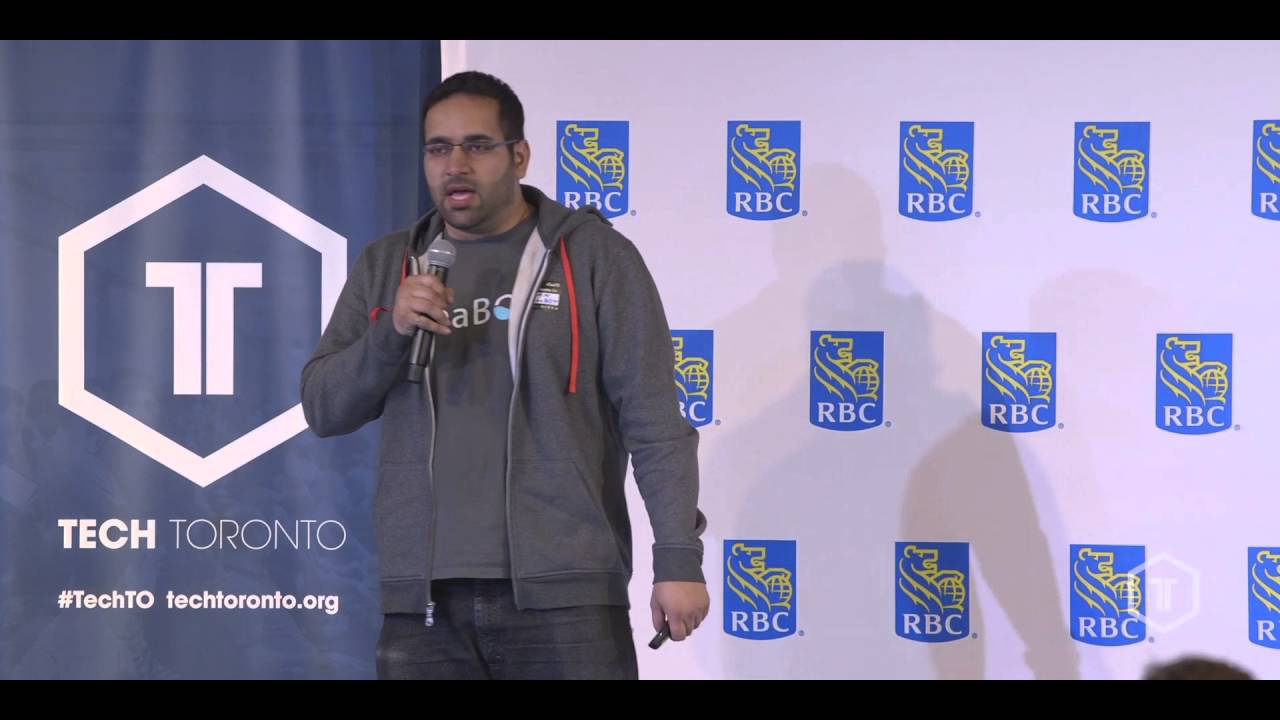
Image 1 / 2
Founding Story
The idea started over sushi in Toronto. Brian Lee's mother owned a tea shop in Sudbury, Ontario, and the line was routinely out the door because she could not brew fast enough. Lee turned to his high-school friend Rehman Merali, then a PhD student in autonomous space robotics at UTIAS, and asked him to build a machine that could make a cup of tea faster. Merali told U of T Engineering in 2016: "His poor mom couldn't make tea fast enough. One day, Brian and I were having sushi and he said, 'Rehman, you're a robotics guy, can't you just build a machine that will make a cup of tea faster?'"[2][3]
The first prototype was deliberately non-technical. It was loaded with the shop's best-selling blends and designed so Lee's mother could operate it with a single button press — the machine added tea, boiled water, poured it into a cup, and let it steep, freeing her to handle the transaction.[4] The founding insight was operational, not consumer-facing: this was a throughput problem in a small retail shop, not a lifestyle product for tea enthusiasts.
The pivot from product to business came from staring at the prototype's menu. Merali described the moment: "When we looked at this initial prototype of ten blends, we noticed that each of the blends is only three or four ingredients. I think that was kind of the a-ha moment when we went from a product to a business."[5] If every blend decomposed into three or four base ingredients, then stocking individual ingredients instead of pre-mixed blends scaled the menu from ten options to ten thousand. The team moved the machine from behind the counter to the front, turning a back-of-house tool into a customer-facing kiosk where users could create, name, and share their own blends.[5]
The company launched its prototype in 2013 through the Rotman School's Creative Destruction Lab, then joined the JOLT incubator at MaRS Discovery District.[6] Merali credited CDL with forcing the founders out of an engineering mindset: "We were so focused on the engineering questions at the time that it actually opened our eyes to the bigger business case."[7] MaRS JOLT wrote the first cheque, which funded the first commercial prototype; Merali said, "They gave us our first cheque and with the investment in the company we were able to develop the first commercial prototype."[8] The amount was never disclosed.
Timeline
- November 2013 — Rehman Merali and Brian Lee found teaBOT; Merali begins as Co-Founder & CEO[32]
- 2013 — First prototype launched through Rotman's Creative Destruction Lab[6]
- February 2015 — UTIAS Start program (Francis Shen) grants teaBOT $25,000[9]
- 2015 — Chris Deutsch joins as investor and "re-founder"; later Board Director via Chicago-based Lofty Ventures[23]
- July 2015 — teaBOT joins Y Combinator Summer 2015 batch; opens first location outside Canada at Coupa Cafe, Palo Alto[11]
- July 2015 — TechCrunch reports the machine blends loose-leaf tea in under 30 seconds, with touchscreen/app ordering and Apple Watch payment[13]
- April 2016 — Merali gives TechTO talk "Build a Hardware Company that Doesn't Sell Hardware"[33]
- May 2016 — Six teaBOTs operating across North America, including the first 365 by Whole Foods Market in Silver Lake, LA[17]
- May 2016 — Two business models in place: retail revenue-share and office lease with cartridge refills[15]
- June 2017 — Expanded to Palo Alto and Chicago; tested at universities, Harry Rosen on Bloor, and Google's office[21]
- 2020 — COVID-19 empties offices and cafes; Merali later calls 2020 "a rough year for our business"[24]
- 2021 — Merali expresses optimism for 2021 after using "downtime" to improve and build product[24]
- June 2022 — Chicago Business Journal profiles teaBOT as an office tea machine for a tea-loving workforce[26]
- July 2022 — Chris Deutsch discusses teaBOT and Lofty Ventures on the Startup of the Year podcast[34]
- 2022 — teaBOT repositioned as "Amenity-as-a-Service" for offices; Google, HubSpot, McKinsey, 1871 as customers[25]
What They Built
The teaBOT machine was a countertop kiosk that dispensed loose-leaf tea. A user selected a blend on a touchscreen or through a smartphone app, chose a water temperature, and paid by credit card or Apple Watch. The machine combined up to three tea types in any proportion, dispensed them into a cup, added hot water, and handed the cup back in under 30 seconds.[13] By May 2016 the machine held 18 types of tea leaves and blends.[16]
The engineering problem was not brewing. It was dispensing. Loose-leaf tea varies wildly in leaf size, density, and fragility across varieties, and the machine had to portion each one accurately without crushing it. Merali described the constraint to U of T Engineering: "It's very delicate, and there are different granularities and sizes. The difference between a rooibos and an oolong is like night and day. It would have been so much easier if we could grind it up like coffee, but customers are paying for loose-leaf tea, so we had to deliver that experience."[20] Grinding would have solved the mechanical problem and destroyed the product's reason to exist. The team built a proprietary dispensing mechanism instead, and paired it with a filtered lid that kept leaves in the cup while letting the hot water cool to drinking temperature.[13]
The user experience was designed around personalization. Because the machine stocked individual ingredients rather than pre-mixed blends, customers could compose their own combinations, name them, and share them on social media. Merali framed this as the core scaling insight: "from ten different blends to ten thousand different blends."[5] A user could walk up, build a blend, save it to their account, and reorder it at any other teaBOT location.
The product line later split into two configurations. teaBOT Discover held seven ingredient options and was aimed at offices and lounges. teaBOT Mega held 18 ingredient options and was aimed at offices and showrooms with higher capacity needs.[31] A third-party profile describes the machine as rated for 40 cups per hour with 18 swappable canisters, ordered via mobile app and QR code.[29] That profile also lists investors including Qualcomm Ventures, Relay Ventures, and iNovia Capital, but this claim is unverified and low-confidence — no primary source confirms any of those firms invested.
What made teaBOT different from a coffee machine or a standard tea station was the combination of loose-leaf quality with robotic consistency. A cafe could not staff a human to brew 40 cups an hour of custom loose-leaf blends, and a standard vending machine could not handle whole-leaf tea without grinding it. The moat was real and specific: the dispensing mechanism for variable-granularity loose-leaf tea was hard to replicate, and the company had spent years tuning it.
Market Position
Target Customers
teaBOT sold to two distinct customer types, and neither was the tea drinker. The first was the venue host: a cafe, library, mall, or hotel lobby willing to give up floor space in exchange for a revenue share. The second was the employer: a company willing to lease a machine and pay for refills as an employee amenity. In both cases, the person who actually used the product — the tea drinker — was not the person who decided to buy it. teaBOT's customers were the hosts, and the hosts' incentives were foot traffic and employee satisfaction, not tea quality.
Market Size
The company never published a market sizing figure, and no investor thesis on market size is on record. The relevant markets were the specialty tea market and the office amenities market. The office amenity segment is the one teaBOT ended up in, competing for the same floor space and budget as coffee machines, snack subscriptions, and beverage services. No public data exists on how large teaBOT believed that opportunity to be, or how it sized the retail kiosk opportunity before pivoting away from it.
Competition
teaBOT's competitive position was structurally awkward in a way that is easy to miss. It was not competing against other tea robots — there were essentially none at its quality level. It was competing against the default: a kettle, a box of tea bags, and a human being. That default costs a cafe almost nothing and an office almost nothing. teaBOT's pitch had to overcome the fact that its alternative was free.
Against that default, teaBOT's advantages were speed, consistency, and menu breadth. Its disadvantages were capital cost, floor space, maintenance, and the fact that it required a host to say yes. The revenue-share model was designed to neutralize the cost objection — Merali called it "a really easy pitch" because the host paid nothing to install.[16] But making the pitch easy for the host made the business hard for teaBOT: it absorbed all the capital cost of the machine, all the servicing, and all the supply replacement, while depending entirely on the host's foot traffic to generate revenue.
The competitive landscape also shifted underneath the company. The office coffee and beverage amenity market consolidated around a handful of large operators with existing distribution into corporate facilities — companies that already had service routes, technician networks, and procurement relationships. teaBOT was a two-person company trying to build that infrastructure from scratch, one host at a time. When COVID hit, the incumbents in office amenities had the balance sheets to wait out the downturn and the route density to survive on reduced volume. teaBOT had neither.
The structural problem was that teaBOT competed on a dimension — product quality and customization — where the buyer did not care much, while depending on a dimension — distribution and floor space — where it had no leverage. The engineering moat protected a product whose access to customers was controlled entirely by third parties.
Business Model
teaBOT ran two models, and both were variations on the same idea: teaBOT owns the machine, the host provides the space, and revenue flows from usage.
The retail model, in place by 2015, was a revenue share. teaBOT owned and operated the kiosks, serviced the machines, and replaced supplies; the host received a percentage of revenue.[14] Merali described the pitch in 2016: "It's based on a shared revenue model: it costs the user nothing to install, and we write them a cheque each month based on the number of cups sold. That makes it a really easy pitch."[16]
The office model, added by May 2016, was a lease. A company leased the machine and paid for tea cartridge refills, with finished cups free to all employees.[15] By 2022 this had become the entire business, repositioned as "Amenity-as-a-Service." A third-party profile describes a flat monthly subscription covering the machine, service and support, software upgrades, usage analytics, and loose-leaf tea refills.[28]
Merali's April 2016 TechTO talk was titled "Build a Hardware Company that Doesn't Sell Hardware," and the service model was a deliberate strategic choice, not a fallback.[33] The logic was sound: recurring revenue, no upfront hardware sale, and a moat built on service relationships rather than units shipped.
No pricing was ever disclosed for either model. No customer acquisition cost, churn, or contract length data exists in any public source. The company raised five rounds per Crunchbase, all with obfuscated amounts, plus a $25,000 UTIAS grant and an undisclosed MaRS JOLT cheque.[30][9][8] With a team of two by 2022, the implied annual burn was low — likely under $500,000 in salary and overhead, as an inference from headcount alone — but the absence of any disclosed revenue figure across nine years of operation is itself the signal. A company with strong unit economics eventually says so.
Traction
By May 2016, six teaBOTs were operating across North America, including at the first 365 by Whole Foods Market store in Silver Lake, Los Angeles, and in Toronto at U of T's Gerstein Library, the MaRS building, and York University.[17] Merali said of the Whole Foods placement: "Whole Foods only selected three or four 'Friends of 365' and we're really happy that teaBOT was one of them."[18]
By June 2017 the company had expanded to Palo Alto and Chicago and had tested machines at universities and colleges, Harry Rosen on Bloor during the holidays, Palo Alto cafes, and Google's office.[21] By 2022, Google, HubSpot, McKinsey, and Chicago innovation hub 1871 were using teaBOT as a recruiting and retention tool.[25]
Two usage figures exist and they cannot be reconciled. teaBOT's Facebook page claims six machine versions, four U.S. states, two Canadian provinces, and more than 80,000 cups served, with no date attached.[35] A third-party profile claims nearly one million cups served across North America and Europe.[28] The gap between 80,000 and one million is more than an order of magnitude, and neither figure is dated or sourced to the company. No revenue figure was ever disclosed. No active machine count after 2017 exists in any public source.
The traction story is real logos and thin footprint. Whole Foods, Google, HubSpot, and McKinsey are credible names, but they were pilots, tests, and single-office deployments, not scaled rollouts. Nine years after founding, the company had a team of two and no disclosed revenue.
Post-Mortem
The host-dependency trap was the original sin
teaBOT's core strategic decision was to never sell hardware. Merali built the company around the thesis that the sustainable path for a hardware business is a service or rental model, and he was right about the revenue mechanics.[33] What the thesis missed is that a rental model requires the renter to have a place to put the machine. Every teaBOT deployment depended on a host — a cafe, a library, a mall, an employer — to provide floor space and foot traffic. teaBOT owned the machine, the brewing IP, and the supply chain, but it never owned the customer relationship or the real estate.
This was not an accident of execution. It was the direct consequence of the revenue-share pitch. Merali's own framing — "it costs the user nothing to install, and we write them a cheque each month" — describes a model where teaBOT absorbs all the capital cost and the host absorbs none of the risk.[16] That made the pitch easy and the business fragile. A host that paid nothing to install had nothing to lose by removing the machine. teaBOT had no contractual leverage, no switching cost, and no direct channel to the tea drinker if the host said no.
The pivot from retail to office traded one host-dependency for another
By 2022 teaBOT had abandoned the retail model and repositioned entirely as an office amenity, with Google, HubSpot, McKinsey, and 1871 as customers.[25] This was a rational response to a shrinking retail footprint — the company's machines had been in libraries, malls, and hotel lobbies, all of which are lower-traffic and lower-margin than a corporate office with hundreds of daily employees.[15] But the office model had the same structural flaw. It required an employer to sign a lease and provide floor space, and it depended on employees being physically present to use the machine. teaBOT still had no direct-to-consumer channel.
The company did not pivot away from host-dependency. It pivoted from one host type to another, and the new host type turned out to be even more exposed to a single shock.
COVID emptied both host categories at once
In 2020, offices and public venues closed or reduced capacity. The retail model depended on foot traffic in cafes, libraries, malls, and hotel lobbies — all of which emptied.[15][17] The office model depended on employees being physically present — which stopped for most knowledge workers and stayed partial for years afterward.[25] Both of teaBOT's host categories were hit by the same event at the same time, and the company had no channel that did not route through a host.
Merali's public comment on 2020, posted on Lofty Ventures' site, is the only contemporaneous founder statement on the downturn: "2020 was a rough year for our business, but it was made infinitely better by the support of the Lofty family and Chris's boundless enthusiasm! I know 2021 will be great as we've spent the 'downtime' improving and building our product!"[24] The quote is optimistic and specific about the remedy — product improvement during downtime — but it does not address distribution. Improving the machine did not solve the problem that the machine had nowhere to sit.
The non-obvious mechanism: the revenue-share model was self-deception about who owned the customer
The structural mechanism that killed teaBOT is subtler than "COVID happened." The revenue-share model was designed to make the pitch frictionless, and it succeeded at that. But by making the host pay nothing, teaBOT also made the host care nothing. The host had no capital at risk, no contractual commitment, and no reason to promote the machine to its own customers. teaBOT was, in effect, a free vending machine that the host tolerated as long as it generated a monthly cheque and cost nothing to host.
This meant teaBOT never built the two things that would have let it survive 2020: a direct customer relationship and a reason for the host to fight for the machine's survival. A cafe that had paid $10,000 for a teaBOT would have had an incentive to keep it running and promote it. A cafe that paid nothing and received a cheque had no such incentive. The revenue-share model optimized for signing hosts and de-optimized for retaining them through a crisis.
The same logic applied to the office model. An employer leasing a teaBOT as an amenity had no sunk cost and no switching cost. When offices emptied, the lease was the easiest line item to cut.
The contrarian angle: the YC and institutional capital story is misleading
teaBOT's fundraising narrative reads as a success: Creative Destruction Lab, MaRS JOLT, UTIAS Start, Y Combinator Summer 2015, and five rounds per Crunchbase.[6][8][9][11][30] But every disclosed amount is either tiny or hidden. The only dollar figure on record is a $25,000 UTIAS grant.[9] The MaRS JOLT cheque is undisclosed.[8] Crunchbase shows five rounds with obfuscated amounts.[30] The Flowntro claim that Qualcomm Ventures, Relay Ventures, and iNovia Capital invested is low-confidence and unverified by any primary source.[29]
The pattern suggests teaBOT raised small amounts from Canadian institutional programs and angel investors, not a scaled venture round. A company that had raised a real Series A would have a disclosed round size. A company that had reached meaningful revenue would have said so. teaBOT did neither, which means the YC credential and the institutional backing were real but the capital base was thin. That thinness is why the company could not wait out COVID the way a better-capitalized office amenity incumbent could.
The industry-level explanation: office amenities is a route-density business
The office beverage and amenity market is structurally a route-density business. The winners are operators with enough machines in enough buildings in enough cities to run efficient service routes, negotiate national procurement contracts, and absorb the loss of any single customer. teaBOT was a two-person company in Toronto trying to build that infrastructure one host at a time, in three cities, with no disclosed scale.[27][28] Even without COVID, the company was competing in a category where the economics reward scale and punish fragmentation. COVID did not create teaBOT's structural problem. It exposed it and removed the time the company needed to solve it.
Key Lessons
-
A revenue model that makes the pitch easy can make the business fragile. teaBOT's revenue-share model meant hosts paid nothing to install, which Merali called "a really easy pitch."[16] But hosts with no capital at risk had no reason to keep the machine when foot traffic fell. The friction teaBOT removed from the sale was the same friction that would have aligned the host's incentives with teaBOT's survival.
-
Pivoting between host types is not the same as escaping host-dependency. teaBOT moved from retail venues to corporate offices between 2016 and 2022, but both models required a third party to provide floor space and foot traffic.[15][25] The pivot changed the host, not the dependency. When COVID hit, both host categories failed simultaneously.
-
A real engineering moat does not protect a product whose distribution is controlled by others. teaBOT solved a genuinely hard problem — dispensing variable-granularity loose-leaf tea without grinding it — and Merali was explicit that grinding "would have been so much easier" but would have destroyed the product.[20] The moat was real. It protected a machine that could not reach customers without a host's permission.
-
Nine years without a disclosed revenue figure is a signal, not a gap. teaBOT raised from CDL, MaRS JOLT, UTIAS Start, and Y Combinator, and Crunchbase lists five rounds — but no round size, valuation, or revenue figure was ever made public.[6][8][9][30] The only disclosed dollar amount in the company's history is a $25,000 grant. Companies with strong unit economics eventually disclose them.
-
Competing against "free and good enough" requires owning the customer, not just the machine. teaBOT's real competitor was a kettle and a box of tea bags, which cost a host almost nothing. teaBOT's answer was to make its own machine cost the host nothing either — which meant teaBOT absorbed all the capital risk while the host captured the upside. The company built a better product and gave away the leverage that would have made the host care whether it survived.
Sources
- https://www.ycombinator.com/companies/teabot
- https://news.engineering.utoronto.ca/u-t-engineering-startup-teabot-expands-across-north-america/
- https://news.engineering.utoronto.ca/u-t-engineering-startup-teabot-expands-across-north-america/
- https://digitalmainstreet.ca/case-study/teabot-grows-robot-empire-one-cup-tea-time/
- https://digitalmainstreet.ca/case-study/teabot-grows-robot-empire-one-cup-tea-time/
- https://news.engineering.utoronto.ca/engineering-student-brews-business-one-cup-at-a-time/
- https://digitalmainstreet.ca/case-study/teabot-grows-robot-empire-one-cup-tea-time/
- https://digitalmainstreet.ca/case-study/teabot-grows-robot-empire-one-cup-tea-time/
- https://news.engineering.utoronto.ca/engineering-student-brews-business-one-cup-at-a-time/
- https://news.engineering.utoronto.ca/engineering-student-brews-business-one-cup-at-a-time/
- https://techcrunch.com/2015/07/23/taste-testing-with-teabot-the-robot-that-brews-up-loose-leaf-tea-in-under-30-seconds/
- https://techcrunch.com/2015/07/23/taste-testing-with-teabot-the-robot-that-brews-up-loose-leaf-tea-in-under-30-seconds/
- https://techcrunch.com/2015/07/23/taste-testing-with-teabot-the-robot-that-brews-up-loose-leaf-tea-in-under-30-seconds/
- https://www.ycombinator.com/blog/teabot-yc-s15-makes-customized-cups-of-tea-with-the-touch-of-a-button
- https://news.engineering.utoronto.ca/u-t-engineering-startup-teabot-expands-across-north-america/
- https://news.engineering.utoronto.ca/u-t-engineering-startup-teabot-expands-across-north-america/
- https://news.engineering.utoronto.ca/u-t-engineering-startup-teabot-expands-across-north-america/
- https://news.engineering.utoronto.ca/u-t-engineering-startup-teabot-expands-across-north-america/
- https://news.engineering.utoronto.ca/u-t-engineering-startup-teabot-expands-across-north-america/
- https://news.engineering.utoronto.ca/u-t-engineering-startup-teabot-expands-across-north-america/
- https://digitalmainstreet.ca/case-study/teabot-grows-robot-empire-one-cup-tea-time/
- https://digitalmainstreet.ca/case-study/teabot-grows-robot-empire-one-cup-tea-time/
- https://www.techshow.com/speakers/christopher-deutsch/
- https://loftyventures.com/
- https://www.techshow.com/speakers/christopher-deutsch/
- https://www.bizjournals.com/chicago/inno/stories/profiles/2022/06/30/teabot-office-tea-machine.html
- https://www.ycombinator.com/companies/teabot
- https://flowntro.com/companies/teabot
- https://flowntro.com/companies/teabot
- https://www.crunchbase.com/organization/tbot
- https://www.crunchbase.com/organization/tbot
- https://ca.linkedin.com/in/rehman-merali
- https://www.youtube.com/watch?v=qVy208Tq2po
- https://music.youtube.com/podcast/jJ3fL0pRWPU
- https://www.facebook.com/myteabot/