
Together Software
Summer 2019AcquiredLearn from the experts at your company.
Pressure-test this opportunity
Explore the risks and possibilities with a prompt for ChatGPT, Claude, or your agent.
Learn from the experts at your company.
Explore the risks and possibilities with a prompt for ChatGPT, Claude, or your agent.
Together Software turned corporate mentoring from a spreadsheet project into enterprise software. Founded in Toronto in 2018 by former Boston Consulting Group colleagues Matthew Reeves and Nathan Goldstein, the Summer 2019 YC company gave L&D teams tools to register participants, match mentors and mentees, guide meetings, connect calendars and HR systems, and measure a program.[1][2]
Together reached its acquisition while generating millions in annual recurring revenue, growing, and operating at cash-flow neutrality.[5] The exit shows a strategic pattern in the category. Mentoring software is valuable on its own, but it becomes a stronger distribution and data fit inside the learning system that already owns the enterprise buyer. Absorb kept Together running, then embedded its capabilities into Absorb LMS in October 2025.[10]

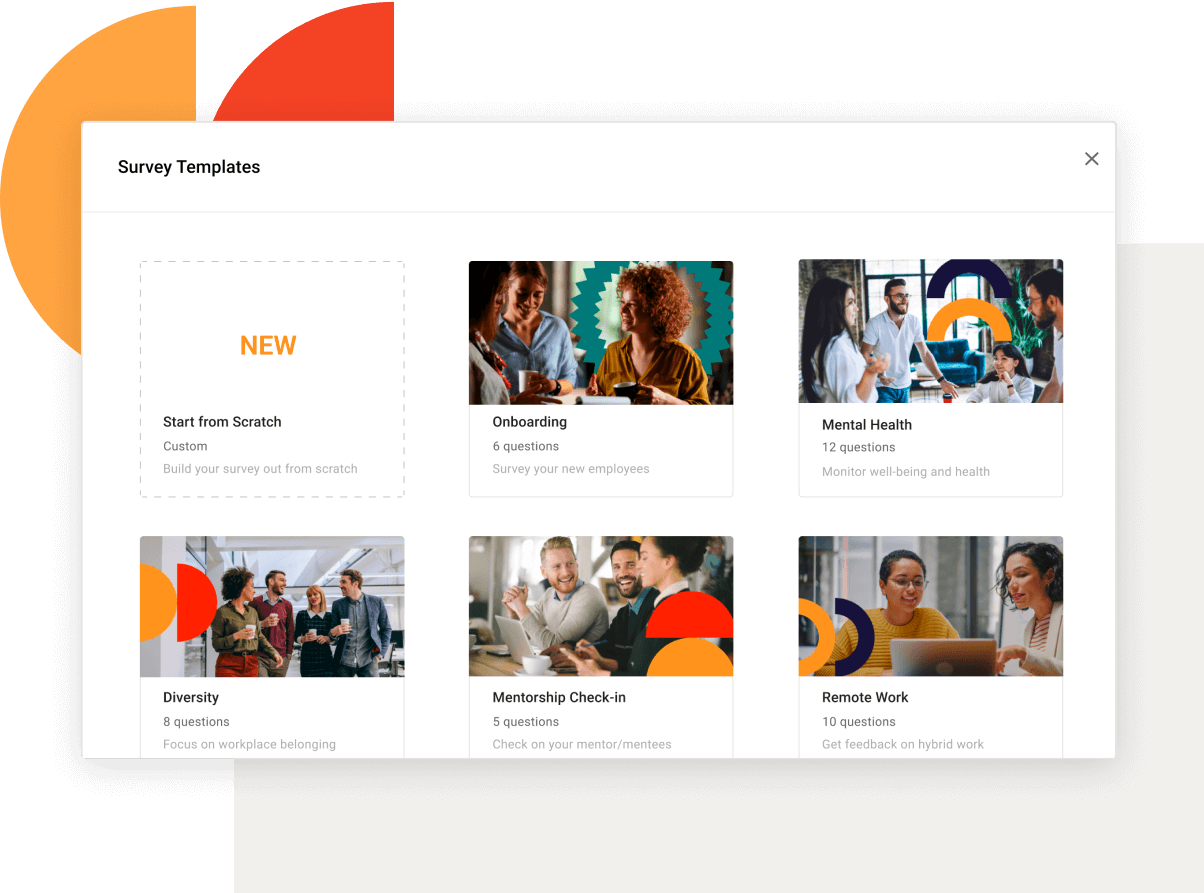
Image 1 / 2
Reeves and Goldstein met at BCG, where both experienced an unusually well-funded professional-development system. Their starting insight came from the contrast between that institution and ordinary companies. In a 2022 founder essay, Reeves wrote: “We thought there was an opportunity to bring the same professional development to all companies in a scaled way through software.” He followed with a blunter market observation: “We didn’t see any meaningful solutions available so we set out to build one.”[2]
The pair started Together in 2018 and joined YC the next year. YC currently lists Reeves as the active founder, while Reeves's own account names Nathan as co-founder and BetaKit later identified Goldstein as co-founder and head of product. Together's first product focused on formal enterprise mentoring. Large companies often had willing mentors, employees seeking guidance, and an HR leader sponsoring the program. The operational glue was missing. Administrators collected forms, made subjective spreadsheet matches, chased scheduling, and struggled to tell whether relationships continued.
Together encoded that playbook. Registration gathered goals and experience. A configurable matching system recommended pairs. Calendar and identity integrations removed setup work. Meeting agendas and reminders gave each relationship a cadence. Surveys and reports showed the administrator where participation had stalled.
Remote work widened the story. The company argued in 2022 that informal learning had once happened through proximity and now needed explicit digital support. Its roadmap expanded toward group learning, subject-matter expert discovery, and peer connection.[2] That broadened Together from a mentoring administrator into a social-learning layer, the product position that later attracted an LMS acquirer.
Together served two experiences. An L&D administrator designed a program, imported employees, chose registration questions, set match criteria, scheduled communications, and monitored results. Employees completed profiles, received or selected a match, booked sessions, followed agendas, set goals, and answered surveys.
The matching layer was configurable because programs pursue different goals. A leadership program might prioritize role and seniority. An employee-resource group might weight shared experience. A reverse-mentoring program could deliberately cross generations or job levels. Templates let the administrator start with a known format and then change questions, content, and rules.[3]
The less glamorous features were central to enterprise adoption. Together connected with Microsoft 365, Google Workspace, Workday, SAP SuccessFactors, and Oracle. It supported SAML, SSO, and SOC 2 controls.[4] Those integrations kept profiles current when employees changed roles or left. Calendar sync and reminders reduced missed sessions. A content library gave mentors agendas rather than asking each pair to invent a process.
Together also sold program operations. Higher tiers included onboarding and dedicated customer success, so the customer bought software plus a mentoring playbook. That service component helped an HR team launch its first cohort and expanded the product from matching into recurring program management.
Together initially targeted companies with at least 500 employees and sold to learning, talent, and employee-experience leaders.[1] The best account already believed in mentoring but could not scale it manually. Large employers also had enough people for useful internal matching without an external network.
No observed source provides a defensible standalone mentoring-software market size. Together's own scale markers are more useful: it raised $6.5 million in total, reached millions in ARR, and stayed cash-flow neutral before acquisition.[5] The category can support a healthy enterprise SaaS company. The undisclosed purchase price prevents judging venture-scale returns.
Together competed with spreadsheets, internal HR workflows, and specialist vendors. Chronus currently combines matching, guided conversations, ROI reporting, and integrations across HRIS, Slack, Teams, and calendars.[11] Mentorloop starts at $299 per month and adds an enterprise tier with SSO, custom programs, and mentoring specialists.[12] Qooper sells templates, matching, training, follow-up, reporting, and AI-assisted agendas.[13]
The important competitive axis was distribution ownership. A specialist could build better mentoring workflows. An LMS already had the budget owner, learning catalog, identities, and procurement approval. Together's independent success made it attractive; its adjacency made absorption logical.
Together sold recurring software based on active participants, with sales-assisted professional and enterprise plans. Its current Starter price is $6 per active user per month. Larger tiers add SSO, HRIS integration, customer success, data residency, and uptime commitments.[8] Pre-acquisition contract values and historical pricing were not disclosed.
The model had good software economics in principle: matching and reminders can serve another participant cheaply. Enterprise requirements added onboarding, integrations, security review, and customer success. By 2024, Together was cash-flow neutral while producing millions in ARR, which suggests recurring revenue covered that service load.[5] Gross margin, net retention, churn, and customer acquisition cost remain unknown.
Reeves named Randstad, Discovery Channel, and Heineken as customers in early 2022.[2] Company case studies later offered program-level evidence. Activision reportedly moved from a 130-person pilot to 4,700 participants and reached 46% adoption.[6]
Together's Randstad study reported that participants were 49% less likely to leave during the observed period and estimated $3,000 in annual turnover savings per participant.[7] The study was observational and company-authored; employees who volunteer for mentoring may differ from nonparticipants. It still shows that Together could connect usage to a metric buyers cared about.
Together ended independence from a position of strength. BetaKit reported millions in ARR, rapid growth, cash-flow neutrality, and consideration of a Series B. Reeves said the company ran a competitive sale process and that its “growth [and] efficiency” made it attractive.[5]
The primary mechanism was product complementarity. Together managed relationship-based learning; Absorb managed formal learning. Both sold to the same department, depended on the same employee identities, and measured adjacent development activity. A merger could combine distribution and data without discarding the product.
Together's integrations were a selling point and a clue. It needed HRIS, identity, calendar, and collaboration data to keep matches alive. Each connector made the specialist product better while reminding buyers that mentoring sat beside their main learning system. The company expanded into group learning and expertise discovery, but an independent vendor still had to win a separate budget and security review.
The attempted remedy was commercial and product depth: enterprise controls, dedicated customer success, more program formats, and measurable outcomes. It worked well enough to create a valuable business. It could not change the platform boundary. Absorb's acquisition strategy explicitly sought profitable, high-growth complements, and Together became its fifth acquisition.[5]
Together initially promised customers a standalone service. Reeves said at announcement: “Together and Absorb share a common vision: enabling people and organizations to thrive through continuous learning.”[9] In October 2025, Absorb embedded Together-derived matching, scheduling, goal tracking, events, badges, and templates inside its LMS.[10]
That outcome validates the original product and narrows the lesson for a new entrant. A broad mentoring clone now competes with specialist incumbents and an LMS-bundled version of Together. New model capabilities such as GPT-4.1's April 2025 long-context and visual processing can help prepare sessions from work artifacts,[14] but matching and agenda generation alone are easy to copy. A rebuild needs a sharper workflow or a distribution partner.
The acquisition price, consideration, investor returns, employee retention, and founder earn-out were not disclosed. Any claim about the financial quality of the exit would be speculation.