
Verak
Winter 2021AcquiredBetter Business Insurance for MSMEs in India
Pressure-test this opportunity
Explore the risks and possibilities with a prompt for ChatGPT, Claude, or your agent.
Better Business Insurance for MSMEs in India
Explore the risks and possibilities with a prompt for ChatGPT, Claude, or your agent.
Verak was a two-act insurance startup. It entered Y Combinator's Winter 2021 batch as BimaPe, a consumer wallet for understanding family insurance policies, then retired that product and rebuilt around property insurance for India's micro, small, and medium enterprises. The second product combined phone and WhatsApp sales with automated underwriting, multiple carrier quotes, payment collection, and claims support.
The company proved that software could compress underwriting and servicing work, but the cost of creating demand remained stubbornly human. Customers needed education, trust, and follow-up; carriers controlled commissions and service quality; and field sales had to expand before revenue. Verak improved almost every metric it could control yet still recovered only ₹0.80 of revenue for each ₹1 of blended acquisition cost. InsuranceDekho acquired the team and technology for an undisclosed amount in April 2023. The deal put Verak's specialized process inside a distributor whose carrier access and agent network could absorb its fixed costs.

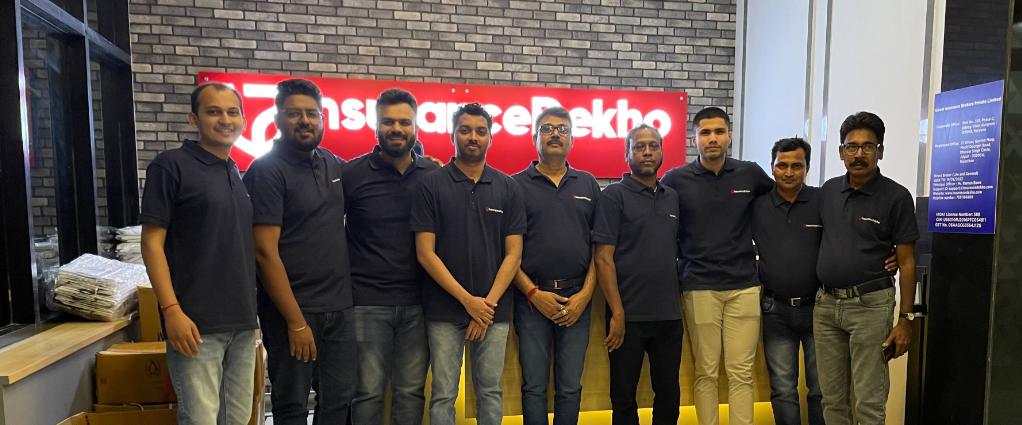
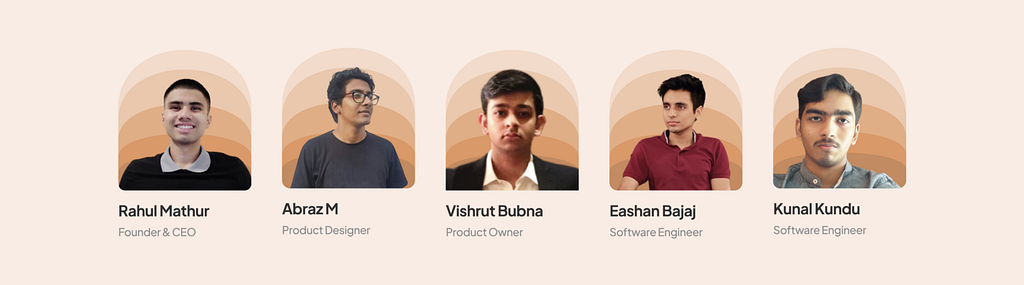
Image 1 / 3
Rahul Mathur came to insurance through both family experience and formal training. When his mother developed septicemia during his childhood, a ₹25,000 health-insurance premium covered roughly ₹2.5 million in hospital expenses. He later studied mathematics and statistics at the University of Warwick, worked in actuarial roles, joined UK bicycle-insurance startup Laka, and moved to Accenture's fintech innovation lab. When the pandemic brought him back to India in 2020, friends and relatives treated him as their insurance interpreter. Their policies lived across email accounts, Google Drive folders, and physical lockers.
Mathur told Kuwi that he believed "no one had thought about insurance from a product first lens and tried to simplify it using software." He discussed the concept with about 125 people over five weeks, then began building BimaPe with Vishrut, Eashan, Abraz, Kunal, and other early teammates. He described the founding decision more bluntly: "I just flew back home with whatever I had."[1]
BimaPe assembled a family's policy records, translated dense terms, and identified overlaps or missing coverage. The team entered YC with what Mathur later called a basic tool rather than a finished product. It raised pre-seed and seed financing and expanded quickly, but early attention did not turn into a durable business. After eight months, BimaPe missed the activation, acquisition, and revenue targets the team had set after YC. Fifteen weekly product changes did not close the gap. Mathur concluded that the team had mistaken a vision for a product strategy, treated an insurance-design problem as an engineering problem, and spread a small engineering group across life, health, and motor policies.[2]
The team paused BimaPe development in July 2021, circulated a written pivot memo, and moved to business property insurance. Mathur later said it should have pivoted in March, when new capital and talent made the alternative possible; sunk cost kept BimaPe alive for several extra months. The founding group formally retired the product in September and adopted Verak, a name made from the first letters of their first names.[3]
Verak sold low-ticket property insurance to shops, warehouses, factories, and other small facilities that mainstream insurers rarely pursued. The customer problem was partly paperwork and partly attention. A small business owner could face a long questionnaire, facility-photo requests, signed incorporation documents, and a branch that lacked a property-and-casualty specialist. The potential annual premium could be too small to justify an insurer's manual work.
The startup placed a trained representative between that complexity and the owner. A prospect answered questions by phone or WhatsApp. The representative clarified ambiguous inventory descriptions and entered the answers into Verak's sales system. Vendor APIs supplied satellite imagery so most owners did not need to photograph their surroundings. Verak mapped free-text descriptions to carrier classifications, applied each insurer's floor rate, and adjusted pricing within approved bands to target a portfolio loss ratio. Mathur said the company could pre-underwrite about 90% of businesses and return three carrier quotes in 30 seconds.[4]
Payment matched local behavior. Verak sent Razorpay links for UPI, net-banking, or card payments, while a field team collected checks. In a 2022 interview, Mathur said 75% paid through UPI and 20% still paid by check. After purchase, the team handled policy issuance and support over WhatsApp. The company's page later said this multilingual journey extended from prospecting through claims.
The product kept expanding beyond software. When online sales plateaued, Verak added field operations across Mumbai, Navi Mumbai, and Thane. It also bundled CCTV cameras, fire extinguishers, and smart locks. Those products raised revenue per customer and could reduce insured losses, turning the company into what Mathur called an integrated business-protection provider.
Verak's main technical achievement was encoding underwriting, training, and carrier-specific process for a segment whose ticket size could not support conventional insurer labor. Distribution decided whether that system could support a large independent company.
Verak targeted traditional, asset-heavy MSMEs: retailers holding inventory, workshops with machinery, warehouses, and small factories. These owners were often WhatsApp-native but had little knowledge of commercial insurance. They were too small for an insurer's enterprise-sales organization and lacked the intent needed for pure self-service. Mathur said weekly search volume for business insurance was only about 10,000 queries, so education had to precede conversion.
The narrow focus was a meaningful correction from BimaPe. Instead of interpreting every kind of consumer policy, Verak chose one buyer, one primary product line, and a repeatable underwriting workflow. Its company profile reported more than 5,000 MSMEs onboarded in the first year, an 8% self-serve purchase rate, and a 60% renewal rate.[5] The low self-serve share also exposed the cost of the model.
The market was large by establishment count but thin by revenue per account. India now records more than 92.6 million formalized MSMEs and informal micro enterprises.[11] During Verak's run, standardized policies such as Bharat Sookshma Udyam Suraksha created a common product base for small enterprises.[13]
Yet establishment count was a poor proxy for accessible premium. Owners did not search for the product, ticket sizes could be only a few hundred rupees, and first-year economics depended on representatives, carrier commissions, and delayed renewals. The opportunity was real, but it accrued most naturally to a broad distributor that could cross-sell protection into an existing customer base.
Verak competed along two axes: access to carriers and the cost of educating each owner. Policybazaar, Turtlemint, Acko, and InsuranceDekho had broader consumer brands or distribution. Traditional brokers had trust and local relationships but relied on manual processes. Carriers owned the balance sheet and policy service but had little reason to redesign operations around small premiums.
Verak occupied the difficult middle. Its underwriting workflow was deeper than a lead generator's, while its direct sales organization tried to build trust without a known insurer brand. The company also relied on carriers for issuance, endorsements, and claims service, so it could not fully control the customer experience.
InsuranceDekho changed the equation. At acquisition it claimed direct integrations with 46 insurers, more than 380 products, presence in 1,300 towns, and 82% of premium from tier-two cities and beyond.[7] Verak brought SMB underwriting and training; InsuranceDekho brought the distribution and carrier relationships that Verak could not afford to recreate.
Verak earned commissions on policies and later added margin from safety products. Its direct-sales economics depended on a representative educating the owner, closing the policy, and retaining the account long enough to collect renewal revenue. The founder said representatives became profitable around month four, while the first renewal often arrived roughly a year after the initial sale.
The team pushed cost per closure from about ₹6,000 to ₹1,500 and cost per unit of revenue from ₹5 to roughly ₹1.25. It also maintained a loss ratio near 25%, which helped insurer relationships. Still, blended revenue-to-CAC reached only 0.8, and first-sale contribution excluding renewals was barely positive. Verak had raised about $1.85 million, but Mathur said the business had only about $1.4 million net capital available when it attacked the MSME market. A planned round fell through as investors turned away from capital-intensive fintech.
No audited revenue or premium figures are public. The disclosed ratios show the central problem: strong underwriting did not pay for demand creation quickly enough.
Verak reached more than 500 policies per month within ten months, doubled business in its final three months without increasing spend, and automated underwriting for more than 90% of prospects. The team reported contribution-positive operations in seven pin codes and unit-positive operations in 25. It spoke with more than 20,000 SMB owners and expanded the sales organization from four to roughly 40 representatives.[6]
Those numbers were strong enough to attract a buyer and weak enough to explain why independence ended. Online inside sales initially grew 30% month over month, then advertising reached carrying capacity as cost per lead rose. Field sales could reach owners without search intent, but hiring leaders outside the home market was slow and expensive. More than 90% of revenue came from half the sales team during the acquisition period, reflecting a 90-day ramp for new representatives.
Verak's technology attacked the insurer's back-office expense. It did not remove the need to explain a low-awareness product to skeptical owners. A prospect might inquire after seeing an advertisement, disappear for two months, and return only after hearing about a nearby fire. Each conversion required reminders and a credible human explanation.
The team tried online inside sales first. When that channel plateaued, it went omnichannel, hired field representatives, and added physical safety products. Those changes improved conversion and margin but increased coordination and capital needs. Mathur's final accounting was direct: "market & margins killed us" despite a lean organization.[6] The structural mechanism was a mismatch between where software created value and where cash was spent. Automation saved insurer labor after a lead existed; Verak still paid to create, educate, and close that lead.
Verak could classify risk and generate quotes, but carriers controlled policy issuance, endorsements, commission levels, and much of claims service. Mathur said partners lacked APIs and established SMB processes, and many displayed little executive interest in the segment. Those delays kept Net Promoter Score below the team's target of 80.
The company built around the constraint: its own sales console, quarterly book reviews with public-sector insurers, and manual coordination where integrations failed. It could not make a slow carrier move faster. The acquisition put the same technology inside an organization with enough premium volume to command commissions, obtain integrations, and escalate service failures. Verak's product was more valuable to a scaled broker than to Verak itself.
Insurance sales representatives needed about 90 days to ramp, so headcount arrived before premium. Renewals improved lifetime value but lagged initial acquisition by roughly a year. Verak could demonstrate profitable pin codes and representatives without producing enough consolidated cash to finance the next geography.
The team tried to build a 40-person sales organization and a detailed training library with more than 50 videos. It also kept executing during five months of acquisition talks, because either the deal or the next financing could fail. A funding round did fail. With less than 12 months of runway visibility, further field expansion became a wager the company could not safely make.
Calling Verak a failed insurer misses what the buyer purchased. The company had no insurance balance sheet and did not claim a broad consumer brand. It built a specialized operating layer for a neglected book of business. InsuranceDekho bought that layer after raising $150 million and while expanding its MSME line. Its chief executive said Verak's expertise would complement InsuranceDekho's distribution network; Mathur said the buyer's infrastructure could resolve low commissions, hiring difficulty, and missing carrier APIs.[8]
About 15 people moved into InsuranceDekho's SMB insurance and cross-sell team, and existing customers continued to receive service. Mathur later led business insurance and ONDC integrations there.[9] The price remains undisclosed, so the return to investors and employees cannot be assessed.
The counter-narrative is that Verak found product-market fit and sold too early. Its policy growth, loss ratio, and acquisition interest support part of that view. The founder's own unit economics answer the rest. Revenue-to-CAC below one, a stalled inside-sales channel, carrier-controlled NPS, and a failed financing round made independent scale fragile. The buyer preserved the product while replacing its weakest asset: standalone distribution.
The founder's 2025 reflection sharpened the lesson. After 3.5 years in the sector, he wrote that Indian insurance changes slowly and rewards distribution-first businesses over technology-first companies.[10] Verak's outcome was evidence for that claim.