
WaystoCap
Winter 2017AcquiredWe are Alibaba of Africa. We are building a marketplace for African…
Pressure-test this opportunity
Explore the risks and possibilities with a prompt for ChatGPT, Claude, or your agent.
We are Alibaba of Africa. We are building a marketplace for African…
Explore the risks and possibilities with a prompt for ChatGPT, Claude, or your agent.
WaystoCap began as a cross-border B2B marketplace for African importers and exporters. Four founders combined buyer and supplier discovery with verification, payments, insurance, finance, and trade support. The company joined Y Combinator in 2017, raised a $3 million seed round, expanded across several African markets, then shifted in 2020 to local retailer procurement.[1]
The pivot exposed the central tension in the original plan. Trade looked continental from a software screen, but trust, logistics, credit, and regulation had to be rebuilt inside each corridor. Local commerce produced faster growth, yet it also made WaystoCap resemble a country-by-country distributor. MaxAB bought the company in 2021 to enter Morocco; the price was not disclosed.[2]
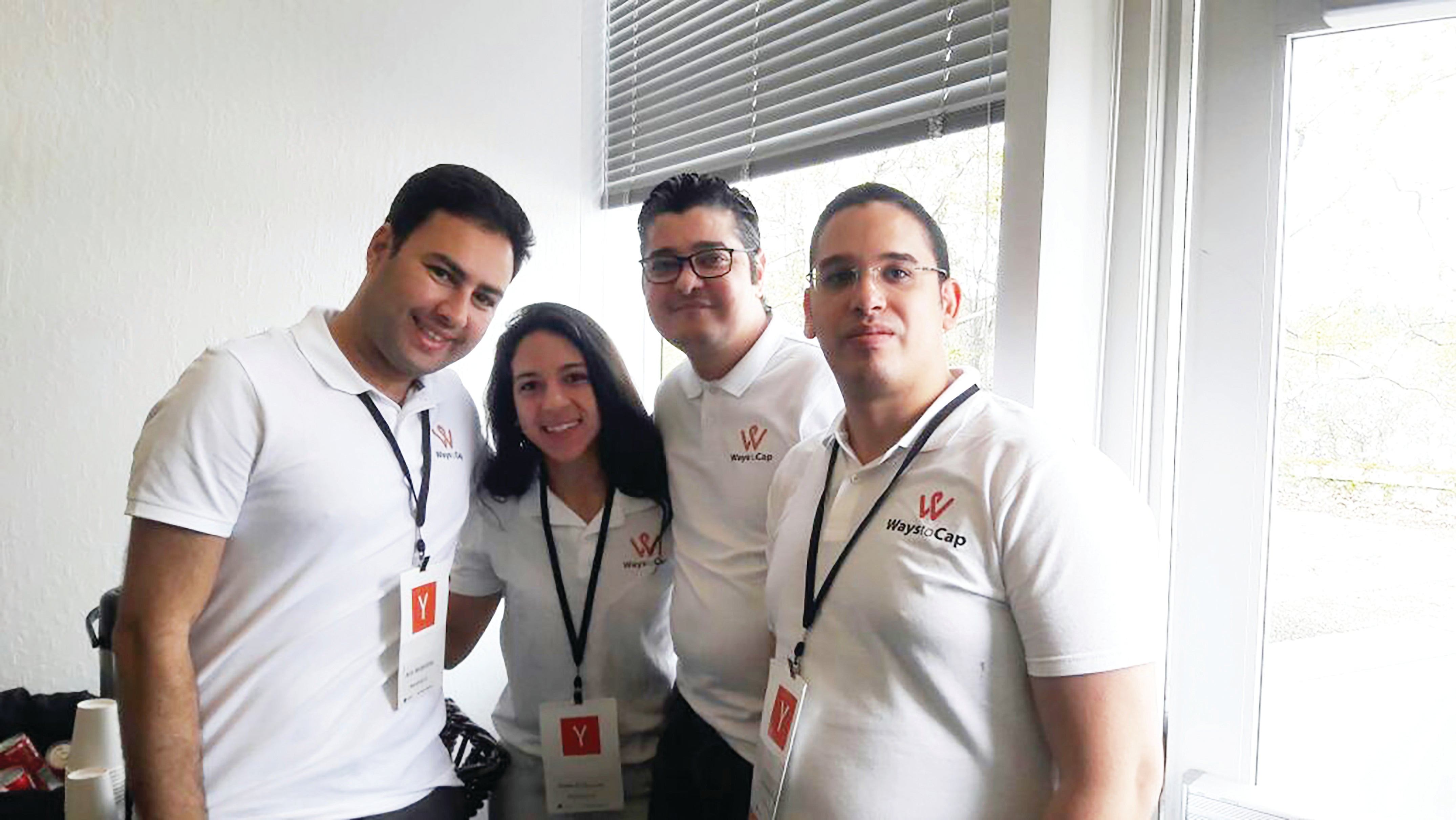

Image 1 / 2
WaystoCap grew out of Niama El Bassunie's trading apprenticeship. She worked at PwC in London, then helped source used cooking oil for a proposed biodiesel taxi business in 2010. The Arab Spring disrupted that supply plan. In November 2011, she traveled to Conakry for what was supposed to be four days and stayed close to eight months, working on projects tied to wrecked ships and scrap metal. She met Anis Abdeddine and Mehdi Daoui while seeking finance for one of those projects. The two men already knew each other from school and work.[3]
That experience sharpened the product insight. Small African businesses could see demand beyond their borders, but opaque counterparties and thin financial infrastructure made each transaction risky. In a 2019 founder spotlight, El Bassunie said: "Transparency is key in international trade, and it is something that SMBs on the continent do not enjoy." She connected that gap to a marketplace where firms could find products and reach international commerce.[4]
The first version was deliberately crude. El Bassunie told MENAbytes: "I remember our first website, which I built, we went to the local supermarket to buy food products, took pictures on my mobile and listed them on our site." The founders recruited Moroccan vendors, then found buyers through their existing network. They bootstrapped for 18 months and said the operation was cash-flow positive before seeking capital for expansion.[5]
The public chronology is untidy. MENAbytes called the company a 2014 founding; TechCrunch's acquisition history used 2015; YC and 500 Global use 2016. The evidence supports a formation window rather than an exact incorporation date. Trading activity came first, the marketplace emerged over repeated tests, and the formal startup identity followed. The four-person founding group eventually comprised El Bassunie, Abdeddine, Daoui, and technical co-founder Aziz Jaouhari Tissafi.
The first product addressed a high-value transaction as a sequence of trust problems. A buyer searched for goods across categories such as food, construction materials, packaging, textiles, and energy. WaystoCap screened buyers and suppliers before admission, collected product and counterparty information, and helped the parties negotiate. Payment, credit insurance, financing, and logistics support surrounded the listing layer. Coface was publicly named as a trade-insurance partner; a trade-finance partner remained unnamed.[8]
The distinction from a directory mattered. A cross-border order could be worth tens of thousands of dollars. An error in identity, quality, delivery, or payment could erase the buyer's working capital. The founders' proprietary verification process and operating network were therefore part of the product. The marketplace charged after a completed transaction. A 2017 profile reported commissions as high as 2% for some fixed-price goods, with rates varying for globally traded commodities.
This model did produce transaction activity. It also kept too much work outside the software. A 2017 Wamda account said buyers and sellers handled delivery once goods reached export or shipping. That boundary lowered WaystoCap's operating burden, but it left customers exposed to the very handoffs that made African trade difficult.
The 2020 pivot changed both the customer and the job. WaystoCap moved from cross-border orders to local procurement for small retailers. The revised product combined an online catalog with inventory tools, last-mile delivery, and working capital informed by purchase history. El Bassunie explained the change plainly: "the pure cross-border marketplace that we launched in 2017 was not best for servicing the small and medium sized business needs in Africa, and was rather just working through more middlemen."[9]
The local model shortened the loop. Retailers reordered common goods, transaction history improved credit assessment, and delivery stayed inside one market. Those gains came with warehouses, inventory exposure, route density, collections, and financing risk. WaystoCap had moved from digitizing trade coordination toward operating a physical distribution network.
The cross-border marketplace targeted African small and midsize importers, exporters, wholesalers, and suppliers that lacked reliable counterparties. The local product narrowed the buyer to small retailers replenishing food and everyday inventory. That was a more frequent purchase than an industrial import, which improved the chance of repeat usage. It also shifted the economic buyer from a firm paying for certainty on a large trade to a shopkeeper choosing on price, availability, credit, and delivery speed.
WaystoCap never published a defensible market-size calculation. The opportunity was described through fragmentation and the number of small businesses, not audited spend. That distinction matters because gross merchandise value is not revenue. The company could process a large order while retaining only a small commission.
Current public rails confirm that the coordination problem remains large. Afreximbank launched the Africa Trade Gateway in 2023 as one access point for MANSA, PAPSS, TRADAR, ATEX, and ATG Connect.[10] MANSA now provides a due-diligence repository for institutions and businesses and received four ISO management-system certifications in 2024.[11] In 2026, PAPSS and Kenya's Pesalink announced a connection spanning more than 80 Pesalink participants and more than 160 PAPSS banks for instant local-currency cross-border payments.[12]
WaystoCap first competed with brokers, trade agents, banks, insurers, and direct supplier relationships. These incumbents looked inefficient because customers crossed several desks to complete one order. Their local knowledge, balance sheets, and legal standing were also hard to compress into a marketplace profile.
After the pivot, the reference set became B2B distributors such as MaxAB. MaxAB had raised a $55 million Series A and wanted entry into Morocco when it approached WaystoCap. The match was structural: MaxAB supplied capital and an operating system; WaystoCap supplied the local team, retailer relationships, and market knowledge. Later consolidation reinforced that logic. MaxAB and Wasoko completed an all-stock merger in 2024 after each had built country-specific commerce operations. The combined group began placing more weight on financial services and other higher-margin products.[13]
The defensible layer was never the catalog alone. Public payment and identity rails can now carry pieces of a trade, and large distributors can subsidize catalogs with logistics or credit. Durable value sits in verified records, corridor-specific workflow, underwriting evidence, and institutional distribution.
WaystoCap initially earned commission when a trade closed. Contemporary reporting cited fees up to 2% in one fixed-price product example and an average order size of $30,000. Those figures imply as much as $600 of gross commission on that example order, before verification, sales, support, insurance, or financing costs. This is an illustration, not a disclosed average take rate or margin.
The team said it bootstrapped to cash-flow positive before expansion, then raised $3 million from Battery Ventures, Soma Capital, Palm Drive Capital, Amino Capital, Endure Capital, YC, and others. The local pivot changed the cost base. Inventory, delivery, working capital, and collections required more capital than matching a buyer with a supplier. Public sources did not disclose revenue, gross margin, default rates, burn, or acquisition consideration, so shareholder returns cannot be inferred.
The current WaystoCap Ventures site describes the 2021 sale as successful and now presents an advisory business, confirming that the old platform operation ended at acquisition rather than continuing independently.[14]
WaystoCap reported $2.2 million of transaction volume during 2016 and $3.1 million in the first quarter of 2017. El Bassunie told TechCrunch that thousands of active buyers used the platform. A separate 2017 profile cited thousands of registered buyers and suppliers and an average order size of $30,000. These were company-supplied figures, and no independent cohort or revenue data was published.
By September 2017, MENAbytes reported 22 employees across Casablanca and Cotonou. The company later entered Benin, Togo, Ivory Coast, and Algeria. After the local pivot, it claimed more than 10,000 retailers and 30-fold growth during 2020. TechCrunch used a lower figure of more than 8,000 Moroccan retailers at acquisition several months later, after WaystoCap withdrew from Ivory Coast and Togo. The difference may reflect timing, geography, or the definition of an active retailer.
The acquisition created a clearer downstream signal. TechCrunch reported in 2022 that Morocco represented about 10% of MaxAB's business. WaystoCap's retailer base and local team therefore became a functioning country operation, even though the original brand and pan-African cross-border thesis did not remain independent.
WaystoCap expected software to aggregate African trade. Its most valuable work was local and manual: verifying counterparties, arranging insurance and finance, understanding customs, and building trust through relationships. Each new country introduced another legal system, banking network, set of suppliers, logistics chain, and currency context. Geographic expansion added operating surfaces before it created shared liquidity.
The team tried to solve this through country offices and partners. The company expanded across several West and North African markets and built proprietary verification. Yet its later withdrawal from Ivory Coast and Togo shows that presence did not automatically compound. Every corridor imposed a reset tax by recreating the trust work that a conventional software marketplace expects prior transactions to reduce.
The 2020 pivot was a serious response, not a cosmetic repositioning. Retailers bought repeatedly, local delivery removed a border, and transaction history could support inventory credit. The company reported strong growth after the move. But local procurement required inventory, route density, working capital, and collections. Faster adoption came from accepting more physical and financial responsibility.
That trade made WaystoCap easier to acquire. MaxAB already ran the same operating model and had the capital to fund it. WaystoCap was raising again while MaxAB wanted Morocco, so a combination avoided two networks competing for the same local suppliers and retailers. The acquisition was a rational exit from a business that had found a better customer loop but also a more demanding capital structure.
Calling WaystoCap a failed marketplace would misread the evidence. It raised institutional capital, processed meaningful volume, adapted its product, and sold to a funded regional buyer. El Bassunie took charge of MaxAB Morocco, and the country later contributed about 10% of MaxAB's business. The current company site calls the transaction successful.
The narrower conclusion is still useful. The original continental marketplace did not become a standalone network. The surviving operation was local and fit inside a larger distributor. MaxAB's later merger with Wasoko, followed by a push toward higher-margin financial products, suggests that scale alone did not erase the economics of physical B2B commerce. Consolidation pooled country operations and capital; it did not turn inventory and delivery into weightless software.