
Weebly
Winter 2007AcquiredBuild a free website that grows with your business.
Pressure-test this opportunity
Explore the risks and possibilities with a prompt for ChatGPT, Claude, or your agent.
Build a free website that grows with your business.
Explore the risks and possibilities with a prompt for ChatGPT, Claude, or your agent.
Weebly made website publishing accessible to people who could not write code. Its founders combined visual editing, hosting, and paid upgrades in one service. The company joined Y Combinator’s Winter 2007 batch and sold to Square in 2018. Its technology continues in Square’s website offering, while a country-specific withdrawal creates migration work for some customers.[1][10]
The acquisition followed an existing commercial partnership. Weebly offered Square catalog imports and inventory synchronization in August 2017, before the deal. That connection gave the buyer a practical way to join online storefronts with in-person selling.[7]
Square announced approximately $365 million in cash and stock, including employee equity vesting after closing. Its later acquisition accounting recorded $272.5 million in purchase consideration. Those figures describe different transaction measures; neither establishes Weebly’s annual revenue or investor returns.[3][11]
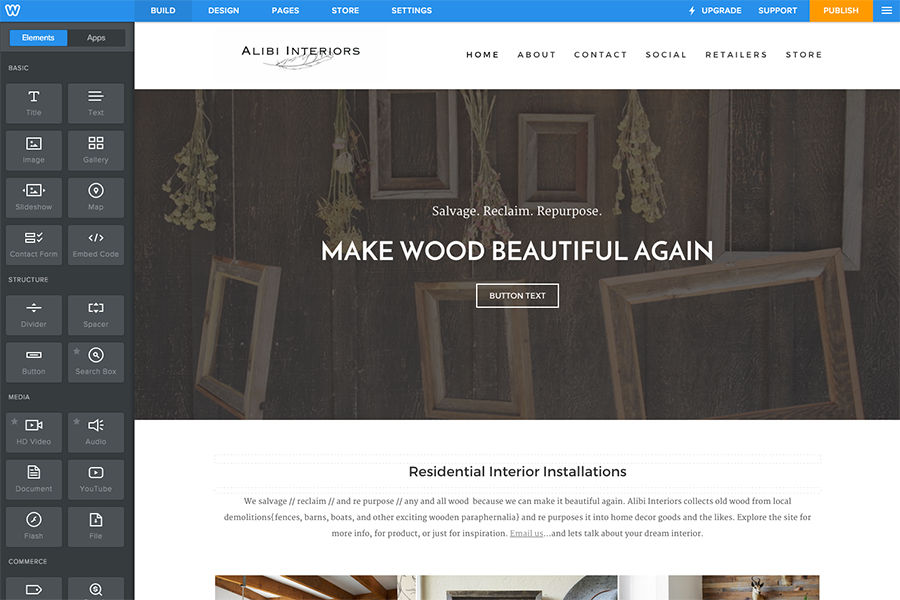
Image 1 / 1
David Rusenko, Chris Fanini, and Dan Veltri founded Weebly. YC identifies their roles as CEO, CTO, and chief product officer. Their product removed several separate tasks: choosing hosting, learning publishing tools, and maintaining a site. A customer could work in a browser and publish from the same environment.[1]
Rusenko’s 2016 Startup School Radio account adds an operating lesson missing from adoption figures. He described the company becoming cash-flow positive and the change in mindset that followed. With less immediate pressure to survive, he began thinking over a longer horizon. This is a founder’s account of cash flow, not an audited annual profit disclosure.[2]
He also described protecting Saturdays from work from the early team’s beginning. He assessed performance through results rather than hours at a desk. That account suggests that the founders treated sustained output as an organizational choice, rather than assuming extreme working hours were necessary. It does not establish a measured productivity advantage.[2]
Weebly’s central workflow was a hosted visual editor. Customers selected a theme, arranged content, and published a site without managing the underlying hosting. Free access supported entry; paid features served customers whose websites became business tools.[1][3]
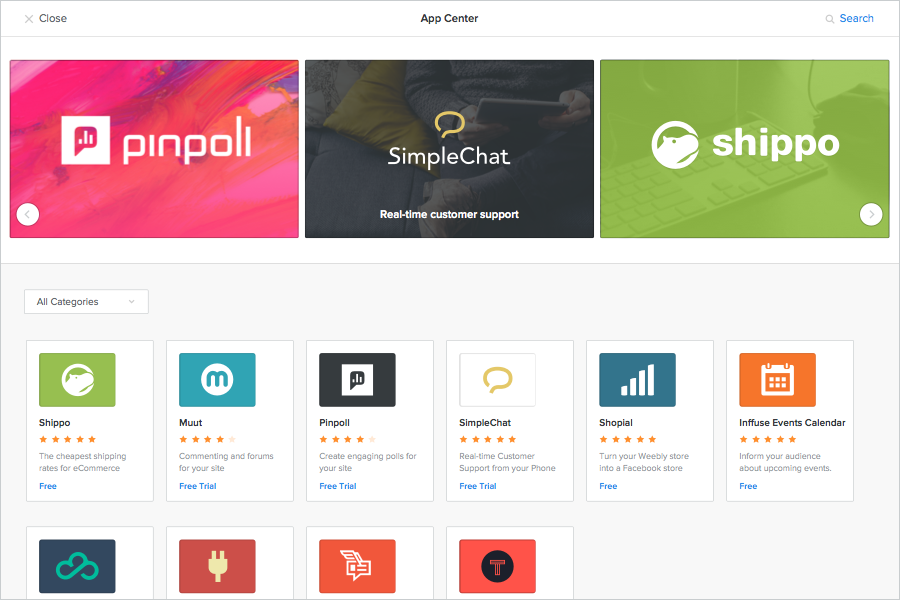
Carbon expanded the platform with an App Center, redesigned editor, business dashboard, mobile site creation, and commerce tools. Named launch partners included Shippo, Switch, Events Calendar, and Poll Creator. An Elements API and REST APIs allowed developers to extend the editor and connect site functions. These features moved Weebly beyond a collection of templates.[5]
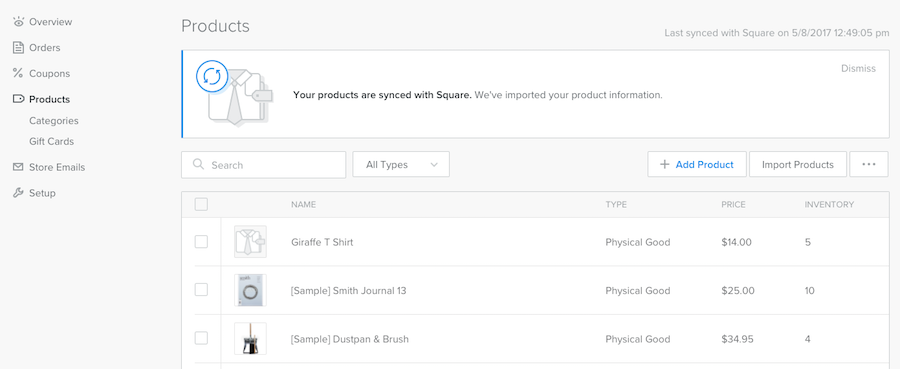
The 2017 Square integration imported a seller’s product catalog and synchronized inventory between the two systems. Weebly promoted the workflow through Katie’s Coldpress, a customer example, and a giveaway of 100 contactless chip readers. The offer targeted sellers in the United States, United Kingdom, and Canada and ran through August 30. This combined product utility with hardware-assisted distribution; the announcement provides no measured conversion result.[7]
Weebly served individuals, organizations, and small businesses seeking a straightforward online presence. Its undated YC profile says more than 20 million people had started a site and published sites received over 100 million monthly unique visitors. Those historical reach figures are not current active-account or paying-customer counts.[1]
The buyer supplied a more useful commercial measure at announcement: over 625,000 paid subscribers, nearly 40% outside the United States. International subscriptions were part of Square’s stated expansion rationale. The release does not disclose their revenue, retention, or payment volume.[3]
Visual publishing and business operations now overlap across established products. Wix offers service listings, booking, payments, and staff management. Squarespace’s Acuity supports appointments and can be embedded in a Squarespace website. Square Websites connects sites with its seller tools. These documented capabilities support a crowded-market assessment; they do not prove that competitor improvements caused Weebly’s later country withdrawal.[14][15][10]
For the proposed Keel rebuild, listings software also matters. Yext describes live-listing verification, approvals, and audit trails. Uberall documents synchronization across supported directories and owned pages; Birdeye offers listings management. A newcomer must test a narrower advantage instead of assuming businesses have only spreadsheets and manual edits.[16][17][19]
Weebly combined free website hosting with paid design, hosting, store, and marketing features. Historical adoption demonstrates distribution, while the 2018 paid-subscriber count demonstrates monetization. Neither supplies average revenue, acquisition cost, renewal behavior, or annual profitability.[3]
Axios reported over $35 million raised from investors including Sequoia, Tencent, Baseline, Ron Conway, and YC.[9]
The $365 million announcement included estimated net cash and restricted stock units for founders and employees vesting over four years after closing. In its filing for the quarter ended September 30, 2018, Square recorded $132.4 million cash and Class A shares valued at $140.1 million, totaling $272.5 million purchase consideration. It separately excluded $2.6 million of option settlement as post-combination compensation. The purchase-price allocation was still preliminary. The announced package and accounting purchase consideration should not be treated as interchangeable.[3][11]
Square said the acquisition added a recurring revenue stream and extended its seller offering. Its completion announcement raised company-wide revenue guidance, but that forecast is not Weebly’s standalone reported revenue. The quarterly filing did not present acquisition pro forma results because the effect on Square’s reported revenue and net loss was not material for the periods shown.[6][11]
The strongest explanation for the exit is operational complementarity. Catalog synchronization existed before ownership changed. Square could add an online creation tool to its merchant relationship, while Weebly could reach sellers needing payments and inventory coordination. Square explicitly described that combined workflow in its announcement. This establishes the buyer’s strategy, not proof of realized cross-selling economics.[7][3]
Current Weebly support identifies Square Websites as built with Weebly technology. It explains that the newer editor uses sections rather than the same drag-and-drop theme workflow. It also lists concrete differences: Stories lacks blog comments, and Weebly App Center extensions are incompatible with the Square editor. The Square App Marketplace supplies a different integration catalog. Moving between the products therefore needs a feature audit, not an assumption of one-for-one continuity.[10]
Square’s current US plans include a free tier with payment-processing fees. That offering makes a generic low-cost storefront an existing alternative, rather than an unoccupied rebuild opportunity.[13]
The withdrawal notice attributes changes in 67 named countries to regulation and simpler global operations. Examples include Singapore, Taiwan, Malaysia, and the United Arab Emirates. It gives several dates: new-page publishing stops June 29, site unpublishing is scheduled September 27, and account login ends December 26. Its introduction also uses September 20 as a broad wind-down date; the specific site and account deadlines are clearer operational guidance.[4]
As of October 2, the unpublishing deadline is past. The published notice verifies the schedule and affected-country list, not whether every scheduled action occurred. A separate support FAQ says there are no plans to discontinue the builder and encourages new sites on Square Online. Read that general guidance alongside the specific country notice.[12] Customers in affected countries should check their own account and preserve content, data, and domain access before the remaining deadline.[4]
Weebly’s export instructions and Square editor differences expose a practical product lesson: successful ownership transitions can still leave customers with migration work. Keel’s proposed response is a portable approved business record and a managed site, with honest evidence of what each external destination actually displays. Demand and willingness to pay remain pilot questions.