
WorkRamp
Summer 2016AcquiredThe All-in-One Learning Platform
Pressure-test this opportunity
Explore the risks and possibilities with a prompt for ChatGPT, Claude, or your agent.
The All-in-One Learning Platform
Explore the risks and possibilities with a prompt for ChatGPT, Claude, or your agent.
WorkRamp made workplace training easier to create and deliver. Founded in 2015 by former Box colleagues Ted Blosser and Arsh Mand, it joined YC's Summer 2016 batch and grew from employee onboarding into customer and partner education. In March 2022, the company announced a $40 million Series C, more than $67 million in total financing, and a customer base exceeding 300 organizations.[1][2][9]
Learning Pool acquired WorkRamp on October 15, 2025. The product continues as Learn:Up under Confirm, alongside separately sold Academy and Practice offerings. The trajectory is a shift from an independent learning company into a broader workforce platform, with continued product development and undisclosed acquisition economics.[4][6][10]
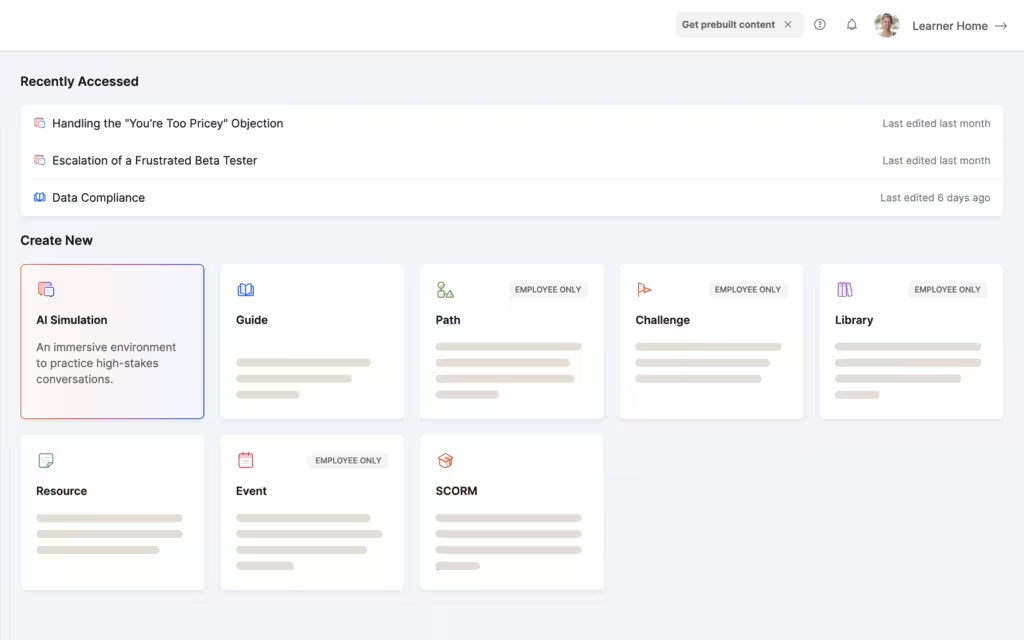
Image 1 / 1
Former Box colleagues Blosser and Mand tested buying intent together. Blosser recalled months of customer meetings before rebuilding his prototype and closing an early $50,000 annual contract.[3]
The employee product supported onboarding, sales enablement, compliance and ongoing development. The customer product let a company build a branded academy, assign personalized learning journeys, sell training, and connect learner activity with Salesforce dashboards. Its May 2020 announcement named 8x8, Branch and Bizzabo as users of customer education. These were company-provided examples rather than disclosed contract values.[12]
That expansion reused a familiar content and administration problem for a different audience. The buyer could train employees and teach customers how to use the product without maintaining unrelated course systems. WorkRamp Content then supplied prebuilt resources, while the Learning Cloud positioned both audiences on shared learning infrastructure.[14]
The November 2023 launch record gives concrete names to portfolio breadth. CMS organized and shared files or links through tagged libraries and search. Communities supported customer discussions, feedback and product announcements. The contemporary recap describes these as forthcoming products; it should not be read as proof that every announced capability was already generally available.[11]
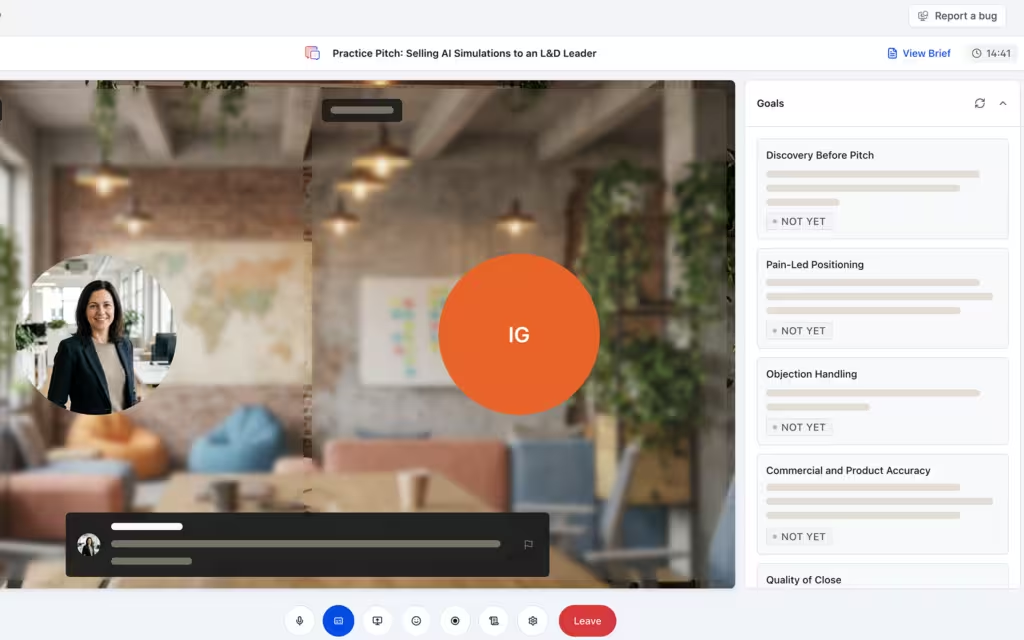
Today Learn:Up markets course generation from uploads, translation, configurable reporting, personalized content formats and AI simulations. Academy continues the external-learning job. Practice provides conversational rehearsal and coaching. The current page explicitly says the additional products are sold separately, so acquisition has not made every capability available only as a single bundled purchase.[6][10]
WorkRamp's early customer profile included growing technology organizations. The 2022 announcement names Box, Reddit, Handshake, Branch, Hopin, GRIN and Vanta. Its examples describe onboarding and sales training, while Branch used the platform internally and through Branch University for customers. The same content engine could therefore support both workforce and product adoption.[2]
Distribution included a practitioner ecosystem. The Enablement Squad acquisition brought a free community where professionals exchanged questions and practices. WorkRamp LEARN provided an event series for People, Revenue and Customer Success leaders and a venue for product launches. These channels could deepen access to the buyer community; public announcements do not establish their conversion rates or acquisition costs.[13][14]
Salesforce was both a financing and integration relationship. The Series C announcement described a planned connection allowing administrators to pull WorkRamp content into Trailhead's learning experience platform. This was an announced capability, not evidence here of deployment or attributable revenue.[2]
Current alternatives include broad learning suites, specialist academies and tools already embedded in work. Docebo markets AI learning capabilities; Cornerstone combines learning with skills and workforce products. Confirm's own successor markets learning-to-outcome reporting. Microsoft Copilot Analytics also supports business-outcome uploads and customized analysis, subject to its licensing, analyst access and data prerequisites. A rebuild must establish a particular unmet workflow rather than assume incumbent tools cannot assess outcomes.[7][8][6][15][16]
Blosser described employee-seat subscriptions and customer-education platform fees. The latter buffered headcount-driven contraction; segment margins remain undisclosed.[3]
The March 2022 announcement says revenue tripled since the start of 2021. It does not disclose revenue dollars. Its customer examples include a reported one-third reduction in Reddit sales-training time and a 15% larger average deal size at Handshake. These are company-promoted customer results, with no controlled attribution or accounting statements supplied in the release.[2]
Financing totals do not reveal acquisition consideration or common-stock returns. Deal terms and audited margins remain unavailable.[4]
Customer education extended learning beyond new hires to continuing product adoption, retention and customer success.[12]
Blosser regretted prioritizing two additional products over AI. WorkRamp nevertheless announced an AI strategy in March 2023.[3][14]

Blosser said an IPO looked unlikely, making strategic alternatives more important.[3] Learning Pool sought WorkRamp's U.S. mid-market presence; WorkRamp would remain a core product during integration planning.[4][9]
The current sequel makes that rationale visible in product form. Learn:Up combines onboarding, simulations, content and reporting, while the larger Confirm group also offers engagement, performance and authoring products. Product availability demonstrates continuity; it does not disclose realized integration savings, profitability or shareholder returns. Those questions remain open because the deal terms and operating accounts are private.[10][6]