Overview
23andMe made genetic information a consumer product, then tried to turn a consenting customer community into a drug-discovery business. The research asset retained value even as the company that assembled it ran out of financial room. Its outcome reflects the cost of turning scientific value into a funded operating business.
The former public company entered bankruptcy on March 23, 2025. TTAM Research Institute completed the purchase of its consumer genetics and research businesses on July 14. Those services continue under the nonprofit now known as 23andMe Research Institute. The debtor, later renamed Chrome Holding Co., is a separate legal entity. Bankruptcy did not close the consumer service.[14][15][27]
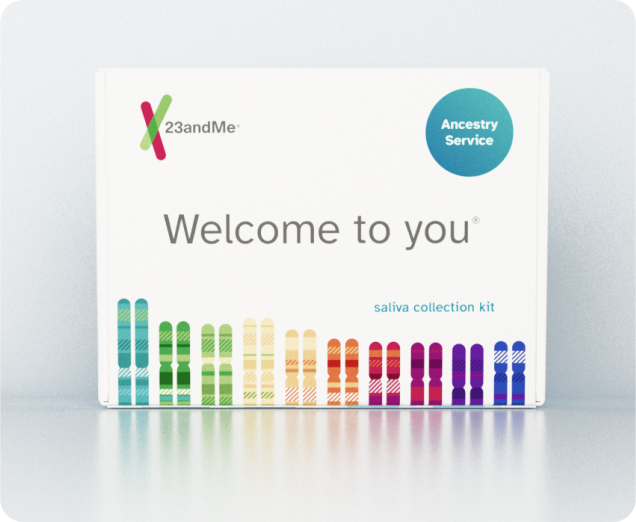
Image 1 / 1
Consumer access created a research community
Anne Wojcicki, Linda Avey, and Paul Cusenza founded 23andMe in 2006. In a 2015 interview, Wojcicki described combining a consumer-testing idea with her interest in assembling a large dataset for research. Drug discovery was therefore part of the ambition well before the later financial crisis.[1]
The basic product combined a mailed saliva kit, laboratory analysis, and online reports. The 2021 prospectus described a custom chip that tested selected genetic variants, rather than reading the entire genome. Reporting software converted those measurements into ancestry, trait, carrier-status, and health-risk information. A result covers the variants and methods included in that test. It cannot exclude every possible genetic cause of disease.[2][21]
Distribution joined online retail with a familiar gift purchase. The prospectus named the company's website and Amazon, including Prime Day and holiday guides. It also described optional relative matching. Each participant could receive personal value, while people who separately consented to research could contribute genetic and survey information to a larger cohort.[2][12]
The resulting research audience was a substantial accomplishment. The bankruptcy court described approximately 13 million customers and research participation by more than 80% in its sale opinion. Those are dated court figures, not a count of current paying subscribers.[26]
Medical claims required a different discipline
In 2013, the FDA required the company to stop marketing health-related tests in the US pending regulatory review. In 2017, the agency authorized genetic health-risk tests for ten conditions. The FDA's announcement stressed that genetic risk does not determine whether someone develops a disease.[3][4]
The product could reach consumers directly, but the interpretation still carried medical consequences. Current test information says reports do not diagnose disease or determine medical action, and directs customers to healthcare professionals. The transferable lesson is to design the claim, evidence, and user explanation together. Calling a result educational does not settle the obligations attached to what it tells people.[21]
Several businesses shared one data asset
Research partnerships gave the cohort another customer. In January 2015, Genentech and 23andMe announced a program to sequence roughly 3,000 members of its Parkinson's community. That announcement required explicit permission before sharing de-identified individual data. In March, 23andMe announced its own therapeutics group under former Genentech research executive Richard Scheller.[5][6]
GSK made a $300 million equity investment alongside the 2018 collaboration. Equity financing was distinct from research revenue. The discovery term ended in July 2023; a subsequent agreement provided a nonexclusive new-data license and a $20 million data-access fee. The relationship changed rather than disappearing.[28][7]
Consumer subscriptions added another revenue stream. 23andMe+ launched in October 2020 with additional reports and features. Recurring billing sat alongside businesses with different costs and development cycles.[2]
Lemonaid Health added online medical care and pharmacy services when its acquisition closed on November 1, 2021. This extended the company from delivering genetic information toward providing care, with another service operation to manage.[29]
The May 2024 results release reported fiscal-year revenue of about US$220 million, down from US$299 million. It attributed the decrease to lower kit volumes and telehealth orders, plus the end of GSK's exclusive discovery term. Membership growth partly offset those declines. It reported an adjusted EBITDA loss of US$176 million and US$216 million of cash at March 31, 2024. EBITDA means earnings before interest, tax, depreciation, and amortization; the adjusted measure makes further exclusions. It is not cash flow.[8]
This evidence supports a financing mismatch more directly than a claim that consumers never valued genetic testing. A large cohort and promising discoveries did not guarantee enough near-term revenue to fund the company's chosen scope. The public figures do not isolate how much loss each strategic bet caused.
Retrenchment did not erase research demand
Governance also fractured. In September 2024, the independent directors resigned, citing differences over strategy, concentrated founder voting power, and the absence of an actionable take-private proposal. Their letter establishes a dispute over control and direction; it does not prove that another strategy would have avoided bankruptcy.[9]
In November 2024, the company announced a workforce reduction of roughly 40% and stopped further development of its therapeutics programs. It sought alternatives for clinical and preclinical assets and planned to wind down trials. It was retreating from funding its own drug programs while preserving consumer and research operations.[10]
Research sales continued. A November collaboration gave Mirador Therapeutics access to targeted, aggregated genetic and phenotype data for immunology and inflammation research. Discover23 launched in January 2025 with Lifebit's controlled research environment for authorized collaborators to analyze summarized findings. These announcements show attempts to sell research access with less direct drug-development exposure. They do not establish the resulting revenue or profitability.[11][12]
Security became a product and transaction problem
The 2023 breach added a different failure. The UK's ICO found that attackers reused credentials stolen elsewhere, while 23andMe lacked appropriate authentication, download protections, and threat detection. The regulator imposed a £2.31 million fine, involving information belonging to 155,592 UK residents. It also found missed opportunities to investigate during the attack. By the end of 2024, improvements had ended the identified security infringements.[13]
For a genetics company, account security protects information about bodies, relatives, and family history. The loss is not limited to a password that someone can replace. The lesson follows from the regulator's findings: protect sensitive downloads and unusual access patterns as carefully as the initial login.
Privacy then shaped the asset sale. More than thirty states initially objected, according to the bankruptcy court. Its opinion permitted the transaction after considering privacy policies, bankruptcy law, and objections. The record does not justify a general claim that genetic data can always be sold without fresh consent.[26]
On October 19, 2026, California announced a US$6 million settlement with Chrome, pending court approval in that announcement. It addressed data-security allegations and the state's appeal over the sale. California also reiterated separate consumer choices to request data deletion, sample destruction, or withdrawal from research. This was a settlement announcement, not a final adjudication of every allegation.[16]
The service continues under a new owner
The 2025 SEC disclosure recorded US$302.5 million received at closing, within an agreed US$305 million transaction that included a separate US$2.5 million telehealth arrangement. Consumer genetics and research left the debtor's operations. This was an asset transaction; its price is not an equity valuation or a payout to former shareholders.[14]
The successor remains active. Its October 2026 research announcement described more than eleven million consented research participants and expanded research capabilities. Its US shop still sells ancestry and health products. On November 5, the Premium Ancestry + Health page displayed a US$89 promotional kit price against US$199, followed by US$99 annually after a trial month. [17][18]
Competition also remains active. The Basic Ancestry page listed US$99. AncestryDNA displayed a US$34 promotion against US$99, ending November 19, with some features requiring a subscription. These are consumer offers, not directly comparable clinical testing services.[19][20]
A new consumer genetics business would face laboratories, scientific validation, permission management, and continuing competitors. A smaller candidate is helping a biobank prove what happened after a participant withdrew permission. OpenSpecimen already documents specimen disposal and participant deletion; REDCap offers configurable research records and audit trails. Any new product must prove a gap between those systems before claiming an opportunity.[22][24]
Timeline
- 2006: Wojcicki, Avey, and Cusenza establish the company.[1]
- 2013: FDA action interrupts US health-related marketing.[3]
- 2015: Genentech partnership and internal therapeutics group are announced.[5][6]
- 2017: FDA authorizes ten genetic health-risk tests.[4]
- 2018: GSK invests and forms the discovery collaboration.[2]
- 2020: 23andMe+ subscription launches.[2]
- 2024: Directors resign; therapeutics development ends.[9][10]
- 2025: Bankruptcy filing precedes TTAM's operating-asset purchase.[14][15]
- 2026: The nonprofit continues sales and research; California announces a settlement with Chrome.[16][17][18]
Sources
- Founder interview
- 2021 company prospectus
- FDA history
- FDA 2017 authorization announcement
- Genentech collaboration
- Therapeutics group announcement
- GSK collaboration amendment
- May 2024 financial results
- Independent directors resignation letter
- November 2024 restructuring
- Mirador collaboration
- Discover23 launch
- ICO breach findings
- 2025 SEC sale and bankruptcy disclosure
- TTAM completed asset acquisition
- October 2026 California settlement announcement
- October 2026 Research Institute update
- Current Premium Ancestry + Health shop
- Current Basic Ancestry shop
- AncestryDNA current offer
- Genetic health report limits
- OpenSpecimen withdrawal handling
- OpenSpecimen pricing
- REDCap software and availability
- HHS advisory committee biospecimen consent guidance
- Bankruptcy court sale opinion
- Debtor brief identifying Chrome Holding name
- GSK counsel confirms investment and collaboration
- Lemonaid acquisition completion filing