Overview
Celsius Network let customers transfer cryptocurrency into an app, earn weekly rewards and borrow against crypto collateral. Founded in 2017, it combined a familiar savings-account experience with lending and investment activities customers could not directly inspect. In October 2021, the company reported more than one million registered customers and over $25 billion in assets. Those figures measured scale, not reserves available for withdrawal. [1]
Celsius froze withdrawals in June 2022 and entered bankruptcy the following month. Its original apps closed in February 2024. Distributions continued separately, while specified mining assets became Ionic Digital. The central failure was the gap between a reassuring consumer promise and the risks management took with customer assets. Mashinsky’s later fraud conviction makes that explanation stronger than a market-downturn account alone. [2], [3]
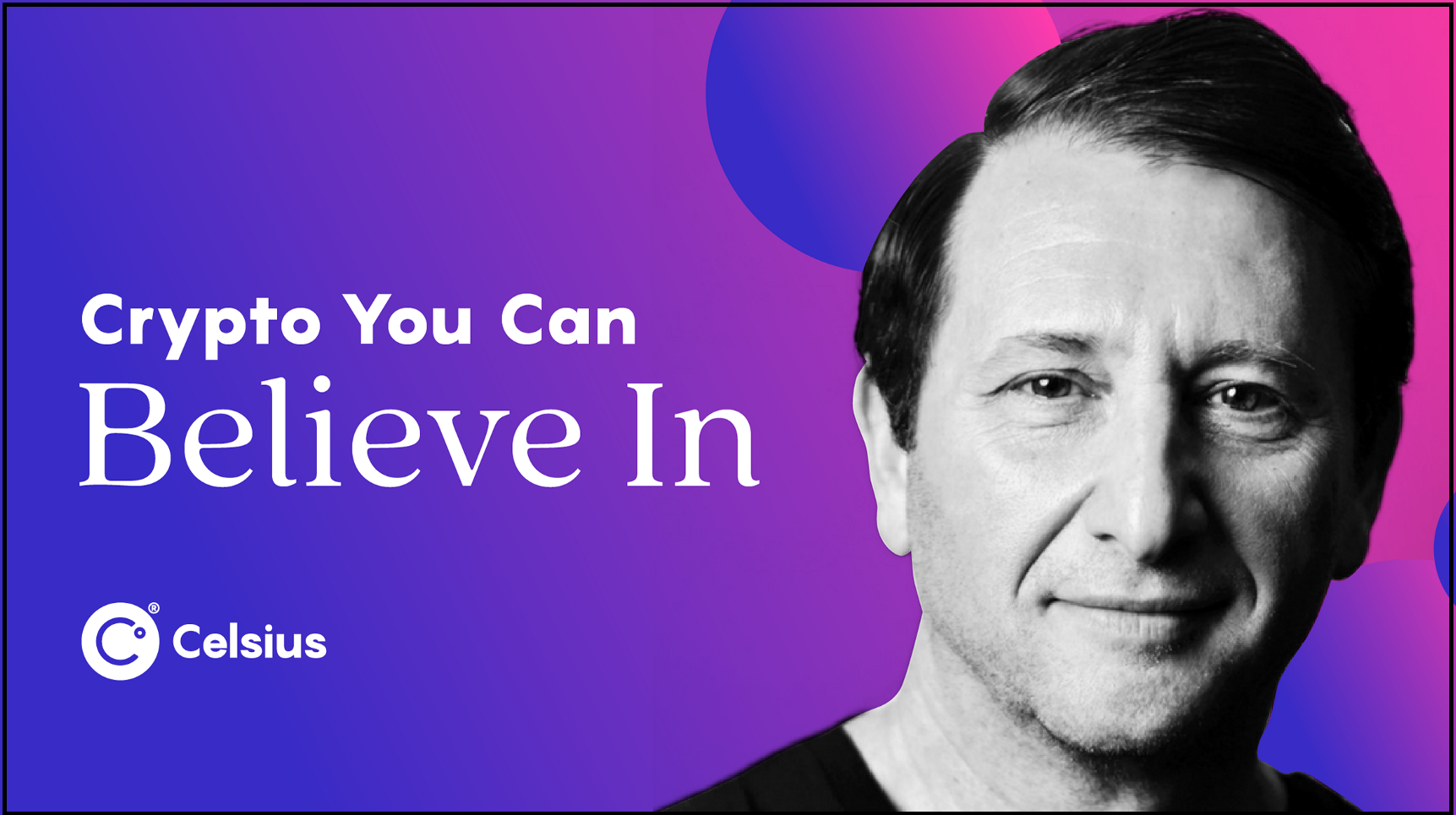
Image 1 / 1
Founding Story
Alex Mashinsky, Shlomi Daniel Leon and Hanoch “Nuke” Goldstein founded Celsius. Mashinsky became its public face. In an interview presented as a 2018 conversation, he described his earlier telecom venture Arbinet and framed Celsius as a member-focused alternative to banks. The sources used here do not establish how the three founders first met. [4], [5]
Mashinsky told CoinCentral: “We represent the best interests of all of our members.” Explaining the borrowing product, he said: “It’s an asset-backed loan”. The first quotation stated an alignment promise; the second described a particular loan structure. Neither established that every deployment of customer funds was secured. [5]
That distinction became consequential. Customers saw a simple transfer-and-reward experience, while Celsius decided how to earn the return. Its own CEL token added an incentive to hold another asset tied to the platform. The company issued CEL and launched its mobile app in 2018. Its founding idea therefore combined an accessible consumer interface, an investment intermediary and a proprietary token from an early stage. [4]
Timeline
- 2017: Celsius was founded. [4]
- 2018: Celsius launched its mobile app and CEL token. Mashinsky described an ICO raising over $50 million in the interview presented as a 2018 conversation. [4], [5]
- October 2021: Celsius announced a $400 million investment led by WestCap and CDPQ. An April 2022 investor release described the expanded Series B as $750 million; these are stages of one round. [1], [6]
- January 2022: CelsiusX announced a Chainlink-backed wrapped-token initiative. [7]
- June 12–July 13, 2022: Withdrawals stopped, followed by Chapter 11. [2]
- January–February 2024: Celsius emerged from Chapter 11 on January 31; the original mobile and web apps closed on February 29. [3]
- December 2024–May 2025: Mashinsky pleaded guilty, then received a 12-year sentence for commodities and securities fraud. [2]
- 2026: Celsius announced a fourth creditor distribution. The FTC announced founder settlements totaling $16.5 million. Ionic Digital separately completed a Nasdaq listing. [8], [9], [10]
What They Built
Celsius offered several economically different products through one interface. Earn promised rewards on transferred crypto. Borrow provided loans secured by customers’ crypto. Custody stored assets without yield. Swaps, purchases and transfers added everyday movement between assets and users. A shared app did not make these services equivalent in ownership, liquidity or risk. [4]
The consumer attraction was understandable. A holder could seek a recurring return without selecting each underlying borrower or investment. A borrower could obtain fiat or stablecoins against cryptocurrency. Tokentus’s April 2022 announcement also described Swap and CelPay, a transfer service between Celsius users. These functions made the platform broader than a single interest account. [6]
CelsiusX extended that scope into cross-chain infrastructure. Its announced Chainlink Proof of Reserve integration concerned tokens backed by corresponding assets on another blockchain, initially ADA, DOGE and ETH linked to Polygon. The technical interview described verification of wrapped-token backing. That scope did not amount to an audit of Celsius’s complete lending book, customer liabilities or withdrawal capacity. [7]
Distribution relied heavily on the founder. The FTC complaint documents digital advertising, personal social accounts and 179 “Ask Mashinsky Anything” episodes recorded by June 2022. This gave customers repeated access to management’s explanations. It also concentrated trust in statements from the person whose investment decisions they could not independently see. [4]
Market Position
Target Customers
Celsius targeted crypto holders seeking rewards and borrowers seeking liquidity without immediately disposing of their holdings. Its bank comparison offered a familiar way to understand an unfamiliar service. The branded reassurance mattered: the retained website artwork places Mashinsky beside the promise “Crypto You Can Believe In.” [11]
Market Size
Celsius’s October 2021 release reported more than $25 billion in platform assets and over one million registered customers. The same release reported more than $850 million in cumulative Earn interest payments. These were company-reported stock, registration and cumulative-payment measures. They were neither annual revenue nor the size of a profitable addressable market. [1]
Competition
The service competed with conventional savings products on apparent return and with other crypto lenders on yield and convenience. BlockFi offered a comparable retail crypto interest account. In February 2022, the SEC required BlockFi to cease unregistered offers and sales under a settlement. Registration and disclosure were already material competitive constraints before Celsius froze withdrawals. [12]
The structural trade-off was delegation. Keeping crypto under personal control leaves its owner responsible for security and gives no automatic lending return. Transferring it to a yield platform adds decisions about counterparties and deployment. Celsius marketed that delegation as unusually safe; its later legal record shows why interface simplicity could not establish the underlying protection. [2]
Business Model
Celsius presented a model in which management deployed customer assets to earn returns and shared much of the proceeds. The SEC complaint reproduces marketing that promised to return up to 80% of revenue as weekly rewards. That was an advertised allocation, not an audited margin or assurance of sustainable yield. A high reward rate still required profitable deployments, sufficient liquidity and accurate disclosure. [13]
CEL complicated the incentives. According to DOJ’s sentencing account, Celsius spent hundreds of millions buying CEL to support its price, sometimes using customer deposits without disclosure. Mashinsky made approximately $48 million from his own CEL sales. A token’s market price could therefore appear to validate the platform while spending customer resources and benefiting an insider. That mechanism cannot be evaluated from reward payments alone. [2]
Traction
Institutional backing reinforced the consumer story. WestCap and CDPQ led the October 2021 financing; Celsius proposed using proceeds for new products, global expansion and nearly doubling staff from 486. An April 2022 Tokentus release described the Series B’s expansion to $750 million. The funding and hiring plans establish investor appetite and ambition. They do not establish that asset deployment matched the safety promise. [1], [6]
Outcome and evolution
Falling crypto markets and withdrawal pressure help explain the timing of the June 2022 crisis. They do not explain away the underlying conduct. The court-appointed examiner’s firm reported that her investigation found a material difference between the advertised business and actual operations. Mashinsky subsequently pleaded guilty to fraud. This distinguishes the case from a sound, transparently described business caught only by an external shock. [11], [14], [2]
The FTC’s separate 2023 case alleged false statements about insurance, reserves, unsecured lending and withdrawals. Its company settlement included a suspended $4.7 billion judgment, preserving the bankruptcy recovery process rather than establishing that amount had been paid. In July 2026, the FTC announced settlements requiring $10 million from Mashinsky, $4.1 million from Leon and $2.4 million from Goldstein. The release described Goldstein’s order as proposed; the FTC’s case record lists its court entry on July 20, 2026.[17] The civil settlements and Mashinsky’s criminal conviction have different scopes; his conviction is not attributed to the other founders. [15], [9]
The customer aftermath continued after the apps closed. A January 22, 2026 notice allocated $344.4 million for a forthcoming fourth distribution, projected to begin in February. That announcement is not evidence that every eligible creditor received payment or recovered their original holdings. Claim classes, identity checks and distribution partners remained relevant. [8]
Ionic Digital acquired specified Celsius Mining assets on January 31, 2024. It subsequently shifted toward AI and computing infrastructure and completed its Nasdaq direct listing on July 28, 2026. This is an operating-asset sequel with its own shareholders and strategy. It does not mean the original Earn platform reopened or establish any individual creditor’s final recovery. Lifecycle review dated October 23, 2026. [16], [10]
Key Lessons
- A familiar interface can conceal a different financial contract. Celsius combined savings language with management-directed crypto deployment. Product design must make control, ownership and withdrawal conditions understandable before a customer transfers assets.
- Repeated access to a founder does not create independent verification. The AMA series supported distribution and reassurance. Evidence about assets, obligations and risk must remain independently reviewable when that reassurance conflicts with reality.
- Verify the scope of every proof. Wrapped-token backing addressed one CelsiusX mechanism. It could not establish the whole platform’s liquidity, liabilities or honesty.
- Token incentives can corrupt a useful customer promise. Supporting CEL’s price used resources and created opportunities for insider gains. Reward rates and token prices were poor substitutes for examining how returns were produced.
Sources
- October 2021 company announcement
- DOJ sentencing account
- Official wind-down support
- FTC founding and product background
- Mashinsky interview
- Tokentus investor announcement
- Contemporary technical interview
- Distribution notice
- FTC settlement announcement
- Ionic listing announcement
- Historical website artwork and context
- SEC BlockFi settlement
- SEC complaint, reproduced marketing
- Examiner’s announcement
- FTC company settlement
- Ionic asset history
- FTC case record: Goldstein order entered July 20, 2026