Overview
Craft Coffee was a Brooklyn-based multiroaster coffee subscription founded by Michael Horn in 2010 and operated until its acquisition in 2019. The company shipped curated tasting boxes of freshly roasted beans from independent roasters, matched to subscribers through a recommendation engine it called the "Coffee DNA Project." It was the only coffee company Y Combinator had backed in its nine-year history when it joined the Summer 2014 batch.[10]
The thesis was that coffee is intimidating like wine and that an algorithm could remove the guesswork. The problem was structural: Craft Coffee owned neither the coffee nor the customer relationship. It resold beans from roasters who could sell direct, at a markup that left no margin to defend, and its "real tech" was a matching questionnaire that any roaster or retailer could replicate. The recommendation engine was a feature, not a company.
Craft Coffee was acquired in January 2019 and folded into PT's Coffee Roasting Co., a Topeka, Kansas roaster founded in 1993.[6][7] The brand survives as a PT's label. Horn moved on to product leadership roles at Care.com, Co-Created, and Meta.[25]
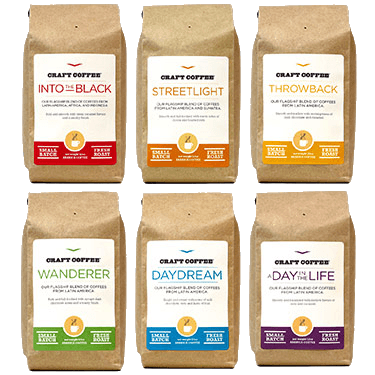
Image 1 / 2
Founding Story
Michael Horn started his career practicing corporate finance law on Wall Street before quitting to start companies.[24] His first venture was WhatIsFresh.com, which he built by locking himself in his office for six weeks to teach himself Ruby on Rails — a lawyer who became a developer by necessity rather than by training.[24] He then raised money to build CraftCoffee.com, which he relaunched in 2011 as a subscription service for artisan coffee tasting boxes.[24] The public record does not document what WhatIsFresh.com was or why Horn abandoned it for coffee; the 2010-2013 period is essentially undocumented except for Horn's own retrospective framing.
The insight was that coffee shopping is a guidance problem. In a 2011 We Are NY Tech interview, Horn described the model plainly: "We do that by tasting lots of the best coffees and creating curated tasting boxes for our subscribers."[24] Three years later he sharpened the framing for Business Insider: "Coffee is so personal and subjective, but it's a lot like wine in that people are intimidated... They might not understand the label, or the jargon or flavors might sound too fancy. People want a lot of guidance when they're picking their coffee, and they want a convenient experience."[11]
By 2014 Horn was pitching Craft Coffee as a technology company, not a coffee company. "We're taking an old industry, using tech and algorithms to understand taste — but taste is so subjective," he told Business Insider. "We went to Y Combinator and said, 'We have a real tech problem with a real tech solution,' and YC agreed."[12] That pitch carried the company into YC's Summer 2014 class, where it spent ten weeks building in a San Jose rental house.[10]
The company never pivoted in a meaningful way. It launched as a curated tasting-box subscription in 2011 and was still a curated tasting-box subscription when it was acquired in 2019. The only significant product evolution was the Coffee DNA Project, which formalized the matching process into a questionnaire and algorithm. The vision stayed fixed: help people discover coffee they love at prices they already pay.
Timeline
- April 2010 — Michael Horn founds Craft Coffee.[4]
- 2011 — Craft Coffee launches as a subscription service for artisan coffee tasting boxes after Horn teaches himself Rails and raises money to build the site.[24]
- April 13, 2011 — Horn gives a We Are NY Tech interview describing the curated tasting-box model.[24]
- September 1, 2011 — Seed round of $150K raised, bringing total to date to $270K.[6]
- August 13, 2014 — Daily Coffee News covers the Coffee DNA Project launch, framing Craft Coffee within a maturing coffee-subscription segment.[19]
- August 18, 2014 — Y Combinator's blog publishes the Coffee DNA Project story; the Hacker News thread generates customer discussion and signup-friction feedback.[16]
- August 19, 2014 — Craft Coffee enters Y Combinator's Summer 2014 accelerator class.[6]
- September 10, 2014 — Business Insider profiles the company, quoting Horn on the $4B at-home coffee market.[10]
- October 8, 2014 — Early-stage VC round raised.[6]
- May 15, 2015 — Angel investment raised.[6]
- 2015-2017 — JAB acquires Stumptown and Intelligentsia; Nestlé pays $425M for a majority stake in Blue Bottle — the third-wave boom Craft Coffee was early to.[28]
- January 1, 2019 — Craft Coffee acquired (Merger/Acquisition, completed, "Generating Revenue" stage per PitchBook).[6]
- March 2019 — Horn's role at Craft Coffee ends; he states he "led the company through its acquisition."[4]
- October 1, 2019 — Fast Company projects the specialty coffee market will grow from $35B (2018) to $85B (2025).[28]
- July 27, 2026 — craftcoffee.com's Terms of Service name the operating entity "PT's Craft Coffee LLC," confirming the brand is owned by PT's Coffee Roasting Co. of Topeka, Kansas.[7]
What They Built
Craft Coffee was a subscription that shipped freshly roasted coffee from independent roasters to customers' doors. The pitch was discovery without risk: no commitment, free shipping, and a survey that matched you to coffee tailored to your taste.[9] Subscribers received tasting boxes — curated selections of beans from different roasters — rather than a single recurring bag from one brand.
The core mechanism was the Coffee DNA Project. Craft Coffee analyzed thousands of coffees from independent roasters to identify consistent traits and flavor profiles.[13] Subscribers answered a questionnaire, but the key question was deceptively simple: what coffee do you currently drink? The algorithm then matched them to an independent roaster's coffee with similar taste quality and price point.[13] The user experience was a short survey, a recommendation, and a box in the mail. No barista, no jargon, no guessing.
The pricing logic was explicit and, in retrospect, revealing. Horn explained on Hacker News: "If you're currently paying $5 for a bag of coffee, you don't want a $25 super high-end bag. And vice-versa. But that's just a small part. A lot of the magic is in understanding the characteristics of the beans you like and how that relates to other beans. A lot of real science and real tech went into that side and we'll continue to pour resources into it."[21] The matching was anchored to the customer's existing price point, not to a premium the company could capture.
The commercial structure was a volume-discount model: 28% off every order of four or more 12-ounce bags.[9] That discount implies thin per-order economics. Craft Coffee was buying roasted coffee from independent roasters, marking it up, absorbing free shipping, and then discounting 28% at volume. There was no proprietary roast, no exclusive bean, no owned supply chain.
The technology was a recommendation engine built on a flavor-profile database. It was real work — Horn claimed "a lot of real science and real tech" went into it — but it was a matching layer on top of someone else's product.[21] The product evolved from a manually curated tasting box in 2011 to an algorithmically matched subscription by 2014, but the underlying model never changed: resell independent roasters' coffee, add a recommendation, charge a markup.
What made it different from alternatives was the multiroaster model combined with taste matching. A single-roaster subscription locks you into one brand's style. Craft Coffee offered variety plus guidance. But that differentiation depended entirely on roaster relationships the company did not control and could not exclusively own.
Market Position
Target Customers
Craft Coffee's customers were at-home coffee drinkers who cared about quality but found specialty coffee intimidating. Horn sized the market as "more than 130 million Americans spend $4 billion a year on coffee they make at home, hardly any of which is sold online."[15] The company also sold into offices, signing Uber's New York offices, Shout, and Lua, and counted Reddit cofounder Alexis Ohanian as an "avid supporter."[14] The office channel was a natural fit — a recurring, volume order with less price sensitivity than a consumer buying one bag at a time.
Market Size
The at-home coffee market was large and the specialty segment was growing fast. Fast Company later projected the specialty coffee market would grow from $35 billion in 2018 to $85 billion in 2025, citing Nestlé's $425 million majority-stake purchase of Blue Bottle in 2017 and JAB's 2015 acquisitions of Stumptown and Intelligentsia.[28] Craft Coffee was early to a boom that would produce nine-figure exits. The market was real. The question was whether a reseller with no proprietary supply could capture any of it.
Competition
The competitive landscape had three layers, and Craft Coffee was structurally squeezed between the top two.
The first layer was the roasters themselves. Craft Coffee's suppliers were also its competitors. Every independent roaster it resold could sell direct to consumers, capture the full margin, and own the customer relationship. The company's model depended on roasters who had every incentive to bypass it. PitchBook lists MistoBox, Conilon, Philz Coffee, Seattle Coffee Gear, and Pact Coffee as competitors.[27] Pact Coffee raised a €2 million Series A led by MMC Ventures, and Blue Bottle acquired Tonx — both signs that the subscription segment was maturing and consolidating.[19]
The second layer was the vertically integrated DTC brands. Blue Bottle, Stumptown, and Intelligentsia built their own subscription and e-commerce operations. They controlled supply, brand, and customer relationship simultaneously. Craft Coffee controlled none of the three.
The third layer was the broader retail and grocery channel, where most at-home coffee was actually sold. Horn's own framing — "hardly any of which is sold online" — was both the opportunity and the warning.[15] If online coffee was a tiny slice of a $4 billion market, the company was fighting for a sliver of a sliver.
Map Craft Coffee along the two axes that mattered: distribution reach and product depth. On distribution, it had neither the retail shelf presence of grocery brands nor the direct customer relationship of roaster DTC. On product depth, it had a recommendation algorithm but no proprietary roast, no exclusive supply, and no brand equity in the beans themselves. It sat in the middle of both axes — more reach than a single roaster, less depth than a vertically integrated brand. That is the weakest position in a market where the ends of the spectrum are defensible and the middle is not.
Business Model
Craft Coffee made money by buying roasted coffee from independent roasters, marking it up, and selling it as a subscription with free shipping.[9] The volume discount — 28% off orders of four or more bags — suggests the company was willing to sacrifice margin to increase order size, likely because per-order shipping and fulfillment costs made small orders unprofitable.[9] There was no disclosed revenue-share or wholesale arrangement with roasters, and no evidence of exclusive supply agreements.
The company never disclosed revenue publicly. Horn claimed on his personal site that Craft Coffee "generated millions in ARR" and secured investments from Y Combinator, Initialized Capital, 500 Startups, and Roham Gharegozlou.[3] But PitchBook's funding history shows a total of only $440K raised across seed rounds, an accelerator slot, early-stage VC, and an angel.[6] That is a strikingly small capital base for a company claiming millions in ARR. Either the ARR claim is inflated, the funding data is incomplete, or the company was capital-efficient to an unusual degree. The tension is unresolved, and the absence of third-party revenue verification is itself a signal.
Directional inference: if Craft Coffee was generating "millions" in ARR on $440K of total funding, it was either extremely capital-efficient or the ARR figure includes gross merchandise value rather than net revenue. A reseller with free shipping and a 28% volume discount would have thin gross margins — likely in the 20-30% range after coffee cost, shipping, and fulfillment. On $2 million in gross revenue at a 25% gross margin, the company would have roughly $500K in gross profit to cover salaries, marketing, and operations. That is a lifestyle business, not a venture-scale one. The $440K raised is consistent with a company that never found the unit economics to justify a larger round.
Traction
Craft Coffee signed Uber's New York offices, Shout, and Lua as customers, and counted Alexis Ohanian as an "avid supporter."[14] Horn claimed "millions in ARR."[3] The company operated for roughly nine years, from 2010 to 2019, and reached "Acquired" status.[0][2]
Customer sentiment on Hacker News was positive but conditional. One customer of 2+ years wrote: "Been a customer for 2+ years and love the service. It's actually helped me figure out what I like in coffee."[22] Another wrote: "I used Craft Coffee for a few months about a year ago and was overall happy with it... I ultimately ended up canceling because I was hoping for more variety from roasters, but I am noticing they have signed on a lot more roasters to be apart of the program so I may give it another go."[23] A prospective customer abandoned signup entirely because the flow required picking a company: "I can't proceed with the sign up process unless I pick a company... Thus, didn't sign up."[24] Horn acknowledged the friction and noted the coffee list included "all the most popular coffee companies in the country, but also hundreds of independents and adding more weekly."[24]
No customer count, churn rate, or cohort retention data was ever disclosed. The traction that existed was real but unquantified, and the one data point that is quantified — $440K raised — is inconsistent with the ARR claim.
Post-Mortem
Craft Coffee did not fail in the conventional sense. It operated for nine years, reached "Acquired" status, and its founder moved on to product leadership at Meta.[25] But the venture-scale outcome never materialized, and the reason is structural: the company built a feature, not a company, in a market where the feature was replicable and the supply was not owned.
The recommendation engine was a feature, not a moat
The Coffee DNA Project was the company's entire differentiation claim. Horn pitched it as "a real tech problem with a real tech solution."[12] But a taste-matching questionnaire is not a moat. It is a feature that any roaster, retailer, or subscription competitor could build. The algorithm matched customers to beans based on stated preferences and price point — a recommendation system, not a proprietary dataset or network effect.[13] The company claimed "a lot of real science and real tech" went into it, but the output was a suggestion, not a lock-in.[21] A customer who learned what they liked could buy that coffee directly from the roaster. The algorithm taught customers to leave.
The multiroaster model had no proprietary supply and no proprietary demand
Craft Coffee resold coffee from independent roasters. It did not roast, did not own exclusive beans, and did not control the customer relationship in any durable way. The roasters it resold could — and increasingly did — sell direct to consumers, capturing the full margin and the customer relationship. Craft Coffee's value to the roaster was customer acquisition; once acquired, the customer could be served directly. The company was a middleman in a market where the suppliers had every incentive to disintermediate it. PitchBook's competitor list — MistoBox, Conilon, Philz, Seattle Coffee Gear, Pact — shows the model was replicable and crowded.[27]
The unit economics could not support a venture-scale outcome
The pricing structure was a volume discount: 28% off orders of four or more bags, with free shipping.[9] That structure implies thin per-order margins. Craft Coffee was buying roasted coffee at wholesale, marking it up, absorbing shipping, and then discounting 28% at volume. There was no proprietary roast to command a premium and no exclusive supply to protect margin. The company raised only $440K total.[6] If it was generating "millions in ARR," it was doing so on gross margins that could not fund the customer acquisition and retention needed to scale.[3] The absence of any disclosed revenue, CAC, or LTV data is itself a signal: the company either did not track these metrics or chose not to share them.
The market shifted toward vertical integration
The third-wave coffee boom rewarded vertically integrated brands. Nestlé paid $425 million for a majority stake in Blue Bottle in 2017; JAB acquired Stumptown and Intelligentsia in 2015.[28] Those brands controlled their roast, their brand, and their customer relationship. Craft Coffee controlled none of the three. As the specialty coffee market grew from $35 billion toward $85 billion, the value accrued to brands that owned the supply chain and the customer, not to resellers who matched taste profiles.[28] The structural mechanism is clear: in a market where the product is commoditized and the supplier can go direct, the intermediary's only defensible position is exclusive supply or exclusive demand. Craft Coffee had neither.
The counter-narrative: the failure framing is a category error
The strongest counter-argument is that Craft Coffee was never a venture-scale business and should not be judged as one. It raised $440K, operated for nine years, and found a rational home inside a regional roaster.[6] The brand survived as "PT's Craft Coffee LLC."[7] Horn's outcome — product leadership at Meta — is a successful operator outcome, not a failure narrative.[25] By this reading, Craft Coffee was a lifestyle-scale business that found a soft landing, and the "failure" framing is imposed by venture expectations on a company that never raised venture-scale capital.
That counter-argument is partially right and partially evasive. It is right that Craft Coffee was not a venture-scale business. It is evasive because the company pitched itself as one — it went to YC, claimed "millions in ARR," and raised from Initialized Capital and 500 Startups.[3] The investors who funded it expected a venture outcome. The acquisition into PT's, at an undisclosed price, may or may not have returned capital. The absence of any acquisition announcement, price, or founder reflection suggests the outcome was quiet — not a failure, but not a win either.
The structural lesson
Craft Coffee's core product was a feature that incumbents could absorb. The recommendation engine was replicable. The multiroaster model was replicable. The only thing that was not replicable was proprietary supply or a proprietary customer relationship, and Craft Coffee had neither. In a market where the suppliers can go direct and the product is commoditized, the intermediary must own something the supplier cannot replicate. Craft Coffee owned a questionnaire.
Key Lessons
-
A recommendation engine is not a moat when the product is commoditized. Craft Coffee's Coffee DNA Project matched taste profiles, but the output was a suggestion, not a lock-in. Customers who learned what they liked could buy directly from the roaster. The algorithm taught customers to leave. In markets where the underlying product is interchangeable, the matching layer must be paired with exclusive supply or a proprietary customer relationship to be defensible.
-
Reselling your suppliers' products gives them every incentive to disintermediate you. Craft Coffee's roasters could sell direct, capture the full margin, and own the customer. The company's value to the roaster was customer acquisition; once acquired, the customer could be served directly. Any business that depends on suppliers who can bypass it is structurally fragile, regardless of how good the matching technology is.
-
A 28% volume discount with free shipping is a signal of weak unit economics, not a growth strategy. Craft Coffee discounted 28% at four or more bags and shipped free.[9] That structure implies thin per-order margins and a reliance on order size to cover fulfillment costs. The company raised only $440K total, which is inconsistent with a business generating "millions in ARR" on healthy margins.[6] The discount was a symptom: the company could not command a premium because it did not own the product.
-
The third-wave coffee boom rewarded vertical integration, not intermediation. Nestlé paid $425 million for Blue Bottle; JAB bought Stumptown and Intelligentsia.[28] Those brands owned their roast, brand, and customer. Craft Coffee owned none of the three. As the specialty market grew from $35 billion to a projected $85 billion, the value accrued to brands that controlled the supply chain. Craft Coffee was early to the boom but positioned on the wrong side of it.
-
A quiet acquisition into a regional roaster is a rational outcome for a business that was never venture-scale. Craft Coffee raised $440K, operated for nine years, and folded into PT's Coffee Roasting Co.[6][7] The brand survived as a PT's label. The failure framing is a category error imposed by venture expectations on a company that never raised venture-scale capital. The real lesson is that the company pitched itself as venture-scale when its model was lifestyle-scale — and the market eventually priced it accordingly.
Sources
- https://www.ycombinator.com/companies/craft-coffee
- https://www.mikehorn.us/about
- https://www.linkedin.com/in/michaeldhorn
- https://www.linkedin.com/company/craft-coffee-exited
- https://pitchbook.com/profiles/company/55303-21
- https://www.craftcoffee.com/policies/terms-of-service
- https://ptscoffee.com/pages/our-story
- https://www.craftcoffee.com/
- https://www.businessinsider.com/craft-coffee-uses-data-to-make-recommendations-2014-9
- https://www.ycombinator.com/blog/craft-coffees-yc-s14-coffee-dna-project-is-designed-to-find-you-the-perfect-cup-of-joe
- https://dailycoffeenews.com/2014/08/13/investors-not-shy-as-coffee-subscription-segment-matures/
- https://news.ycombinator.com/item?id=8193842
- https://news.ycombinator.com/item?id=8194152
- https://news.ycombinator.com/item?id=8194097
- https://news.ycombinator.com/item?id=8194150
- https://news.ycombinator.com/item?id=8195066
- http://wearenytech.com/118-michael-horn-founder-of-craftcoffee-com-and-whatisfresh-com
- https://www.fastcompany.com/90419801/forget-the-tech-bubble-craft-coffee-is-the-next-boom-industry