Overview
Hiro Finance tried to turn a household’s scattered financial records into a useful conversation. Ethan Bloch and Rushabh Doshi began working together on the idea in early 2024, after working at Digit. Their product combined account tracking, financial scenarios, and chat. Useful answers depended on maintaining financial context, including old records and inspectable calculations.[1][2]
Hiro announced it was joining OpenAI on April 13, 2026, with its standalone service scheduled to stop one week later. The evidence supports a team acquisition and a product wind-down. It does not establish that Hiro exhausted its funding or failed commercially.[3][4]
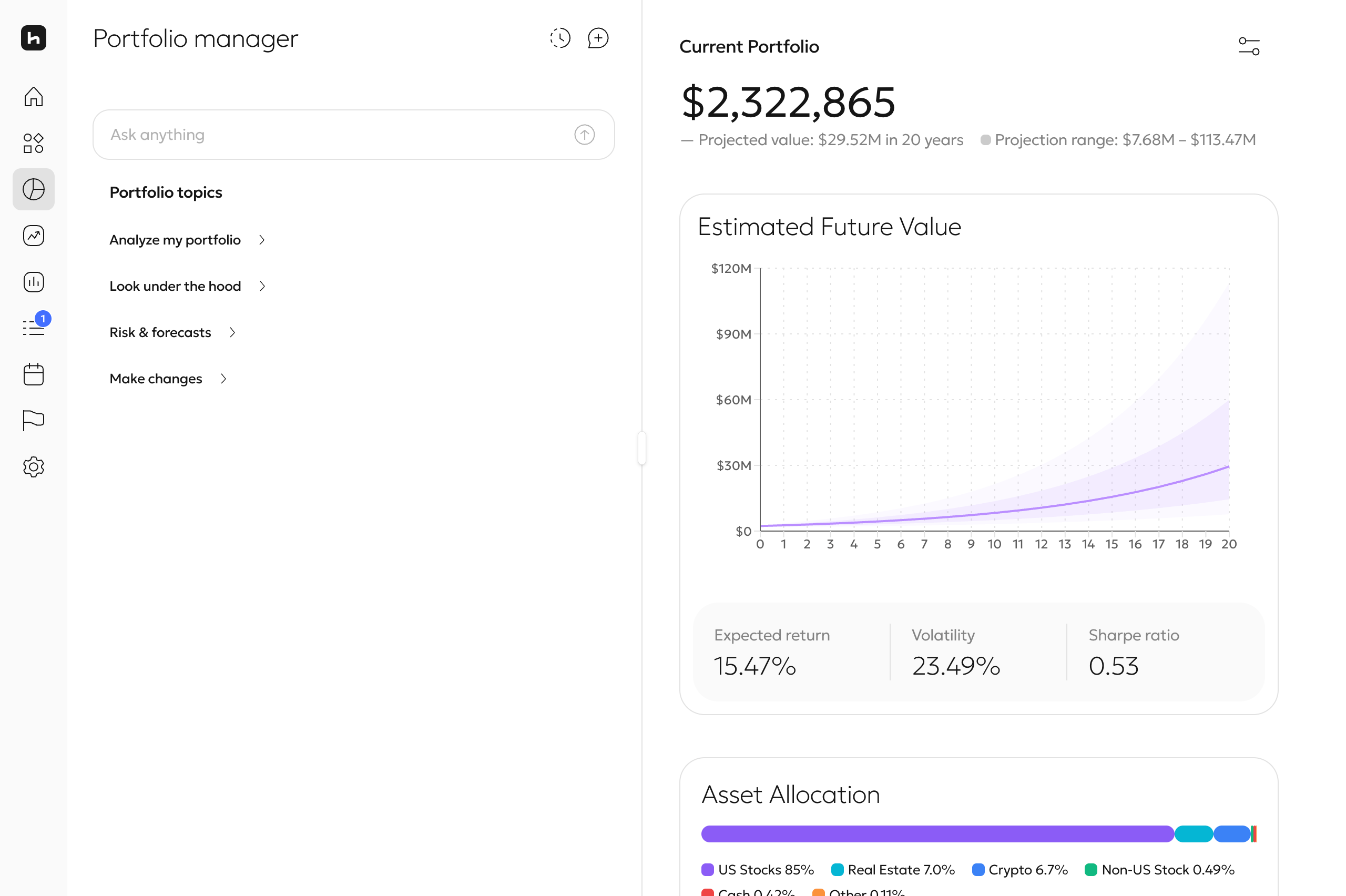
Image 1 / 1
Founding Story
Bloch founded Digit, the savings app. Doshi was its chief product officer and had previously worked at Facebook, YouTube, and Microsoft. Their shared experience explains why they returned to consumer finance together.[1][5]
In April 2025, Bloch wrote: “After leaving Digit in 2023, I had no plans to start another company.” Doshi’s experiments with large language models changed that. Bloch dated their renewed collaboration to early 2024. After testing with friends and family, Hiro opened a larger private beta on April 8, 2025.[1]
The founders wanted a financial partner that understood someone’s circumstances across accounts. They also stayed close to implementation. In August 2025, Doshi described Hiro as “a small, fully remote team” and explained how everyone, including Bloch, could contribute code.[6]
Timeline
- Early 2024: Bloch and Doshi began pursuing the financial AI concept together.[1]
- April 8, 2025: Hiro expanded its private beta.[1]
- March 13, 2026: Doshi documented a portfolio tab, an agent connection, and a revised import flow.[2]
- April 13, 2026: Hiro announced its move to OpenAI. Its notice set April 20 for the product shutdown and May 13 for the end of data exports and subsequent deletion.[3]
- May 15, 2026: OpenAI launched a personal finance preview in ChatGPT. Its October 2 update extended the rollout to Free and Go users in the United States.[8]
What They Built
Hiro combined a financial dashboard with a conversational planner. Users could connect accounts through Plaid and Coinbase, review spending and net worth, and explore retirement or other life scenarios. Partners could share a household and selected chats. Bloch’s launch demonstration emphasized inspectable financial math and free plan creation.[7][9]
The product evolved beyond its own interface. Its Model Context Protocol connection let external AI assistants read prepared financial data through a shared connection format. Hiro’s privacy policy described this access as user-authorized, read-only, and revocable. That access did not authorize moving money.[2][10]
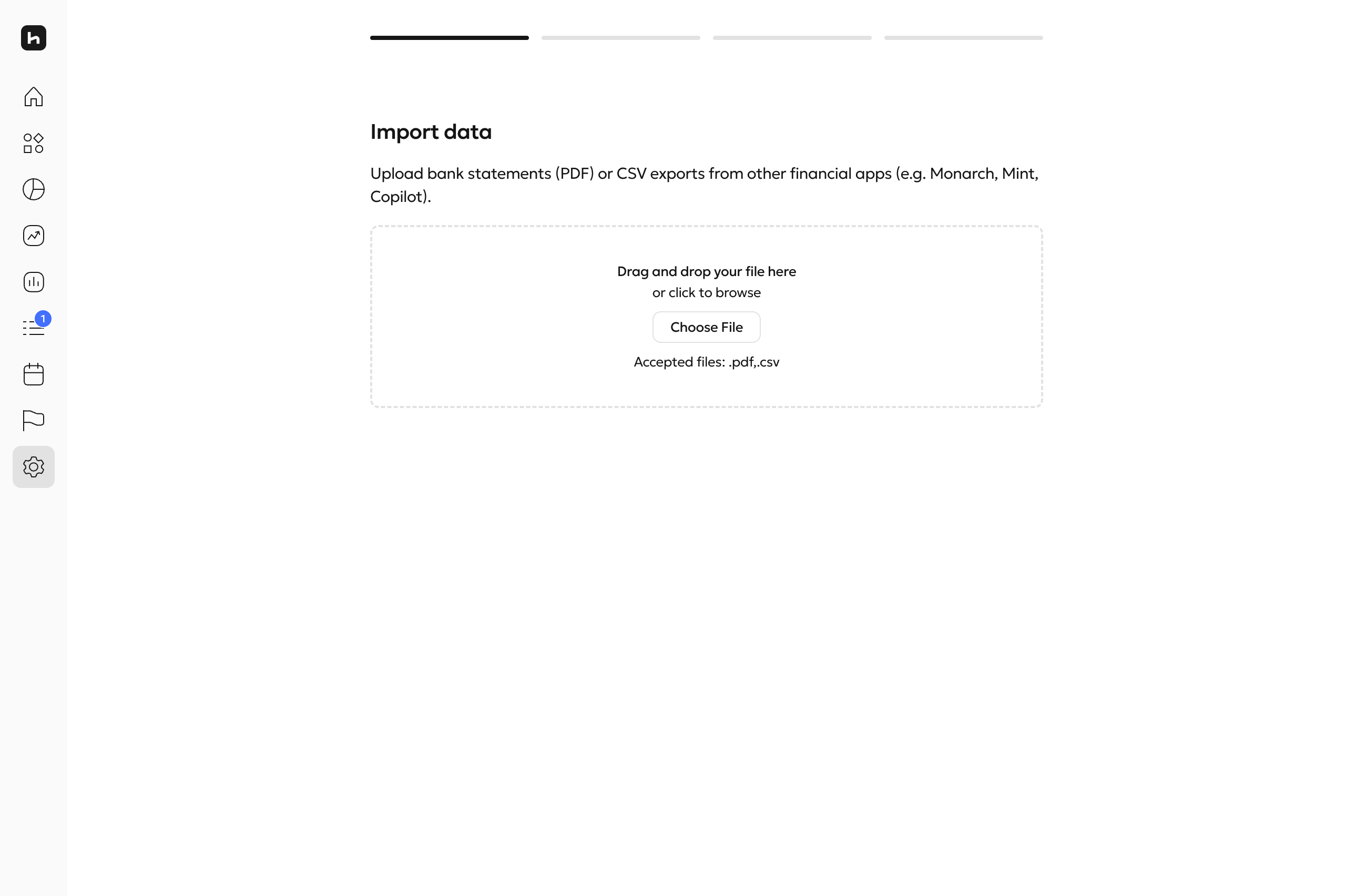
Importing history was a practical obstacle. Doshi reported that the earlier import flow could leave an account in a broken state without an undo action. The replacement added reversible imports and broader file handling. Hiro also added Finicity and MX alongside Plaid when bank connections proved unreliable.[2]
Market Position
Target Customers
Hiro targeted individuals and couples who wanted financial context across accounts. Its launch examples included buying a home, changing jobs, and financial independence.[9]
Market Size
No verified estimate of Hiro’s addressable market appears in the reviewed primary material. Its asset figure measures the finances users brought into planning, rather than the number of paying households.
Competition
Planning tools already covered part of the job. ProjectionLab currently offers a free tier and paid planning features. OpenAI’s own Finances product now combines connected accounts, dashboards, and questions inside ChatGPT. These alternatives weaken any claim that Hiro’s closure left the whole category unserved.[11][8]
Business Model
Hiro promoted free financial planning at launch. Bloch named Ribbit, General Catalyst, and Restive as investors when announcing the OpenAI move. Revenue, paid conversion, funding amounts, and acquisition consideration remain unverified.[9][4]
Traction
Bloch said Hiro helped clients plan for and manage more than $1 billion in assets. This founder-reported figure does not establish assets under management, investment custody, revenue, or retention. Doshi’s public-beta post mentioned hundreds of users, without a later user total.[4][7]
Post-Mortem
Financial context required continuing maintenance
Hiro’s import redesign illustrates the continuing work of preserving context as records change. Its recovery controls addressed mistakes before they could distort answers. This operational work helps explain the product’s value beyond fluent conversation.[2]
Engineering ownership mattered too. Doshi wrote in August 2025: “You own your vibed code.” His account described required review, shared conventions, and type checks. This documents a deliberate response to AI-generated bugs; it does not measure whether those practices reduced defects.[6]
The team continued while the customer service ended
OpenAI confirmed the acquisition to TechCrunch; financial terms were undisclosed.[12] Bloch described a chance to pursue the mission at greater scale. That explanation remains compatible with several undisclosed economic outcomes. The public record does not show whether the founders rejected a viable standalone path.[4]
For customers, continuity ended quickly. Hiro’s notice promised an export window, personal-data deletion, and no transfer of that data to OpenAI. The notice establishes those commitments, rather than independently proving deletion occurred. OpenAI’s later finance launch overlaps Hiro’s mission, but its announcement does not establish which Hiro code or features it inherited.[3][8]
Key Lessons
- Hiro’s import redesign shows why an undo action can matter as much as a financial answer. Users need to recover when their underlying records are wrong.
- Hiro’s asset total describes planning activity. Evaluating its business still requires revenue, retention, and paying-customer evidence that remains unavailable.
- Hiro’s team transfer and short shutdown window show why customer continuity deserves separate attention when evaluating an acquisition.
Sources
- Ethan Bloch, “Hiro,” April 8, 2025
- Rushabh Doshi, “Ship week at Hiro,” March 13, 2026
- Hiro, “Hiro is joining OpenAI,” April 13, 2026
- Ethan Bloch, “Hiro is joining OpenAI,” April 14, 2026
- Rushabh Doshi, biography, November 28, 2025
- Rushabh Doshi, “Vibe Coding Safely,” August 20, 2025
- Rushabh Doshi, public-beta launch post
- OpenAI, “A new personal finance experience in ChatGPT,” May 15, 2026; updated October 2
- Ethan Bloch, financial-planning launch demonstration
- Hiro privacy policy, March 6, 2026
- ProjectionLab pricing, observed October 23, 2026
- Julie Bort, TechCrunch, April 13, 2026