
Overview
Northslope builds custom enterprise applications on Palantir Foundry and its Artificial Intelligence Platform, or AIP. Its engineers work beside customer staff to connect operational data with decisions and actions. Its existing platform gave the team a defined place to build.[1]
The OpenAI Deployment Company agreed to acquire Northslope on July 8, 2026. Later founder and employee posts describe the team as having joined. This is an acquisition through OpenAI’s deployment business; the announcement does not describe a direct purchase by OpenAI itself. The price is undisclosed, and the exact closing date remains unverified.[2][3]
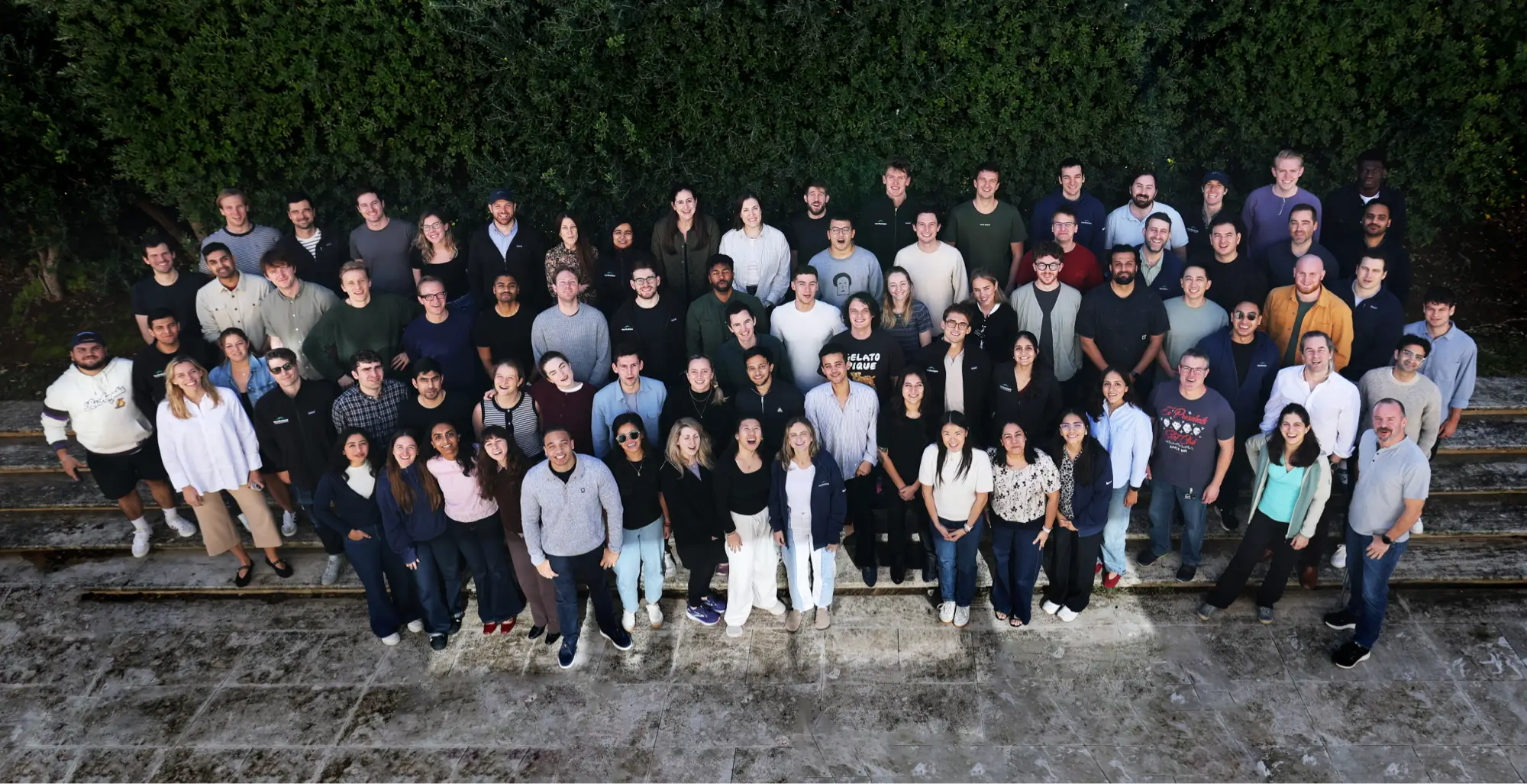
Image 1 / 1
Founding Story
Founder and CEO Bill Ward brought experience as a Palantir forward-deployed engineer. In this role, an engineer works within a customer’s operating environment and builds software around the work. Northslope’s founding proposition was that this method could support a company focused on customer applications above Palantir’s platform.[4]
In an early public explanation, Ward wrote, “Product-driven outcomes, not high-headcount & billable hours.” He also wrote, “We are anti lock-in”. He described embedding with customers’ engineering teams so they could own the result. These promises explain the intended business: sell useful operational software, then earn further work by solving another problem.[5]
Ward’s first-year account places that beginning in 2024. The reviewed primary sources establish Ward as founder but do not establish a complete cofounder roster.[6]
Timeline
- 2024: Ward’s first-year account reports growth to 21 people and 16 customers across seven countries.[6]
- December 2025: Ward announces Northslope as Palantir’s first Vanguard: Elite partner.[7]
- January 29, 2026: Northslope announces a $22 million Series A, co-led by Friends & Family Capital and Goldcrest Capital.[4]
- July 8, 2026: The OpenAI Deployment Company announces an agreement to acquire Northslope, subject to closing conditions.[2]
- By October 23, 2026: Indexed founder and employee posts say Northslope has officially joined the buyer. They do not supply an exact closing date.[3]
What They Built
Northslope’s application catalog makes the model concrete. Its maintenance-inventory work connects asset records, purchasing systems, and supplier lead times. Planners can review proposed stocking decisions alongside cost and stockout risks. Its supply-chain applications connect recommendations to proposed purchase-order changes, transfers, or supplier notifications.[8]

Demo image: Northslope application catalog.
A dashboard can identify a problem while leaving staff to reconcile records and carry out the decision elsewhere. Northslope markets applications that cover more of that operating loop. The catalog describes intended capabilities; it does not independently prove every stated customer outcome.[8]

Demo image: Northslope application catalog.
Market Position
Target Customers
The company targets enterprises already using Palantir, across sectors including manufacturing, healthcare, and energy. This gives it a defined technical environment and a customer base with existing platform commitments.[1]
Market Size
The reviewed sources provide no defensible addressable-market estimate. Counting all enterprise software spending would overstate a business whose delivery depends on customer access and skilled engineers.
Competition
Ward positioned Northslope against conventional consulting and generic software. Its choice creates a trade-off: existing Palantir infrastructure can shorten implementation, while dependence on that platform limits independence. That is an inference from its delivery model, rather than evidence of a failed partnership.[5]
Business Model
Northslope sells custom application delivery. Public sources do not establish standard prices, contract duration, gross margin, or the division between recurring software and engineering revenue. Its funding announcement names investors with Palantir ties, including former CFO Colin Anderson at Friends & Family Capital. Those relationships support the ecosystem strategy, but do not establish the cost of winning a customer.[4]
Traction
The buyer says Northslope’s revenue grew sevenfold in 2025. The company’s funding announcement gives a similar claim. Neither supplies the revenue base or audited accounts, so the growth rate cannot establish revenue scale or profitability.[2][4]
Post-Mortem
The delivery method became the acquisition target
Northslope’s public trajectory supports a thesis about deployment capacity. Ward described the customer need: “World-changing organizations don't run on off-the-shelf software”. The buyer then sought a team able to build inside operational environments, alongside its earlier Tomoro acquisition.[4][2]
A model provider still needs customer data, operating rules, security decisions, and staff adoption before a model changes a business process. Northslope organized engineers around those requirements. Buying that capacity could shorten the buyer’s path into customer operations. This interpretation fits the acquisition announcement; it does not prove a particular return on the purchase.
The strongest alternative explanation is a conventional purchase of a growing services business. Undisclosed terms and margins prevent a clean comparison. The July announcement also allows for select future joint commercial work with Palantir, so it does not establish that Northslope abandoned its original platform.[2]
Key Lessons
- Northslope used an existing enterprise platform to narrow the implementation problem. That focus helped define both its customer and its dependency.
- Its founder promised customer ownership of delivered software. The commercial test is whether customers buy the next application after they can maintain the first.
- Sevenfold growth supports demand, but disclosed revenue and margins would be needed to judge the economics of expanding an engineer-heavy business.
Sources
- Northslope company and application overview
- The OpenAI Deployment Company’s acquisition announcement
- Nathan Cole’s profile, including founder and employee acquisition posts
- Northslope’s Series A announcement, reproduced from Business Wire
- Bill Ward on Northslope’s delivery model
- Bill Ward’s 2024 first-year account
- Bill Ward on the Palantir Vanguard: Elite partnership
- Northslope’s application catalog
- Northslope careers page and team photograph