
Optimizely
Winter 2010AcquiredThe first all-in-one operating system for marketing
Pressure-test this opportunity
Explore the risks and possibilities with a prompt for ChatGPT, Claude, or your agent.
The first all-in-one operating system for marketing
Explore the risks and possibilities with a prompt for ChatGPT, Claude, or your agent.
Optimizely made website experiments accessible to people who could not write code. Dan Siroker and Pete Koomen built the company through Y Combinator's Winter 2010 batch. It later expanded into experiments inside applications and reached more than $100 million in annual recurring revenue, according to Koomen's YC biography.[1]
Episerver acquired Optimizely in October 2020 and adopted its name in January 2021. The product continued. This is an acquisition story with contested financial returns, rather than a documented shutdown. Its useful tension is between an easy entry product and the cost of serving complex enterprise customers. Public evidence supports that tension; it does not establish a single cause for the sale.[2][3]
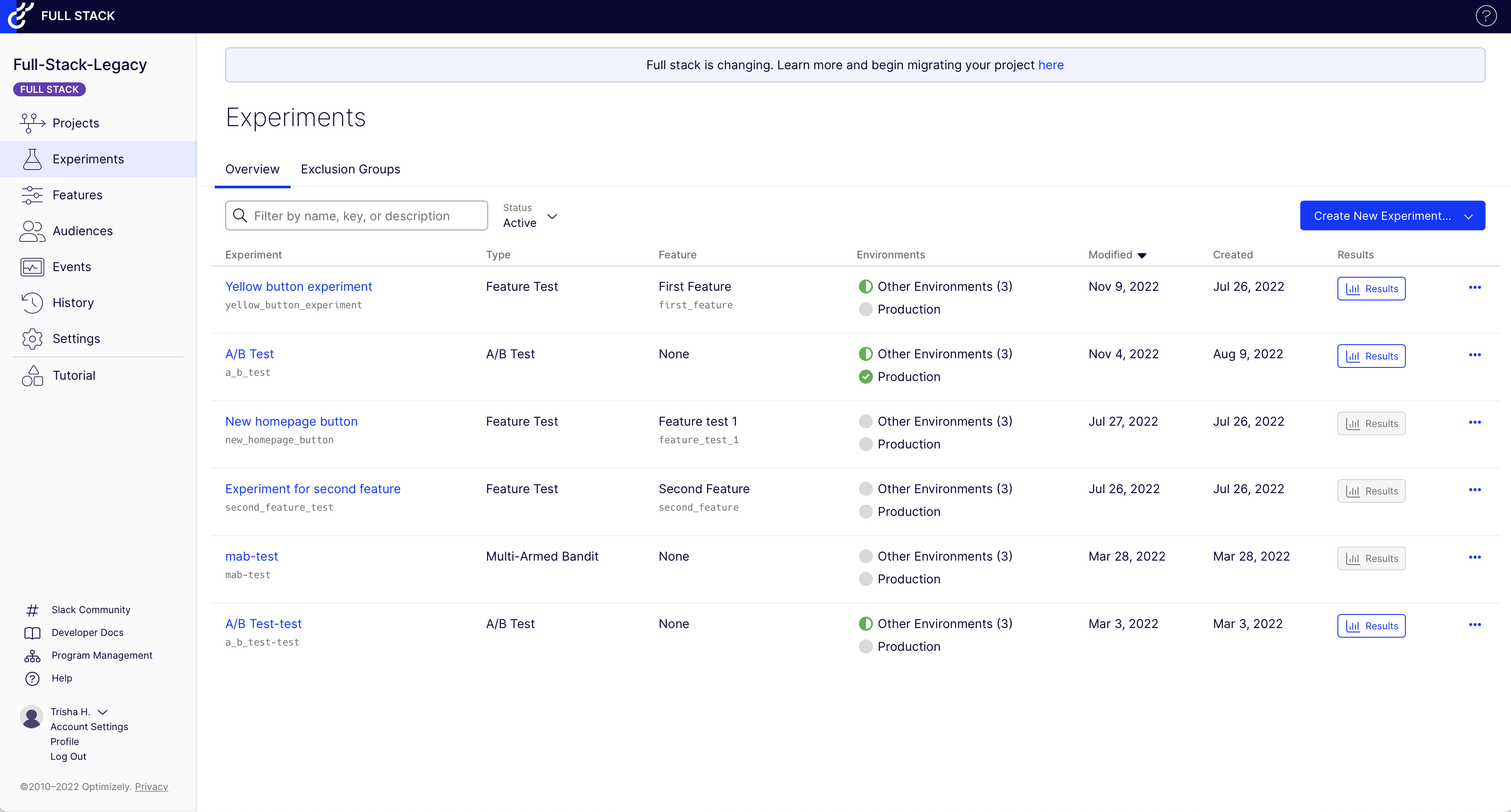
Image 1 / 1
Siroker and Koomen had worked at Google. They tried an educational product, CarrotSticks, and then an enterprise customer acquisition product before Optimizely. Koomen's 2015 YC interview compares the payment signals: six months to the first dollar for CarrotSticks, six weeks for the next idea, and revenue before code for Optimizely. The founders learned to test willingness to pay alongside willingness to talk.[4]
In a 2018 YC interview, Koomen said: “We actually pivoted during the second week of YC!” The company's SEC filing also lists Spreadly, Inc. as a previous issuer name, supporting that otherwise easily lost part of its history.[5][6]
The product idea came from Siroker's work directing analytics for Barack Obama's 2008 campaign. In December 2007, his team tested 24 combinations of images, videos, and button text on an email signup page. He reported a winning signup rate of 11.6%, against 8.26% for the original. His famous $60 million donation estimate extrapolated that improvement across the campaign and combined it with average donations per email address. It was an estimate with stated assumptions, rather than revenue directly measured inside that one experiment.[7]
In his November 2010 account, Siroker wrote: “Optimizely is the product I wish we’d had on the campaign.” The founders sold relief from the time required to set up tests, rather than a new reason to care about conversion rates.[7]
The Clinton Bush Haiti Fund supplied another early use case. In a direct interview, Siroker described changing donation-page imagery, button text, and font size when the fund's existing content system made changes difficult. This shows why the visual editor mattered: an organization already knew the page needed improvement but could not readily make those changes.[8]
An A/B test divides visitors between different experiences and compares a chosen outcome. Optimizely's web product let a marketer create variations in a visual editor, choose an audience, and measure results. The company turned a process requiring repeated engineering work into a reusable workflow. Its 2016 launch announcement describes an editor and integrations intended to let teams run website experiments without writing code.[10]
Full Stack reached a different user. Developers could test application behavior, including search ordering and pricing, through software development kits. That expanded the possible experiments but also required developers to implement them. Removing a marketer's editing bottleneck and helping engineers test application logic are related jobs with different setup costs.[10]
Content management became part of the wider suite through Episerver. Today's CMS should not be treated as proof that the original startup built a CMS or spread its engineering team across that category. Optimizely's product migration records distinguish renamed Episerver products, acquired products, and the original web experimentation product.[13]
The original appeal was to marketers who needed to change pages without repeatedly asking engineering for help. The application product added engineers and product managers. By June 2019, Optimizely reported adoption by more than a quarter of the Fortune 100, evidence that it had reached large organizations as well as its early users.[11]
The available records establish a substantial company, but not a reliable standalone market estimate. A broad digital experience market includes content management and commerce; it cannot be treated as the market for a small A/B testing product. A new entrant should estimate reachable accounts, traffic requirements, and realistic prices before using a category-wide spending forecast.
Google's free testing product created pressure at the entry level. Its eventual closure also shows that free distribution does not guarantee a complete testing service. Google ended Optimize on September 30, 2023 and explicitly directed attention to third-party integrations, including Optimizely, AB Tasty, and VWO.[14]
The useful competitive distinction is between making a test easy to launch and helping an organization run trustworthy experiments repeatedly. Larger buyers need implementation help, reliable measurement, and coordination across teams. An editor alone does not supply those capabilities. This is an inference about the workflow, rather than proof that any particular competitor caused Optimizely's acquisition.
Optimizely sold experimentation software. Moving toward larger customers could increase contract value while adding sales and service costs. Public evidence does not establish the contribution margin of its self-service and enterprise segments, so neither can be declared economically superior from customer anecdotes alone.
The 2019 financing announcement separates $50 million in Series D funding from an additional $55 million in financing. Treating the entire package as new equity exaggerates the comparison with an acquisition valuation. The announcement reports total funding of $200 million; it does not disclose cash burn or prove that the credit facility signaled a failed IPO plan.[11]
Koomen's YC profile reports growth to more than $100 million ARR before the acquisition.[1] This is incompatible with a claim that nobody would pay for experimentation. It does not establish profitability or the return received by each shareholder.
The later combined company reported $400 million ARR in 2024, with 52% from customers buying multiple products. This is company-reported evidence that cross-selling mattered after the merger. It cannot establish organic growth of the original startup or justify comparing two different businesses as an unbroken revenue series.[12]
The founding product made the first experiment easier. Enterprise use added more demanding implementation, buying, and coordination work. This creates a plausible structural tension: keeping entry cheap and easy can build advocates, while the support required for larger deployments pushes a supplier toward bigger contracts.
A 2020 Hacker News thread contains conflicting accounts of Optimizely's move away from self-service. A commenter claiming to be a former employee said the change damaged clarity and customer relationships. Another commenter argued that the self-service model had weak economics and that its removal benefited the business. These are unverified participant accounts. Their disagreement matters: the thread does not support presenting the enterprise transition as an established mistake.[15]
Optimizely did take action on costs. In March 2016, Siroker told Forbes the public software market decline was “a wake up call for me personally.” The company reduced its workforce and sought less dependence on new funding. This supports a financing and cost concern at that date. It does not prove that product demand had collapsed, or that the same concern caused a sale four years later.[9]
Episerver could connect creating content with testing its performance. The closing announcement said Optimizely would remain available independently and become part of Episerver's offerings. That provides a concrete strategic explanation for the combination without requiring a story of terminal product failure.[2]
The rebrand likewise supports the value of the Optimizely identity. It does not rank the value of the brand against the technology or staff. The combined company subsequently added other acquired capabilities; present-day breadth belongs to that later history.[3][13]
The acquisition announcement did not disclose a price. One HN commenter expected to lose more than $100,000 on exercised stock. That reports an individual's expectation at announcement, without establishing the final payout, liquidation preferences, or results for all employees. That evidence cannot establish that all common shareholders received nothing.[15]
Public material therefore supports an operating business acquired into a broader suite, alongside concerns about financing and the customer transition. It leaves the exact investment outcome and the weighting of causes unresolved. Founders can learn from those tensions without treating a surviving product as a dead company.