RethinkDB (S09) at a glance
- The product — RethinkDB built an open-source distributed document database designed for the real-time web. It replaced inefficient polling with push-based changefeeds, streaming query results to clients instantly. Developers used ReQL to build collaborative apps, live dashboards, and chat platforms with low latency.
- The failure — The company died because it could not convert strong developer adoption into sustainable revenue. It fell into the open-core monetization trap, lacking enterprise features or managed services. Cloud giants like Firebase and AWS absorbed its core functionality, offering integrated, managed alternatives that developers preferred.
- Why now — Edge compute commoditization and standardized HTTP/3 now enable sub-50ms global push delivery without heavy cluster maintenance. Developer spending has shifted decisively toward managed, usage-based APIs. Platforms like Supabase prove real-time sync sells as a service, solving the historical distribution and billing friction RethinkDB faced.
- The rebuild — Ship a managed changefeed API that decouples real-time synchronization from persistent storage, allowing developers to stream query deltas via WebSocket endpoints without managing infrastructure.
Overview
RethinkDB operated from 2009 to 2016 as an open-source database engineered specifically for the real-time web. The company built a distributed document store that replaced traditional polling architectures with a push-based model, automatically streaming query results to clients whenever underlying data changed. It attracted significant attention from developers building collaborative applications, live dashboards, and chat platforms.[3]
The company failed because it could not convert strong developer adoption into a sustainable revenue model. Despite building a technically elegant product that earned widespread community praise, RethinkDB struggled to monetize open-source software while competing against well-funded incumbents and cloud-native platforms that absorbed its core functionality.[6]
In October 2016, RethinkDB shut down its commercial operations and transferred its assets to the Cloud Native Computing Foundation for approximately $25,000 to cover legal and administrative costs.[1] The acquisition preserved the codebase as an open-source project but marked the end of the company’s attempt to build a standalone database business.

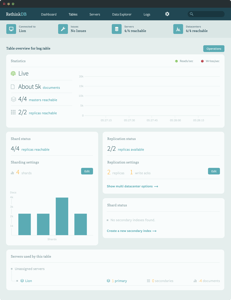
Image 1 / 2
Founding Story
RethinkDB was founded by Slava Akhmechet, Chris Anderson, and Daniel Mewes.[3] The trio entered Y Combinator’s Summer 2009 batch with a clear technical thesis: traditional relational databases were fundamentally mismatched for modern web applications that required live, bidirectional data synchronization.[4] Akhmechet and Mewes brought deep systems programming and database engineering backgrounds, while Anderson contributed expertise in distributed systems and developer tooling. They met through open-source communities and shared a frustration with the polling-heavy architectures that dominated early web development.
The founding insight emerged from observing how developers built real-time features. At the time, applications relied on frequent HTTP requests to check for database changes, creating unnecessary network overhead, latency, and server load. The founders envisioned a database that natively supported push notifications. Instead of clients asking for updates, the database would monitor active queries and stream results to connected applications the moment data changed. This architectural shift promised to simplify real-time development and reduce infrastructure complexity.
RethinkDB’s initial vision centered on a modern, developer-first database that prioritized query expressiveness and live data synchronization. The team spent their first two years refining the core engine, building a custom query language, and designing a distributed architecture capable of horizontal scaling. They avoided early commercialization to focus on technical excellence and community building. The product remained open-source throughout its lifecycle, with the founders betting that widespread developer adoption would eventually create enterprise demand for support, hosting, and advanced features.
The company never executed a major strategic pivot. Instead, it doubled down on its original architecture while attempting to layer monetization mechanisms on top of a free product. This commitment to technical purity shaped both its strengths and its eventual constraints. As Akhmechet later reflected, the team prioritized building a system developers loved over designing a business model that could sustain itself.[6]
Timeline
- 2009: RethinkDB founded by Slava Akhmechet, Chris Anderson, and Daniel Mewes.[3]
- Summer 2009: Company joins Y Combinator’s accelerator program.[4]
- 2010–2015: Raises $13.3 million in venture funding from Index Ventures, Greylock Partners, and Y Combinator.[5]
- 2012–2015: Releases multiple major versions, introduces changefeeds, and expands distributed clustering capabilities.
- October 2016: Shuts down commercial operations after failing to achieve sustainable revenue.[6]
- October 5, 2016: Assets acquired by the Cloud Native Computing Foundation for approximately $25,000 to cover legal and administrative costs.[1]
- October 2016: Project donated to CNCF to ensure continued open-source maintenance.[1]
- October 2016: Founders publish a public post-mortem detailing monetization challenges and competitive pressures.[6]
What They Built
RethinkDB was a distributed, open-source document database designed to push query results to clients automatically when underlying data changed. The system replaced traditional request-response polling with a continuous query model. Developers wrote queries in ReQL, a functional query language embedded directly into application code. When a query executed, the database maintained a persistent connection and streamed updates in real time as new documents matched the query criteria.[7]
The architecture centered on three core components: a storage engine optimized for JSON documents, a distributed query planner that routed operations across cluster nodes, and a changefeed mechanism that tracked data mutations. The storage layer used a custom B-tree variant to support efficient range queries and secondary indexes. The query planner decomposed complex operations into parallel tasks, distributing them across available servers to maintain low latency under load. Changefeeds operated by subscribing to the write-ahead log, filtering changes against active queries, and pushing deltas to connected clients over WebSocket or HTTP streaming.
The user experience emphasized developer ergonomics. Engineers could test queries directly in the RethinkDB Data Explorer, a web-based admin interface that visualized query execution, displayed live result streams, and provided cluster health metrics. The interface allowed developers to prototype real-time features without writing boilerplate synchronization logic. Integration required minimal configuration: applications connected to a cluster endpoint, issued ReQL queries, and received automatic updates.
Over time, the product evolved from a single-node prototype to a horizontally scalable distributed system. Early releases focused on query language design and basic persistence. Subsequent versions introduced automatic sharding, replica management, and fault tolerance. The team prioritized consistency and developer experience over raw throughput, positioning the database for collaborative applications, live analytics dashboards, and multiplayer platforms.
RethinkDB differentiated itself from alternatives by treating real-time synchronization as a first-class database primitive rather than an application-layer add-on. Traditional NoSQL systems required developers to implement polling, message queues, or third-party pub/sub services. RethinkDB embedded this functionality directly into the storage engine, reducing architectural complexity and latency. The system also offered a more expressive query language than key-value stores, while maintaining better real-time performance than relational databases with external caching layers.
Market Position
Target Customers
RethinkDB targeted web and mobile developers building applications that required live data synchronization. Primary use cases included collaborative editing tools, real-time dashboards, chat platforms, multiplayer games, and IoT telemetry systems. The company focused on engineering teams that valued developer experience, rapid prototyping, and architectural simplicity. Customers typically operated in startups or mid-market technology companies where infrastructure budgets were constrained and engineering velocity mattered more than enterprise compliance features.
Market Size
The database market expanded rapidly during RethinkDB’s operational period, driven by cloud adoption and the proliferation of real-time web applications. The NoSQL segment grew from a niche category to a multi-billion-dollar market, with document stores and key-value systems capturing significant share. Real-time application infrastructure represented a smaller but high-growth subset, as consumer expectations shifted toward instant updates and bidirectional communication. The addressable market for developer-focused databases was substantial, but monetization required capturing enterprise procurement budgets rather than individual developer tooling spend.
Competition
RethinkDB competed across multiple structural axes: developer experience, real-time capability, enterprise readiness, and cloud distribution. On the developer experience axis, it outperformed traditional relational databases and early NoSQL systems by offering a unified query language and built-in changefeeds. However, incumbents like MongoDB and PostgreSQL held significant advantages in ecosystem maturity, community size, and enterprise sales infrastructure. These competitors also benefited from established distribution channels through cloud providers and managed service offerings.
The competitive landscape shifted decisively when platform companies absorbed real-time database functionality. Firebase, acquired by Google in 2014, offered a fully managed real-time database with automatic synchronization, authentication, and hosting. AWS and GCP integrated similar capabilities into their broader cloud ecosystems, bundling real-time features with serverless compute, storage, and analytics. RethinkDB’s standalone architecture struggled to compete against these integrated platforms, which reduced deployment friction and shifted infrastructure costs to usage-based pricing models.
The company occupied a narrow position between open-source flexibility and enterprise reliability. It lacked the managed service infrastructure required to capture cloud-native buyers, while its open-source distribution model made it difficult to enforce licensing or upsell premium features. Competitors with stronger sales engines and cloud partnerships captured the enterprise segment, while platform-native solutions absorbed the developer segment. RethinkDB’s technical differentiation in query expressiveness and real-time architecture proved insufficient to overcome distribution disadvantages and ecosystem lock-in.
Business Model
RethinkDB attempted to monetize through an open-source distribution model, relying on enterprise support contracts, hosted database services, and consulting engagements. The company offered the core database freely, expecting that large organizations would pay for production-grade reliability, security patches, and managed infrastructure. This approach mirrored successful open-core strategies in adjacent markets, but RethinkDB never established a clear tiered licensing structure or premium feature gate.
Directional unit economics can be inferred from public funding and operational data. The company raised $13.3 million over approximately seven years.[5] Assuming a peak headcount of 30–40 engineers and support staff, and typical Silicon Valley startup burn rates for that era, annual operating expenses likely ranged between $1.5 million and $2.5 million. These figures are estimates based on industry benchmarks, not disclosed financials. Revenue was never publicly reported, and the founders explicitly acknowledged that monetization efforts fell short of covering operational costs. The absence of disclosed revenue metrics signals that the company operated primarily on venture capital rather than sustainable commercial income.
The business model relied on converting developer adoption into enterprise purchasing decisions. However, the target audience consisted largely of individual engineers and small teams who preferred free, self-hosted solutions. Enterprises required managed services, compliance certifications, and dedicated support SLAs, which RethinkDB lacked the infrastructure to deliver at scale. The gap between community enthusiasm and commercial willingness to pay ultimately prevented the company from achieving revenue sustainability.
Post-Mortem
The Open-Core Monetization Trap
RethinkDB’s primary failure stemmed from an inability to convert developer adoption into sustainable revenue. The company distributed its database freely, expecting that enterprise customers would pay for support, hosting, and advanced features. In practice, the developer community valued the product’s technical elegance but resisted commercial licensing. Enterprises preferred managed cloud services with built-in compliance, automated backups, and dedicated support SLAs. RethinkDB’s infrastructure and sales organization lacked the capacity to deliver these enterprise-grade offerings. The team attempted to address this gap by exploring hosted database services and consulting engagements, but these initiatives required significant operational overhead and failed to scale. Without a clear premium feature tier or enterprise packaging, the company could not generate sufficient recurring revenue to cover development costs. The outcome was a structural mismatch between open-source distribution and commercial viability.
Competitive Displacement by Cloud-Native Platforms
The second major failure driver was platform consolidation. Real-time database functionality, which RethinkDB pioneered as a standalone product, became a native feature within larger cloud ecosystems. Firebase launched its real-time database in 2011 and scaled rapidly under Google’s ownership. AWS and GCP followed with managed document stores and serverless synchronization layers. These platforms offered integrated authentication, hosting, analytics, and usage-based pricing, reducing deployment friction for developers. RethinkDB attempted to compete by emphasizing query expressiveness, distributed architecture, and open-source transparency. However, the company lacked the distribution reach, cloud partnerships, and ecosystem bundling required to retain developer mindshare. Platform moves shifted the competitive axis from technical differentiation to infrastructure convenience. The outcome was market absorption: RethinkDB’s core innovation became a commodity feature within broader cloud offerings, eliminating the need for a dedicated database vendor.
Structural Industry Dynamics in Database Markets
The third failure reason reflects broader industry dynamics. Database markets exhibit strong network effects and high switching costs. Enterprises prioritize stability, vendor support, and ecosystem compatibility over architectural novelty. Open-source databases require massive scale to monetize through support or hosting, and independent vendors struggle to compete against cloud providers with subsidized infrastructure and integrated sales channels. RethinkDB attempted to navigate this landscape by maintaining technical independence and focusing on developer experience. The team invested heavily in documentation, community engagement, and query language design. However, these efforts did not translate into enterprise procurement. The database market structurally favors vendors that control the full stack, from storage to managed services to compliance tooling. RethinkDB’s standalone architecture could not match the operational guarantees or commercial packaging of incumbents. The outcome was a predictable market consolidation, where independent open-source databases either achieved massive scale or were absorbed by platform providers.
As Slava Akhmechet stated in the company’s post-mortem: “We built a product developers loved, but we couldn't figure out how to turn that love into a business.”[6] The statement captures the core tension between technical excellence and commercial sustainability. RethinkDB’s failure was not a product defect. It was a structural inability to align open-source distribution with enterprise monetization in a market increasingly dominated by cloud-native platforms.
Key Lessons
- Developer enthusiasm does not guarantee commercial viability. RethinkDB achieved strong community adoption and GitHub engagement, but individual developers and small teams rarely purchase enterprise database licenses. The company’s reliance on open-source distribution without premium feature gating or managed service infrastructure prevented revenue conversion.
- Real-time synchronization became a platform commodity rather than a standalone product category. RethinkDB’s core innovation—push-based query results—was absorbed by Firebase, AWS, and GCP. These platforms bundled real-time capabilities with authentication, hosting, and analytics, eliminating the need for a dedicated database vendor.
- Open-source database vendors require cloud-native packaging to survive. RethinkDB’s independent hosting and support model could not compete with managed cloud services that offered automated scaling, compliance certifications, and usage-based pricing. The market shifted toward integrated infrastructure, leaving standalone database companies without a sustainable commercial path.
Sources
- https://www.cncf.io/blog/2016/10/05/cncf-welcomes-rethinkdb/
- https://news.ycombinator.com/item?id=12636666
- https://rethinkdb.com/about/
- https://www.ycombinator.com/companies/rethinkdb
- https://www.crunchbase.com/organization/rethinkdb
- https://rethinkdb.com/blog/rethinkdb-shutdown/
- https://rethinkdb.com/docs/introduction-to-reql/