
Overview
Reverie Labs built software to design small-molecule drugs, then used that software to develop its own cancer therapies. Its focus became highly selective kinase inhibitors that could reach the brain. In February 2024, Ginkgo Bioworks acquired key platform assets and hired four members of its AI team. The acquisition ended Reverie's independent platform story; it does not establish that all its drug programs failed.[1][2]
The useful lesson is a change in what the company had to prove. A software vendor needs a buyer with a budget and a repeatable workflow. A drug developer needs evidence that specific molecules can advance. Better predictions can help both, but neither business earns its value merely by producing predictions.
Founding Story
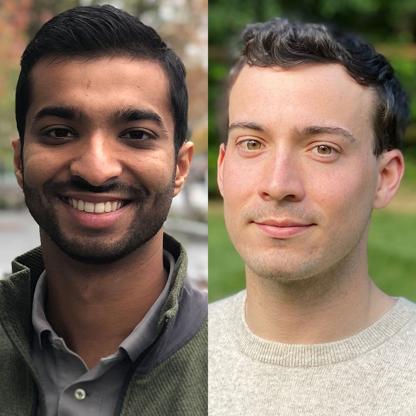
Founded in 2017, Reverie joined Y Combinator's Winter 2018 batch. YC lists Jonah Kallenbach, Ankit Gupta, and Connor Duffy as founders. Kallenbach and Gupta met at Harvard; they brought a computational approach to a field that still required physical experiments. Contemporary coverage described a virtual discovery company without its own laboratory, using outside work alongside cloud computing.[3][4]
In its 2021 funding announcement, Gupta described data as “an intentionally generated asset.” That phrase captures the original promise: choose experiments that improve the discovery system, rather than treat their results as leftovers. Kallenbach said the funding would “expand our extraordinary team of scientists and engineers.” Software was part of a multidisciplinary discovery operation, not a substitute for one.[1]
Timeline
- 2017–2018: Founded and joined YC Winter 2018.[3]
- July 2020: Announced a multi-target collaboration with Roche and Genentech, covering screening and molecule optimization.[5]
- February 2021: Announced a $25 million Series A led by Ridgeback Capital. The company reported more than $32 million raised in total.[1]
- February 2024: Ginkgo acquired platform infrastructure and software; four AI employees joined it.[2]
- January 2025: Gupta published a retrospective describing the move from software services toward owned drug assets.[6]
- September 2025: YC announced Gupta as a General Partner after his Visiting Partner role.[7]
What They Built
Reverie's platform combined machine learning, physics-based modeling, and cloud infrastructure to generate and evaluate chemical structures. Its therapeutic focus was kinase inhibitors: molecules intended to interfere with particular enzymes involved in signaling. Brain penetration added another design constraint alongside potency and selectivity.[1]
These are different requirements. Strong binding to a target does not establish useful exposure in the body. A candidate also needs an acceptable profile for absorption, distribution, metabolism, excretion, and toxicity, often shortened to ADMET. In his retrospective, Gupta reported rapid progress on potent, selective molecules across roughly ten programs, followed by much slower work on those other properties. This is the founder's account of Reverie's experience, not a benchmark for every discovery company.[6]
The acquisition announcement identified infrastructure and software for training foundation models. Ginkgo planned to integrate the tools into experimental design and small-molecule discovery workflows. It did not announce the purchase of Reverie's complete therapeutic pipeline or a clinical approval.[2]
Market Position
Target Customers
The Roche agreement served discovery teams, with Reverie contributing virtual screening, hit-to-lead work, and lead optimization. Those teams were buying help with a drug program, not simply a general-purpose software seat.[5]
Gupta later described a purchasing mismatch: scientists who wanted computational help did not necessarily control software budgets. Selling drug assets reached a different buyer, but transferred development responsibility to Reverie. That distinction helps explain the pivot without assuming weak science caused every commercial difficulty.[6]
Market Size
Pharmaceutical research spending is not a directly reachable software market. A relevant market estimate would count eligible teams, their procurement authority, and the amount they would pay for a defined workflow. Reverie's public funding and partnership announcements do not provide that calculation. Its potential customers were valuable, but a large therapeutic market did not guarantee recurring software revenue.
Competition
Schrödinger illustrates why the opportunity was never empty. Its LiveDesign platform combines experimental and computational results for discovery teams; LiveDesign ML supports model building and updating predictions from project data. That overlaps with the workflow around Reverie's platform, although it does not establish a matched comparison of scientific performance.[8]
Today, CDD Vault also offers models built from private experimental assay data, with automated model updates. A rebuild must earn a place beside tools teams already use. “We use machine learning” is insufficient differentiation when established data systems already do so.[9]
Business Model
The Roche agreement combined an upfront payment with eligibility for preclinical, clinical, and regulatory milestones, plus tiered royalties. Public terms did not disclose payment amounts. These arrangements can align a partner's payments with progress, but milestone eligibility is not recognized revenue or a guaranteed payout.[5]
Developing owned drugs offered greater participation in an asset's eventual value. It also meant funding the work required to make that asset investable. The operating model changed: a reusable computational engine could support many programs, while each program still required its own evidence. The platform and the portfolio therefore had different proof obligations.
Traction
The strongest public evidence is concrete: a named Roche/Genentech collaboration, a $25 million financing, and Ginkgo's acquisition of platform assets. These show partner interest, investor support, and a subsequent use for the technology. They do not establish recurring revenue, clinical efficacy, or investor returns.[1][2][5]
Post-Mortem
The evidence supports an acquisition and a difficult business-model transition. It does not support a simple verdict that the founders lost every investor's money or that the platform was worthless.
Ginkgo separately disclosed $3.53 million in inducement restricted-stock-unit grants to the four joining employees. Those grants depended on continued employment. They were compensation, not the acquisition price.[10] Its first-quarter 2024 filing disclosed shares valued at approximately $2.4 million issued to Reverie for certain infrastructure and software assets. That narrower consideration disclosure does not reveal the company's remaining cash, liabilities, other assets, or distribution to investors.[11]
The founder's account identifies two pressures. Software sales were slow and budgets constrained. Moving toward owned assets made the company responsible for problems beyond the binding predictions its platform handled well. Investors then judged drug prospects, rather than the engine alone.[6]
The causal lesson is narrower than “biotech takes too long for venture capital.” A company can reduce one technical bottleneck while leaving the milestone that unlocks funding largely unchanged. If a program cannot yet establish a useful whole-molecule profile, faster target binding predictions may not bring the next financing closer. Reusable software and program-specific experiments must be measured separately.
There is a continuing market for that work. In May 2026, Ginkgo Datapoints, Tangible Scientific, and Inductive Bio announced ADME-One, combining experimental assays, compound management, and pharmacokinetic projections. This is a current example of tools built around physical data. It is not evidence that a particular Reverie drug survived or that Reverie's platform caused this offering.[12]
Key Lessons
- Find the buyer before enlarging the platform. A scientist's interest and a purchase commitment are different signals. Validate procurement with a specific workflow.
- Track progress against the hardest remaining property. Binding, selectivity, exposure, and safety answer different questions. Improvement on one cannot stand in for the others.
- Make experiments test the model. Preserve predictions before results arrive, then compare them with measurements. Retrospective agreement can hide mistakes in the original decision.
- Keep asset economics separate from platform economics. An engine's reuse does not remove the cost of proving each drug candidate. Charge and fund each activity accordingly.
Sources
[1] Reverie Series A announcement, February 2021 [2] Ginkgo platform acquisition announcement, February 2024 [3] YC company profile [4] Contemporary virtual discovery profile, August 2020 [5] Roche collaboration announcement, July 2020 [6] Ankit Gupta: Flipping Unfair Coins, January 2025 [7] YC welcomes Ankit Gupta, September 2025 [8] Schrödinger LiveDesign [9] CDD Vault Zero-Click Inference Models, May 2026 [10] Ginkgo employee compensation disclosure [11] Ginkgo Q1 2024 Form 10-Q [12] ADME-One announcement, May 2026