Overview
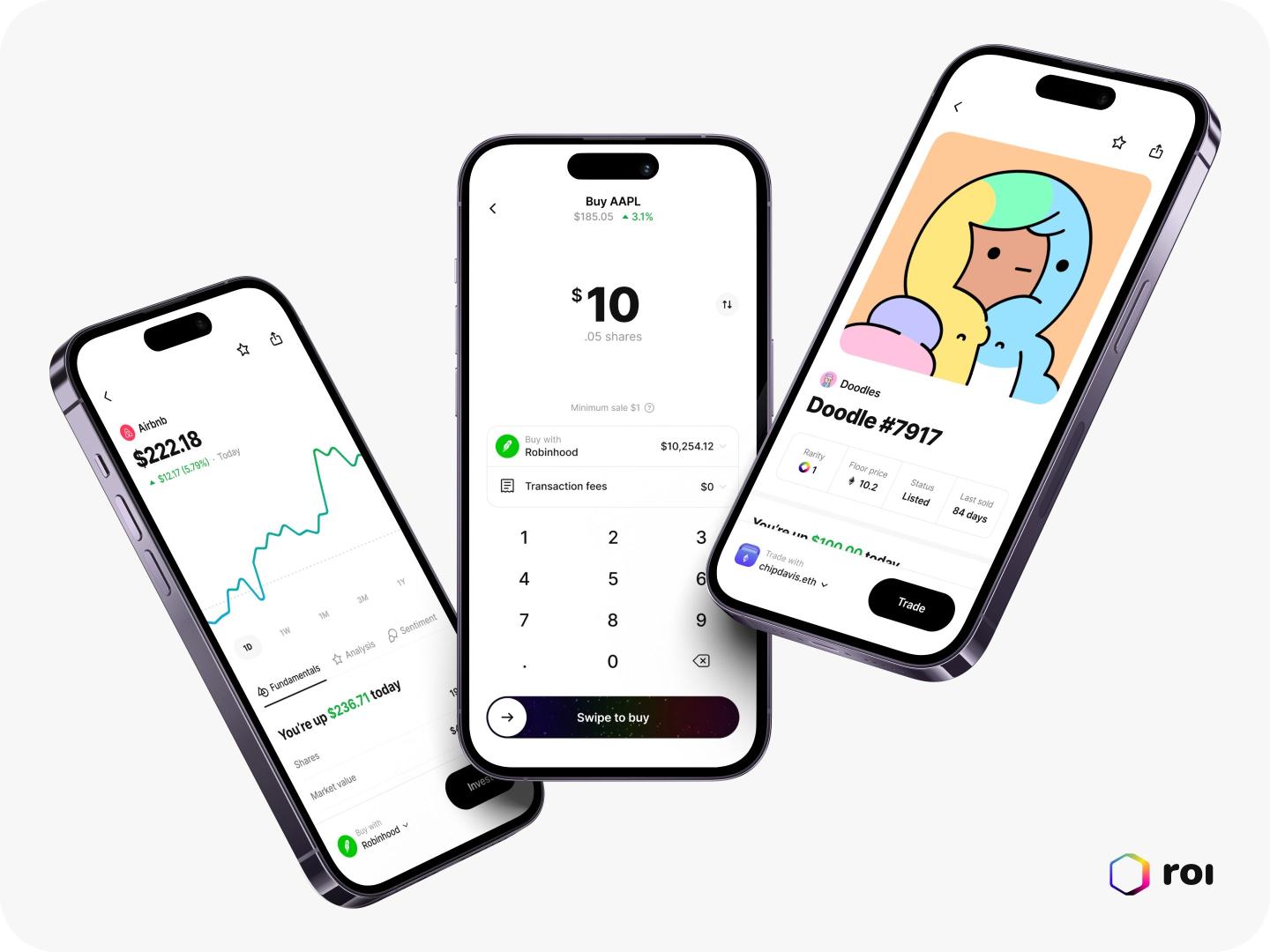
Roi combined investments held across brokerage accounts and crypto wallets in one mobile app. It later added an AI assistant that could answer questions using a customer’s portfolio. Roi announced its OpenAI acquisition in October 2025, with October 15 as its final service day.[1]
The deal valued a founder’s experience while ending a customer product. Roi built a broader personal-finance experience, then closed its service when its founder moved to OpenAI. The public record supports that sequence. It does not establish a cause of commercial failure.


Image 1 / 2
Founding Story
Sujith Vishwajith and Chip Davis knew each other at Airbnb. Vishwajith had also worked at Google and Microsoft; Davis had led design for Airbnb’s professional hosting products. Their early product addressed investors whose assets spanned conventional brokerages and crypto services.[2]
In his acquisition announcement, Vishwajith described the goal as “to make investing accessible to everyone.” In an earlier founder post, he said “creating the best user experience was priority #1.” Customers could schedule conversations with the founders, and a small power-user group tested features early.[3][4]
Roi was operating by March 2022. Its exact incorporation date is not established here.[2]
Timeline
- March 2022: Investor 500 Global described a closed beta and an early social-media audience.[2]
- July 2023: Roi raised $3.6 million in a Spark Capital-led round.[5]
- By October 2025: The developer’s App Store listing advertised Roi AI alongside portfolio tracking and trading.[6]
- October 3, 2025: Vishwajith announced the OpenAI acquisition.[3]
- October 15, 2025: Roi’s announced final service day.[1]
What They Built
The initial idea was to reduce the work of checking disconnected investments. Users could view assets together while retaining accounts elsewhere. The later App Store description added performance comparisons, dividends, allocation views, trading through connected accounts, and an AI assistant. Its publisher was Vega Corp.[6]
The assistant changed the product’s job. A dashboard tells users what they own; a portfolio-aware conversation helps them ask why values changed. Whether that led to better decisions or longer retention was not disclosed.
Market Position
Target Customers
Roi targeted retail investors whose portfolios crossed asset types. Its early investor profile framed fragmented accounts as the opening, with mobile access as the starting point.[2]
Market Size
A large investing audience did not establish Roi’s paying market. The company’s reachable customer count, willingness to pay, and acquisition cost remain unknown.
Competition
Roi competed for the overview that users otherwise assembled across brokerage and wallet apps. That position also depended on those services. The company had to give customers a reason to return after the initial account connection. This is a structural inference from its aggregation model, rather than a documented explanation for the deal.
Business Model
Apple’s listing showed a free download with monthly, quarterly, and annual in-app purchases. That establishes paid subscription options, but it does not show which plan predominated. Roi did not publish revenue, paid conversion, or operating costs in the sources reviewed.[6]
Traction
The developer advertised more than 100,000 investors. Treat this as a company claim, without an independently verified active-user definition. Its founder’s direct-feedback group provides evidence of customer contact, but not retention at scale.[6][4]
Post-Mortem
A founder transferred while the service ended
TechCrunch reported that only Vishwajith joined OpenAI from Roi’s four-person staff; terms were undisclosed.[7] The Information separately reported that OpenAI bought no intellectual property.[8]
The mechanism was a separation of operating experience from product continuity. A founder could continue work at the buyer while customers lost the standalone service. Describing the deal as an acqui-hire captures that distinction.
Personalization became the broader ambition
Vishwajith’s announcement said: “personalization isn’t just the future of finance. It’s the future of software.” That connects the finance product to a wider product ambition, in the founder’s own account.[3]
A competing explanation is commercial pressure: a small company might prefer a buyer to continued independent operation. Without cash-flow, retention, negotiation, or investor-return data, that remains unproven. The record is sufficient for a product and acquisition history, but insufficient for a causal failure verdict or a supported rebuild plan.
Key Lessons
- Roi treated connected financial data as the starting point for a more personal interface. Builders can distinguish information access from the recurring job customers want done.
- The founders invited users into product development. That is evidence of a feedback process; its effect on growth still requires measurement.
- Roi’s service closure and founder’s new role had different consequences. Evaluate customer continuity separately from a founder’s next opportunity.
Sources
- Roi’s acquisition and service-ending announcement
- 500 Global’s March 2022 company profile
- Sujith Vishwajith’s acquisition announcement
- Vishwajith on customer feedback and early testing
- Fortune’s July 2023 funding report
- Roi’s developer-supplied App Store description
- TechCrunch’s October 2025 acquisition report
- The Information’s acquisition briefing (indexed text; full article unavailable)