Shiok Meats
Winter 2019AcquiredShiok Meats is a cell-based clean shrimp company, the first of its…
Pressure-test this opportunity
Explore the risks and possibilities with a prompt for ChatGPT, Claude, or your agent.
Shiok Meats is a cell-based clean shrimp company, the first of its…
Explore the risks and possibilities with a prompt for ChatGPT, Claude, or your agent.
Shiok Meats was a Singapore-based cellular agriculture startup founded in August 2018 by Dr. Sandhya Sriram and Dr. Ka Yi Ling, two former stem cell scientists from Singapore's Agency for Science, Technology and Research (A*STAR). The company pioneered an entirely new category — cultivated crustacean meat — by isolating shrimp, crab, and lobster stem cells and growing them in bioreactors, with the ambition of producing seafood without fishing or aquaculture. It raised approximately $30 million across six rounds, grew to over 40 staff, and became the first alternative protein company accepted into Y Combinator.
Shiok Meats failed because the fundamental biology of cultivating crustacean stem cells at production scale proved intractable. Unlike cultivated beef or poultry, crustacean cellular agriculture had virtually no prior scientific literature to draw on — and the company exhausted its capital runway before it could bridge the gap between R&D-scale milestones and commercial viability.
The company merged with Umami Bioworks in a share-for-share transaction announced in March 2024 and completed in Q3 2024. Shiok Meats ceased to exist as an independent entity. Agronomics, one of its most visible investors, had already fully written down its position by June 2022 — nearly two years before the merger closed — signaling that the financial outcome for investors was deeply unfavorable.
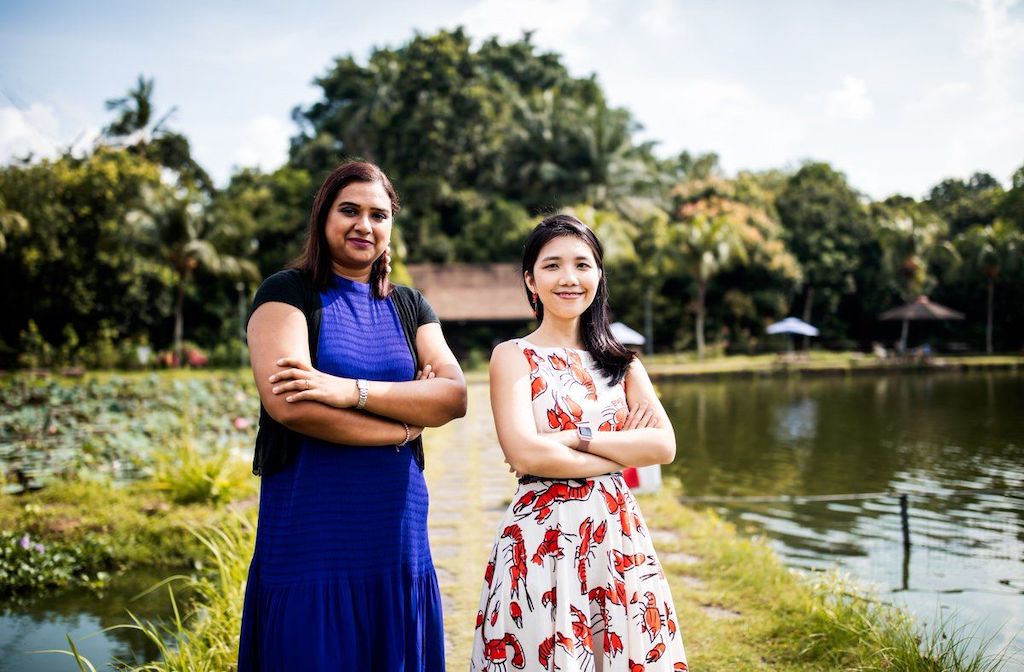
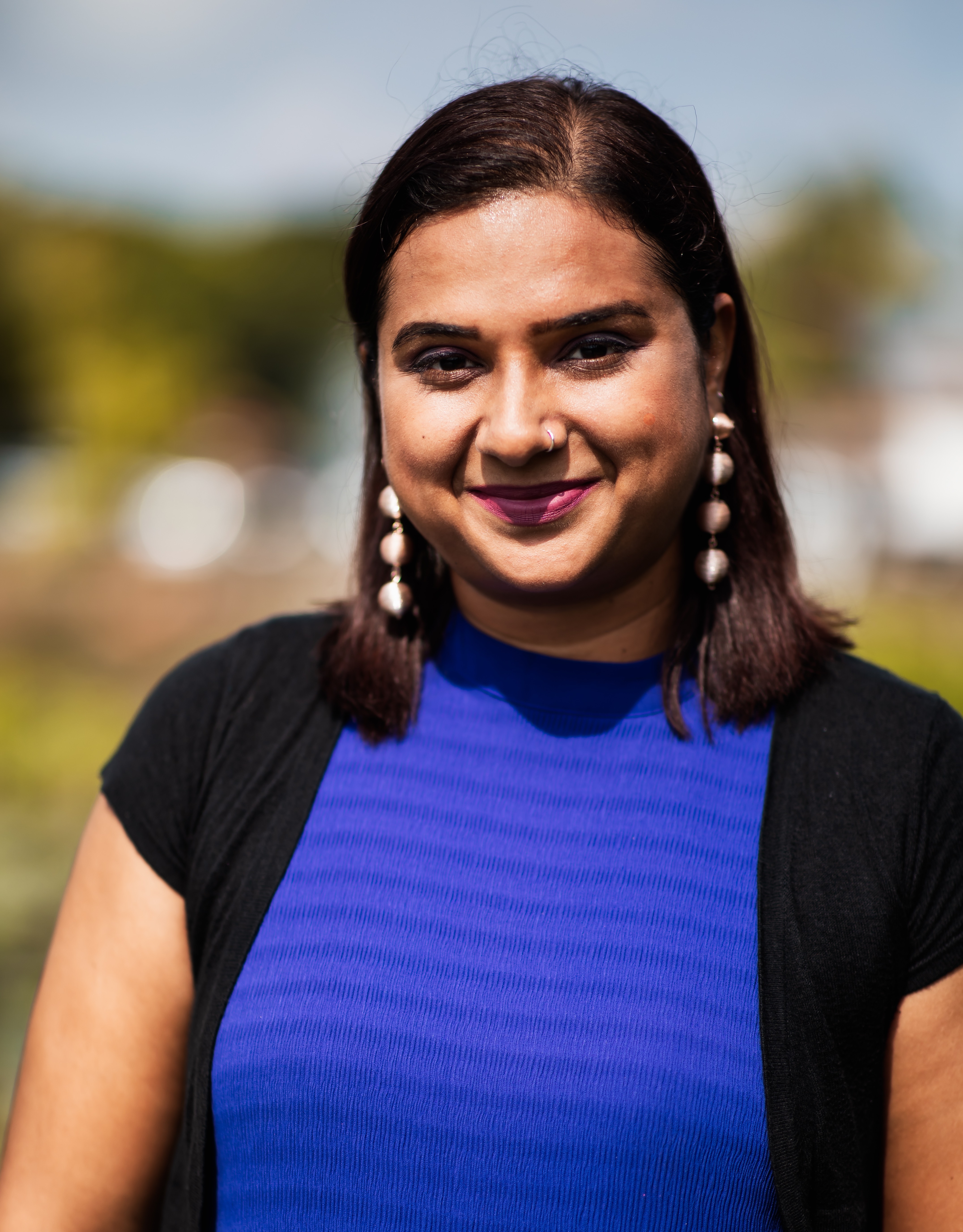
Image 1 / 2
Dr. Sandhya Sriram and Dr. Ka Yi Ling met as colleagues at A*STAR, Singapore's national research agency, where both worked as stem cell scientists. Their professional backgrounds gave them direct exposure to the mechanics of cellular biology — isolating cells, maintaining them in culture, and coaxing them to proliferate — skills that are foundational to cultivated meat but rarely applied to seafood.
The founding insight was geographic and dietary as much as scientific. Southeast Asia is one of the world's largest consumers of shrimp and crustaceans, yet the region had no presence in the emerging cultivated meat sector, which was almost entirely focused on beef and poultry. Sriram and Ling identified a gap: crustaceans were a massive global protein category, yet no one had attempted to cultivate them at the cellular level. The scientific reason for that absence — the near-total lack of prior research on crustacean stem cell lines — was simultaneously the barrier and the opportunity.
In August 2018, the two scientists left A*STAR and incorporated Shiok Meats with $10,000 from a single angel investor. [1] The reaction from peers was immediate skepticism. As Sriram later recalled: "In August 2018, when Ka Yi and I used to tell anyone that we have started Shiok Meats and that we are going to make shrimp meat using stem cells, 90% of the people who heard us told us that we were crazy." [2]
That skepticism had a practical consequence: the founders could not rent lab space on the Singapore mainland. Instead, they set up operations on St. John's Island — a small island off Singapore's southern coast — because their research was considered too risky by the scientific establishment. [3] The physical isolation was an early signal of how far outside mainstream science this work sat.
The founders gave themselves a disciplined one-year mandate: produce a working prototype and raise $1 million in funding. [4] Both milestones were achieved. In January 2019, Shiok Meats was accepted into Y Combinator's Winter 2019 batch — becoming the first alternative meat company in YC history. [5] The YC stamp provided both capital (a pre-seed round of $500,000) and the credibility to attract institutional investors who would otherwise have been reluctant to back a company working in a category with no scientific precedent.
The company's name — "Shiok" is Singaporean slang for something delicious or excellent — reflected its founders' intent to build a product rooted in Southeast Asian food culture, not just a laboratory curiosity. The initial vision was singular: cultivated shrimp, at scale, at a price competitive with conventional aquaculture. That vision never changed. What changed was the founders' understanding of how far the biology was from making it possible.

August 2018 — Shiok Meats founded by Dr. Sandhya Sriram and Dr. Ka Yi Ling with $10,000 in initial capital. Lab established on St. John's Island, Singapore. [3]
January 2019 — Accepted into Y Combinator Winter 2019 batch, the first alternative meat company in YC history. Pre-seed round of $500,000 closed from YC, AiiM Partners, Boom Capital, and Wild Earth CEO Ryan Bethencourt. [5] [6]
April 2019 — Seed round of $4.6M closed, led by Monde Nissin CEO Henry Soesanto. First prototype — cell-based shrimp dumplings — showcased at the Disruption in Food and Sustainability Summit. Five dumplings priced at S$8,000–10,000. [7]
October 2019 — Agronomics invests $500,000 via convertible loan note. [8]
January 2020 — CEO Sriram discloses to Reuters that production cost stands at $5,000/kg — a single dumpling costs approximately $300. [9]
June 2020 — Bridge round of $3M closed from Agronomics, VegInvest, Impact Venture, and Mindshift Capital. Total funding reaches $7.6M. [10]
September 2020 — Series A of $12.6M closed, led by Aqua-Spark. Cost per kg has dropped to approximately $300/kg. Implied post-money valuation of approximately $50M. [11]
July 2021 — Series A extension of $10M closed, led by Woowa Bros and CJ CheilJedang. This is the last documented funding round. [12]
August 2021 — Shiok Meats acquires a 90%+ stake in Gaia Foods, Southeast Asia's first cultivated red meat startup, expanding its product range to beef, pork, and mutton. [13]
September 2021 — Pre-seed investment in Source Green and investment in Phyx44 announced, signaling portfolio diversification. [14]
August 2022 — $50/kg cost milestone announced at R&D scale. Headcount exceeds 40. Mini-plant established in Singapore. Partnership with Mirai Foods announced. 2023 commercial launch of cultivated shrimp targeted. [15]
June 2022 — Agronomics fully writes down its Shiok Meats position in audited results for year ending June 2022. [16]
May 2023 — CEO Sriram publicly discloses 50% staff loss in approximately six months. Confirms crustacean cell lines cannot be scaled into production. Company pivots to prioritize cultivated red meat via Gaia Foods. [17]
March 2024 — Merger with Umami Bioworks announced as a share-for-share transaction. Sriram steps down as Group CEO. [18]
Q3 2024 — Merger with Umami Bioworks completed. Shiok Meats ceases to exist as an independent entity. [19]
Shiok Meats' core technology was cellular agriculture applied to crustaceans — a category no company had attempted before. The process began with isolating stem cells from shrimp, crab, or lobster tissue. These cells were then placed in a nutrient-rich growth medium inside bioreactors, where they proliferated over four to six weeks into edible crustacean meat. [20]
The technical challenge was immediate and structural. Conventional cultivated meat research — focused on beef and chicken — had decades of mammalian cell biology to draw on. Crustacean cell lines had no such foundation. There was no established protocol for isolating shrimp stem cells, no validated growth media formulation, and no bioreactor design optimized for crustacean cell culture. Sriram and Ling were, in the most literal sense, building the scientific playbook as they went.
One early and consequential design decision was the choice of growth media. Many cultivated meat companies use fetal bovine serum (FBS) — a byproduct of the conventional meat industry — as a cheap and effective cell growth medium. Shiok Meats chose to use serum-free, pharmaceutical-grade media instead. [21] This was ethically cleaner and aligned with the company's positioning as a sustainable alternative to conventional seafood. It was also significantly more expensive, adding cost pressure to a product that was already extraordinarily costly to produce.
The first public demonstration of the technology came in April 2019, when Shiok Meats showcased cell-based shrimp dumplings at the Disruption in Food and Sustainability Summit in Singapore. Five dumplings carried a price tag of S$8,000–10,000 — a figure that illustrated both the genuine scientific achievement and the enormous distance to commercial viability. [7]
The cost reduction trajectory over the following three years was real and significant:
Conventional farmed shrimp trades at roughly $5–15/kg depending on species and grade. Even the $50/kg milestone — achieved at R&D scale in a controlled laboratory environment — was still three to ten times the price of conventional shrimp, and R&D-scale economics do not translate linearly to production scale. The gap between the two is where the company ultimately broke down.
The product portfolio expanded over time. After the Gaia Foods acquisition in August 2021, Shiok Meats added cultivated beef, pork, and mutton to its development pipeline. [13] The company also partnered with Japanese cellular agriculture firm IntegriCulture to explore cost-reduction approaches, and announced a partnership with Swiss cultivated beef company Mirai Foods in August 2022. [23] [24]
The company's most durable technical output was its intellectual property. Shiok Meats was granted patents in both the United States and the European Union for its crustacean cell line technology and methods for producing cultivated crustacean meat for food applications. [25] These patents — not the product — were ultimately what Umami Bioworks acquired.
Shiok Meats' primary target was the food service and consumer packaged goods market in Southeast Asia, with Singapore as the initial regulatory beachhead. Singapore was a logical first market: it had approved cultivated chicken for sale in 2020 (the first country in the world to do so), had a sophisticated food regulatory environment through the Singapore Food Agency, and was a high-income market where consumers were more likely to pay a premium for novel protein products.
The company's stated ambition was to eventually reach mass-market consumers across Asia — a region where shrimp and crustaceans are dietary staples, not luxury items. This created a structural tension: the product needed to be priced competitively with commodity shrimp to achieve meaningful adoption, but the biology required to produce it at that price point did not yet exist.
Secondary targets included food manufacturers and restaurant chains that might incorporate cultivated shrimp as an ingredient, reducing the need for direct-to-consumer distribution infrastructure.
The global shrimp market was valued at approximately $45–50 billion annually at the time of Shiok Meats' peak operations, with Asia-Pacific accounting for the majority of both production and consumption. The broader cultivated seafood market was nascent but attracted significant investor attention between 2019 and 2021, when the broader alternative protein sector was receiving close to $1 billion per year in investment. [26]
The addressable market was real and large. The question was never whether people would eat shrimp — it was whether Shiok Meats could produce cultivated shrimp at a price and scale that made the market accessible.
Shiok Meats had no direct competitors in cultivated crustaceans for most of its existence — it was the only company attempting this. This was simultaneously its greatest competitive advantage and its greatest risk. There was no competitive pressure, but there was also no shared scientific infrastructure, no published research to build on, and no proof that the biology was solvable. [27]
The more relevant competitive frame is the broader alternative protein landscape. Shiok Meats competed for investor capital and consumer mindshare against:
The competitive dynamic that mattered most was not product-to-product but capital-to-capital. When the alternative protein funding environment contracted sharply after 2021, investors prioritized companies with clearer paths to commercialization. Cultivated crustaceans — with no regulatory approval, no production-scale cell lines, and a cost structure still far above commodity prices — were among the hardest to defend in a capital-constrained environment.
Shiok Meats also faced an indirect competitive threat from the incumbents it was trying to displace: the global shrimp farming industry. Conventional shrimp aquaculture, while environmentally problematic, was cheap, established, and improving. The cost gap Shiok Meats needed to close was not static — it was a moving target.
Shiok Meats' intended revenue model was direct product sales — cultivated shrimp and crustacean products sold to food service operators and, eventually, retail consumers. The company also explored B2B licensing of its cell line technology and production processes as a secondary revenue stream, though this was never formalized.
The company never disclosed revenue figures, and there is no public evidence that it generated any commercial revenue prior to the merger. This absence is itself significant: Shiok Meats operated for approximately six years entirely on investor capital, with no commercial product reaching market. CEO Sriram was explicit about this dependency: "For the deep tech company like ours where revenue and product will not see the light of day at least [for] five to seven years, we knew we were always dependent on investors' money." [28]
Estimating burn rate from available data: Shiok Meats raised approximately $30M across six rounds between early 2019 and July 2021 — a span of roughly 30 months. [29] With 40+ staff at peak and the capital costs of building a Singapore mini-plant, acquiring Gaia Foods, and running pharmaceutical-grade cell culture operations, an annual burn rate of $6–10M is a reasonable inference — though this is an estimate, not a disclosed figure. If accurate, the $10M Series A extension (July 2021) would have provided roughly 12–20 months of runway, consistent with the May 2023 public acknowledgment of crisis.
The unit economics of the core product were never viable at any documented production scale. At $50/kg (the best R&D-scale figure achieved), the product was still three to ten times more expensive than commodity shrimp — and that figure did not account for the cost inflation that typically accompanies the transition from R&D to production scale.
Shiok Meats demonstrated meaningful operational execution across its five-year life. The company grew from fewer than five employees at founding to over 40 by 2022, and established a dedicated mini-plant in Singapore — a physical production facility, not just a laboratory. [30]
The cost reduction from $5,000–7,000/kg in early 2020 to $50/kg by August 2022 represented a roughly 100-fold improvement in production efficiency over approximately two and a half years. [9] [15] This is a genuine technical achievement, though the critical qualifier — "at R&D scale" — meant it did not translate to production economics.
External recognition was strong. Shiok Meats was named among Fast Company's Top 10 most innovative companies in the Asia Pacific region. [31] The company attracted 35 investors across six rounds, including strategically significant backers: Aqua-Spark (a specialist aquaculture fund), Monde Nissin (a major Asian food conglomerate), CJ CheilJedang (a Korean food giant), and Woowa Bros (the operator of South Korea's largest food delivery platform). The investor roster suggested genuine commercial interest from food industry incumbents, not just financial speculation.
The planned 2023 commercial launch of cultivated shrimp in Singapore — announced with confidence in August 2022 — never occurred. [32] That gap between the August 2022 announcement and the May 2023 public acknowledgment of failure represents the definitive measure of where traction ended and crisis began.
The proximate cause of Shiok Meats' failure was explicit and founder-confirmed. In May 2023, CEO Sriram stated publicly: "We are unable to scale crustacean stem cells into production — we are facing issues with cell lines that can scale and then further issues in scale up too." [33]
This was a two-layer failure. First, the company could not establish crustacean cell lines that were stable and proliferative enough to serve as the biological foundation for production. Second, even where cell lines showed promise at laboratory scale, the engineering challenges of maintaining those cells in larger bioreactor environments introduced new failure modes. The specific biological mechanisms — whether cell line instability, insufficient proliferation rates, differentiation failure, or bioreactor incompatibility — were not disclosed publicly.
What is clear is that the failure was not for lack of effort or capital. By May 2023, Shiok Meats had spent approximately five years and the majority of its $30M on this problem. The $50/kg milestone achieved in August 2022 was real, but it was achieved under controlled R&D conditions that could not be replicated at production scale. The gap between R&D-scale and production-scale economics in cellular agriculture is well-documented across the industry — and for crustaceans, with no prior scientific literature to draw on, that gap was wider than for any other protein category. [27]
Shiok Meats' failure was not simply a matter of execution. It was structurally more likely than failure in cultivated beef or poultry, because the scientific foundation simply did not exist.
Cultivated meat companies working on mammalian proteins — beef, chicken, pork — could draw on decades of mammalian cell biology research, established cell line repositories, validated growth media formulations, and bioreactor designs developed for pharmaceutical manufacturing. None of this existed for crustaceans. Shiok Meats had to develop its own cell isolation protocols, its own growth media, and its own bioreactor approaches from scratch, in parallel with trying to reduce costs and scale production. [27]
This is a different risk class than competing in an established cultivated meat category. The biological unknowns were not reducible by capital or execution alone — they required scientific breakthroughs that may not have been achievable within any commercially viable timeframe. The company's founders understood this risk from the outset (hence the island lab and the 90% skepticism rate from peers), but the investor community may not have fully priced it.
By May 2023, Shiok Meats had lost 50% of its staff in approximately six months through a combination of layoffs and voluntary resignations. [34] Sriram described the dynamic candidly: "Along with the layoffs, also came employees resigning themselves as they were doubtful of the future of the company and not motivated with crustacean cell lines not scaling up." [34]
The staff loss was both a symptom of the scaling failure and an accelerant of it. Scientists and engineers who had joined to work on a specific technical problem — crustacean cell culture — lost confidence when that problem proved intractable. Their departures removed institutional knowledge that was difficult to replace, further slowing any remaining attempts to solve the scaling challenge. A 50% headcount reduction in six months in a deep-tech company is not a restructuring — it is a collapse of organizational confidence.
Shiok Meats' last documented funding round closed in July 2021. [12] The company then operated for approximately two years on that capital while attempting to solve the crustacean scaling problem. No Series B was announced or documented — whether because the company chose not to pursue one given the scaling failures, or because it tried and failed to raise one, is not publicly known.
The external environment made a Series B structurally difficult regardless. The cultivated meat sector experienced a severe funding contraction after 2021, with investment falling sharply from a peak of nearly $1 billion in a single year. [26] Investors who had funded the sector on the expectation of near-term commercialization grew impatient as regulatory approvals moved slowly and production costs remained far above commodity prices. Shiok Meats — with no commercial revenue, a scaling failure in its core product, and a pivot to red meat that was itself unproven — was among the least fundable companies in an already difficult environment.
Agronomics' full write-down of its Shiok Meats position, disclosed in results for the year ending June 2022, is the clearest financial marker of when institutional confidence collapsed. [16] That write-down came nearly two years before the merger announcement — meaning Agronomics had concluded the investment was worthless well before the company formally wound down.
The August 2021 acquisition of Gaia Foods — framed publicly as a strategic expansion into red meat — reads differently in retrospect. Sriram later acknowledged that red meat cell lines are better understood scientifically than crustacean cell lines, and that Gaia had scalable cell lines where Shiok's core product did not. [35]
This suggests the Gaia acquisition was at least partly a hedge against crustacean scaling risk — an attempt to acquire a more tractable product line before the crustacean failures became undeniable. The pivot to red meat as the primary commercialization path (announced May 2023) validated this reading. But the pivot also consumed capital and management attention that might otherwise have been directed at the core crustacean problem, and it introduced a new set of regulatory and commercial challenges without resolving the original ones.
By May 2023, the company was pursuing cultivated red meat as its first product for regulatory approval, with seafood to follow. [33] Whether the Gaia Foods red meat cell lines were themselves commercially viable at that point is not publicly documented.
The merger with Umami Bioworks, announced March 2024 and completed Q3 2024, was a share-for-share transaction with undisclosed exchange terms. [18] The combined entity retained the Umami Bioworks name and was led by Umami Bioworks CEO Mihir Pershad. Sriram stepped down as Group CEO. [36]
Umami Bioworks acquired Shiok Meats' crustacean cell line IP and some team members. Pershad stated: "Some of the [Shiok] team is joining us so there's a combination of know-how plus process IP around development of crustacean cell lines." [37] The fact that only "some" team members joined — not all — combined with Agronomics' prior full write-down, strongly implies that investors received little to no financial return. The merger had been in negotiation for approximately eight to nine months before the public announcement, meaning serious wind-down discussions began around mid-2023, shortly after the public acknowledgment of scaling failure. [38]
The scientific work was not worthless — the patents and cell line know-how had value as a building block for Umami Bioworks' broader cultivated seafood program. But the company could not commercialize that work independently, and the merger was the mechanism by which it was transferred to an entity better positioned to continue it.
Pioneering a category with no prior scientific literature is a fundamentally different risk class than competing in an established one. Shiok Meats entered cultivated crustaceans in 2018 with virtually no published research on crustacean stem cell lines to draw on — unlike cultivated beef, which had decades of mammalian cell biology as a foundation. The company raised $30M and spent five years on the problem, but the biological unknowns were not reducible by capital or execution alone. Investors and founders who enter genuinely novel scientific categories should model the possibility that the core biology may not be solvable within a commercially viable timeframe, regardless of how well the company executes.
R&D-scale cost milestones are necessary but not sufficient signals of commercial viability — and the gap between the two is where cultivated meat companies most often break down. Shiok Meats achieved a 100-fold cost reduction from $5,000/kg to $50/kg between 2020 and 2022, which it announced alongside a 2023 commercial launch target. Nine months later, the company disclosed it could not scale crustacean cell lines into production at all. The $50/kg figure was real, but it was achieved under controlled laboratory conditions that did not survive contact with production-scale bioreactors. Investors and observers should treat R&D-scale cost milestones as proof of scientific progress, not proof of commercial readiness.
The Gaia Foods acquisition in August 2021 — framed as strategic expansion — was also an implicit acknowledgment that the core product was at risk. Sriram later confirmed that red meat cell lines are better understood scientifically and that Gaia had scalable cell lines where Shiok's crustacean lines did not. A company that acquires a more tractable product line while its core product is still unproven is hedging, not expanding. Founders and investors should treat mid-stage portfolio diversification in deep-tech companies as a potential signal of underlying technical risk, not just strategic ambition.
Deep-tech companies with 5–7 year horizons to revenue are structurally fragile when sector sentiment shifts. Sriram explicitly acknowledged that Shiok Meats was entirely dependent on investor capital for at least five to seven years. When the cultivated meat sector's funding environment contracted sharply after 2021 — investment falling from a peak of nearly $1 billion per year — companies with no revenue, unresolved scaling challenges, and no near-term regulatory approval had no fallback. Shiok Meats' last funding round closed in July 2021; the company then operated for two years without additional capital while failing to achieve the milestones that would have justified a Series B.
Investor write-downs are leading indicators, not lagging ones. Agronomics fully wrote down its Shiok Meats position in results for the year ending June 2022 — nearly two years before the merger was announced and completed. That write-down was a public signal, available to anyone tracking the company, that the lead investor had concluded the investment had no recoverable value. In deep-tech companies with long development timelines and no revenue, institutional investor write-downs should be treated as among the most reliable available signals of terminal distress.