Overview
Skiff built encrypted documents, email, storage, and calendars around one account. Notion acquired it in February 2024, and the original suite closed on August 9, 2024. Users had to move their data and replace their Skiff addresses. The official migration notice offered forwarding only until February 9, 2025, for accounts that enabled it before the shutdown. [1]
The product attracted a substantial audience: Ars Technica reported two million users when covering the acquisition. That count does not establish active usage or paid subscriptions. The acquisition price was undisclosed. The documented adverse outcome is the loss of the original service, rather than a calculated financial loss for investors. [2]
Founding Story
Andrew Milich and Jason Ginsberg founded Skiff in 2020. In Notion’s acquisition interview, Milich traced the idea to a graduate-student trip to Russia and the difficulty of collaborating across languages, time zones, and security constraints. The founders had met while planning a Stanford hackathon. [3]
“We became official on April Fool’s Day, 2020,” Milich said. Ginsberg was working on Apple’s Vision Pro when Milich called him. By 2021, Skiff occupied a former Notion office in San Francisco’s Mission District. [3]
The company’s product ambition combined privacy with familiar collaboration tools. Milich told investor SV Angel: “Companies aren’t built overnight.” He described security work as requiring months of design, analysis, auditing, and review. That engineering burden helps explain the challenge of expanding a private workspace without making it difficult to use. [4]

Timeline
- April 2020: Skiff officially began, according to Milich’s account. [3]
- November 2021: The IPFS project announced Skiff’s public availability and collaboration with Protocol Labs on decentralized document storage. [5]
- March 2022: Skiff announced a $10.5 million Series A. [6]
- May–December 2022: Mail, Drive, and Calendar expanded the workspace beyond documents. [7]
- January 2023: Skiff announced in-product domain registration and automatic email configuration. [8]
- February–August 2024: Notion acquired the company; the original four services then closed. [3], [1]
- April 2025: Milich and Ginsberg introduced Notion Mail, a different email product. Notion later announced a September 22, 2026 retirement date for that inbox. [9], [10]
What They Built
Skiff Pages enabled collaborative writing; Drive stored and shared files; Mail handled email; Calendar added private event management. Its historical product pages describe aliases, folders, scheduled sending, custom domains, and migration from Google tools. These pages preserve the former offering; the migration notice controls its availability. [11], [12], [1]
The December 2022 whitepaper describes encryption in the user’s browser and sharing keys with collaborators. Its email model distinguished messages between Skiff users from communication with outside providers. External email required an intermediary service to process messages for delivery or encryption. A broad claim that every message remained encrypted between its original sender and final recipient would therefore exceed the documented design. [13]
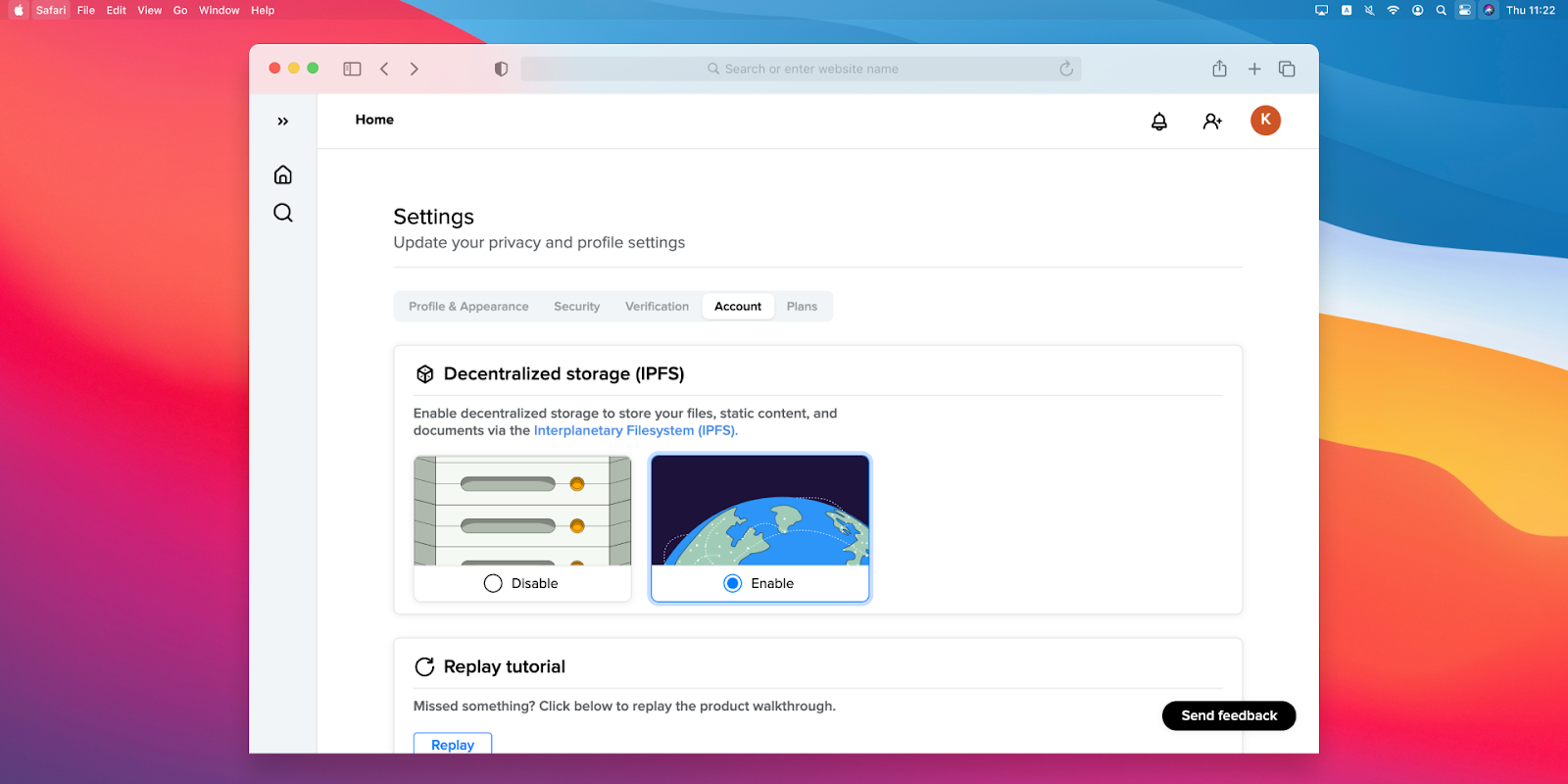
Skiff also offered optional IPFS storage. IPFS is a network for distributing files across hosts; it did not remove every dependency on the company’s applications, accounts, and email service. Protocol Labs’s announcement describes a collaboration feature, rather than a promise that the full suite could survive without Skiff. [5]
Wallet login was another route into the product. The whitepaper documented MetaMask and Brave Wallet support. Later Drive material listed additional wallets. This connected private collaboration to communities already using cryptographic identities; a wallet login still did not make a Skiff-hosted email address portable. [13], [12]
Market Position
Target Customers
Skiff addressed people and teams that wanted collaboration with stronger privacy. In an April 2022 interview, Milich described finding users through privacy communities, security conferences, Reddit, Telegram, Discord, and cryptocurrency events. Community participation supplied feedback as well as distribution. [14]
Market Size
The broad population using email and documents was not a measured paying market for Skiff. Adoption depended on the work of moving existing files, contacts, domains, and routines. Its expansion made more jobs possible inside one account while increasing the amount users would eventually need to move.
Competition
Google Workspace supplied familiar collaboration; Proton offered an established privacy-focused alternative. Skiff sought to combine everyday usability, a growing suite, and wallet-based identity. Today Proton still provides paid custom-domain email and import/export tools. That makes a new encrypted inbox a much broader undertaking than simply replacing Skiff’s interface. [15], [16]
Business Model
Skiff used free access to attract users and offered paid storage and workspace capabilities. Its December 2022 retrospective reported paid tiers with additional aliases, custom domains, and up to 1 TB of storage. In January 2023, purchasing and configuring a domain inside the product reduced another barrier to adopting Skiff as a primary account. [7], [8]
The public record reviewed here does not establish revenue, profitability, acquisition consideration, or investor returns. A subscription offering and a large registered audience cannot supply those missing measures.
Traction
Skiff’s own year-end 2022 account reported more than 350,000 users and millions of emails. The later two-million figure describes further reach, with no consistent active-user denominator established between the two accounts. The figures support substantial adoption; they do not show how many users paid or depended on Skiff as their main address. [7], [2]
Outcome and evolution
The acquisition preserved the team’s opportunity to build at Notion, while ending Skiff’s original services. Skiff explicitly said accounts and data would not become Notion accounts. Exporting files, changing account recovery addresses, and moving email identity remained separate tasks. Time-limited forwarding could ease the transition but could not preserve an address indefinitely. [1]
The founders launched Notion Mail in April 2025 around custom views, AI-assisted organization, and scheduling. Notion’s documentation described it as a Gmail client. It was a new product direction, rather than continuation of Skiff’s encrypted mailbox. [9], [17]
Official app release notes also announced that Notion Mail would close on September 22, 2026, and instructed users to export Mail-only data beforehand. Actual completion of that retirement was not verified. Notion’s current agent documentation separately says Mail connections can work without using Notion Mail. The announced inbox retirement and continuing email connections concern different product surfaces. [10], [18]
The evidence supports a continuity lesson more strongly than a financial failure theory. Encryption addressed who could read stored content. It did not guarantee continued operation, a permanent address, or a complete migration path after a change of ownership.
Key Lessons
- Define privacy and continuity separately. Encrypted data can still depend on an application and provider that later close.
- Test the exit path early. Moving files, changing recovery addresses, and replacing email identity require different checks.
- Use communities for product feedback. Skiff’s founder described privacy and security groups as sources of adoption and criticism.
- Track the successor’s actual scope. Notion Mail used Gmail and later received its own retirement notice; the acquired team’s next product was not the old service.
Sources
- Skiff migration notice
- Ars Technica
- Notion’s founder conversation
- SV Angel profile
- IPFS announcement
- TechCrunch
- Company retrospective
- Skiff Domains
- Launch
- official app release notes
- Drive
- Technical whitepaper
- Founder transcript
- Current Proton plans
- export documentation
- Notion documentation
- current agent documentation