Overview
Skyscanner made fragmented flight information easier to compare. Its founders began work in 2001, launched publicly in 2003 and built a business that sends travellers to airlines and other providers. Ctrip completed its acquisition in December 2016. Skyscanner remains part of the renamed Trip.com Group.[1][2][6][8]
Skyscanner’s business depended on supplier coverage, useful comparison and reaching travellers. Referral income depended on the agreements behind those introductions. A large audience does not establish completed bookings, and a displayed fare does not establish the final cost of a usable trip.
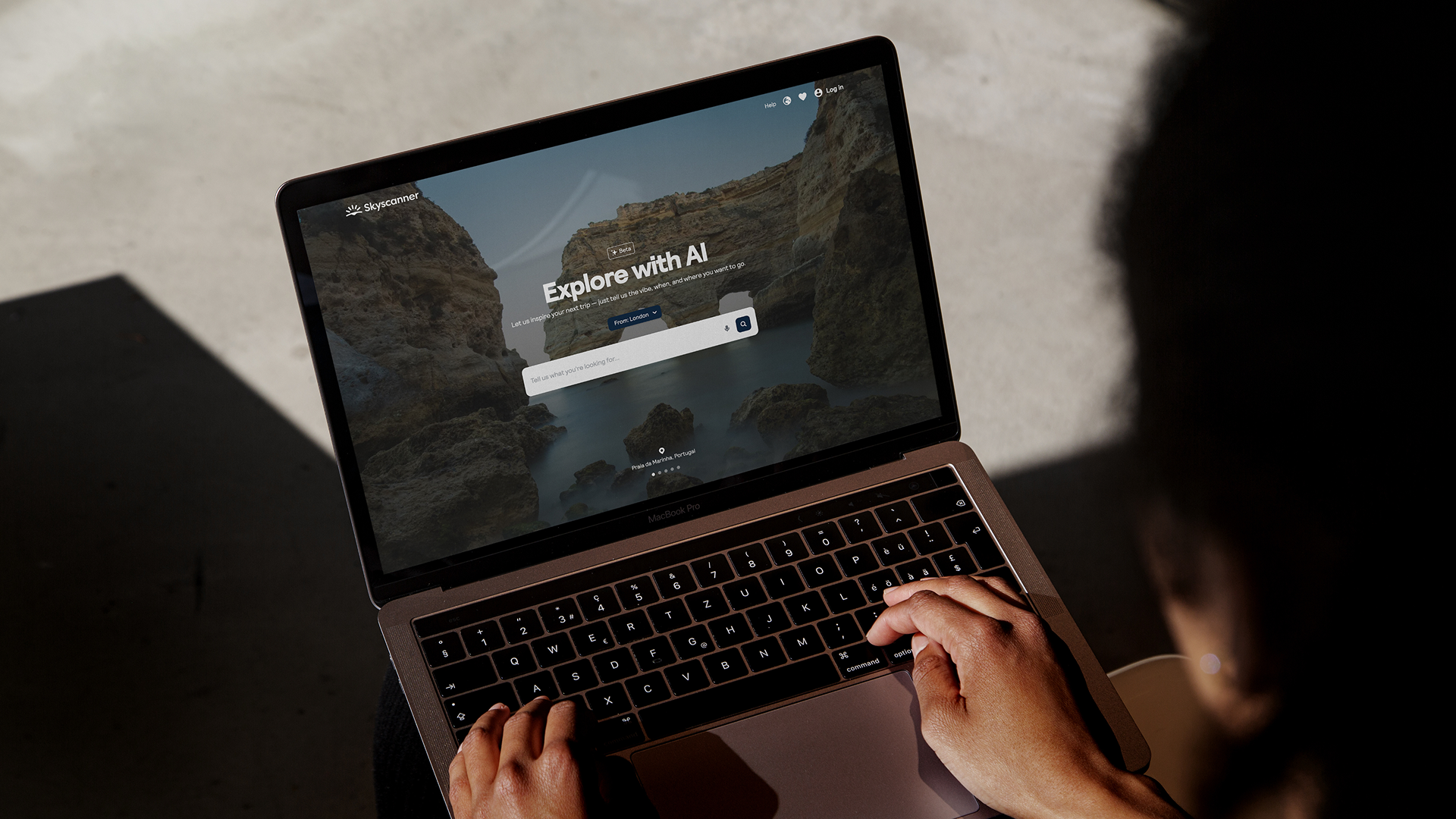
Image 1 / 1
The founders solved a comparison problem they knew
Gareth Williams wanted to compare flights from several London airports to airports serving the Alps. He worked with Barry Smith and Bonamy Grimes on an early spreadsheet and then a search product. In his 2017 interview, Williams describes sharing two salaries between three founders while he worked full time on Skyscanner. Airlines initially struggled to understand the metasearch model and were difficult to recruit.[2]
Metasearch means comparing offers from other sellers, then directing the customer to one of them. That model reduced the need to sell tickets itself, but made coverage and reliable links central to the product. A polished search box with too few suppliers would leave travellers checking the same airline websites manually.
Williams dates Scottish Equity Partners’ £2.5 million investment to 2007. He describes Sequoia’s 2013 investment as secondary, then £128 million from new investors in January 2016. Secondary share purchases and money entering the company serve different purposes; they should not be added together as operating capital.[2]
International growth required local supply knowledge
In February 2015, CFO Shane Corstorphine described why Skyscanner bought Youbibi in 2014. Its Tianxun service needed Chinese technology, consumer understanding and better access to a market where offline supply partners mattered more. International flight coverage alone did not solve domestic search. He said more than 80% of Skyscanner’s traffic then came from outside the UK.[3][4]
Distinction added mobile-development capacity in 2014.[5] The two acquisitions illustrate different needs: local commercial knowledge and product engineering. Neither follows automatically from translating an existing website.
The CFO interview reported £93.4 million of revenue and £20 million of EBITDA for calendar 2014. EBITDA is an earnings measure before specified financing, tax and accounting costs; it is not net income or cash flow. These reported figures describe a substantial revenue business before the sale.[3]
The customer searches free; providers fund the service
Skyscanner’s current explanation says users do not pay to search or download its app. It earns from travel partners and advertisers. Depending on the agreement, a partner pays for a website visit or a completed booking. The traveller completes payment and receives post-booking service from the chosen provider. Skyscanner also says it does not cover every airline and seller.[9]
This creates a measurement boundary. Search sessions, redirects, supplier bookings and Skyscanner revenue are separate measures. The value of tickets eventually sold by airlines cannot be called Skyscanner’s merchant revenue. A referral can create revenue without Skyscanner becoming the ticket seller.
Distribution also works through other publishers. Its affiliate programme offers widgets, banners and links. The current page describes a 30-day referral record and a payout based on a share of the commission Skyscanner receives. It lists more than 5,000 monthly unique visitors among acceptance criteria. That payout is not a percentage of the whole flight price unless a specific agreement says so.[11]
Supplier relationships continue to change. Ryanair announced a September 2025 agreement giving Skyscanner direct access to its content and ancillary-price information. The announcement documents a commercial integration, rather than ownership of the airline’s inventory or responsibility for its flights.[15]
Cheap exploration and a bookable price are different products
Skyscanner’s developer documentation says its Indicative Prices API supports broad exploration with cached prices that can be up to four days old. Those prices describe the cheapest recently seen option for one adult in economy. They are useful for comparing months or destinations, but the documentation directs developers to live prices for exact, bookable itineraries.[10]
The trade-off is practical. Broad exploration benefits from quick estimates; committing money requires current availability and the seller’s final conditions. A founder can make both useful by labeling their different purposes. Treating a cached discovery price as a guaranteed quote damages the comparison product’s trust.
Access to this data is also a business constraint. The current commercial API application requires an established product and business plan, with at least 100,000 monthly active users among its criteria. Access is reviewed case by case. A new travel product cannot assume it can obtain the same data merely by adding an API key.[12]
Ctrip bought the business; travel shocks still reached it
Skyscanner published its acquisition-complete notice on December 9, 2016. A later Trip.com filing records approximately £1.4 billion in purchase consideration, around £1.2 billion in cash and the remainder in shares. It describes acquiring shares from nearly all Skyscanner shareholders. The completed transaction should be distinguished from the November announcement.[6][7]
The acquisition preserved an operating brand. Trip.com’s 2025 annual report records 99.6% indirect ownership of Skyscanner Holdings at December 31, 2025. It also dates Ctrip’s holding-company name change to October 2019. Trip.com Group revenue or profit therefore includes a wider business and cannot establish Skyscanner’s standalone results.[8]
Ownership did not remove travel-demand risk. In July 2020, DIGIT reproduced CEO Moshe Rafiah’s restructuring statement, which anticipated around 300 staff departures and likely office closures in Budapest and Sofia. Those were announced plans during the pandemic, rather than a verified final count of departures. The episode shows how a search business can remain exposed to the underlying industry without operating aircraft.[20]
Current features already cover broad travel discovery
Skyscanner’s July 2026 release reported more than 160 million travellers using it monthly worldwide. That is a company audience claim across its travel products, not 160 million monthly ticket buyers. The release described Explore with AI in English-speaking markets and a desktop road-trip planner, both in beta. It also listed flight tracking with gate and terminal information.[13]
Its app-only Drops feature identifies fares falling at least 20% over a seven-day comparison. Existing Price Alerts cover selected routes and dates. A generic assistant that recommends destinations or watches fares would overlap with these products immediately.[13][14]
Google Flights already tracks routes, particular flights and flexible dates. Hopper’s published help topics include Price Watch and prediction tools. Skyscanner also entered conversational distribution: February 2026 reporting described its ChatGPT flight-search app launching in the UK and US.[18][19][17]
Skyscanner also depends on other platforms to reach travellers. In its February 2026 submission to the UK Competition and Markets Authority, Skyscanner calls search-engine optimization and organic content central to its growth. It argues that Google’s AI search changes and preference for its own travel tools threaten visibility. These are Skyscanner’s claims in a consultation, not a regulator’s finding. They nevertheless identify a dependency its founders would need to manage today.[16]
A narrower test starts where a search result stops
A possible product is Case Passage, an instrument-travel record for small chamber ensembles. A tour manager would link each instrument and case to each flight leg, record the operating airline’s requirements and retain the actual carrier or agent confirmation. Changes to the route or case would reopen the relevant checks.
There is evidence for the task. The Independent Society of Musicians recommends written airline acceptance. British Airways says certain larger cabin instruments need an extra seat booked at least 48 hours before departure through the airline or an agent. FIM already offers a public airline-policy directory, whose visible entries include older review dates. A directory entry cannot establish acceptance of a particular case on a particular flight.[21][22][23]
Existing alternatives are substantial. Master Tour manages itineraries and attachments. TAG supplies touring travel support and confirmation documents through TAGgo+. EasyVola advertises instrument-request services starting at €19, excluding airline charges. Case Passage would need to outperform those services or a spreadsheet for coordination across several legs; it has no demonstrated demand yet.[24][25][26]
Test with an ensemble’s existing booking agent before building integrations. The product would organize evidence, while the airline decides carriage and the agent handles ticket changes. If an existing touring tool records the same checks adequately, use it and stop the separate product.
Timeline
| Date | Event |
|---|---|
| 2001–2003 | Prototype work precedes the public launch. [1–2] |
| 2007 | Scottish Equity Partners invests, according to Williams. [2] |
| 2013 | Sequoia secondary investment. [2] |
| 2014 | Youbibi and Distinction acquisitions. [3–5] |
| January 2016 | £128 million investment round. [2] |
| December 9, 2016 | Company announces Ctrip acquisition complete. [6] |
| 2020 | Pandemic restructuring proposed. [20] |
| 2025–2026 | Ryanair integration, AI discovery beta and conversational distribution extend the current product. [13,15,17] |
Sources
- Skyscanner company history
- Gareth Williams founder interview
- CFO interview about APAC expansion
- Youbibi acquisition notice
- Distinction acquisition reporting
- Completed Ctrip acquisition notice
- Trip.com 2021 annual filing historical acquisition
- Trip.com 2025 annual report
- How Skyscanner works, Canada
- Indicative flight prices documentation
- Affiliate programme
- Commercial Travel API admission
- Summer 2026 product release
- Skyscanner email price alerts
- Ryanair partnership announcement
- Skyscanner CMA publisher-control response
- ChatGPT launch report
- Google Flights price tracking
- Hopper products index
- Pandemic restructuring report
- ISM instrument travel guidance
- British Airways musical instrument rules
- FIM airline-policy directory
- Master Tour Pro
- TAG touring service and TAGgo+
- EasyVola musical-instrument service