Overview
Vesttoo promised to connect insurers with capital-market investors using data and risk models. Founded in Israel in 2018, it announced an $80 million Series C at a $1 billion valuation in October 2022. The business later collapsed when the credibility of collateral supporting its transactions failed. Better estimates of insurance losses could not make an invalid financial guarantee payable. [1] [4] [6]
Vesttoo entered bankruptcy in August 2023. Its liquidation plan took effect on April 11, 2024. As reviewed October 27, 2026, the case docket still showed a creditors liquidating trust filing post-confirmation reports. The cited legal records distinguish liquidation from the resolution of individual claims. [8] [9] [10]
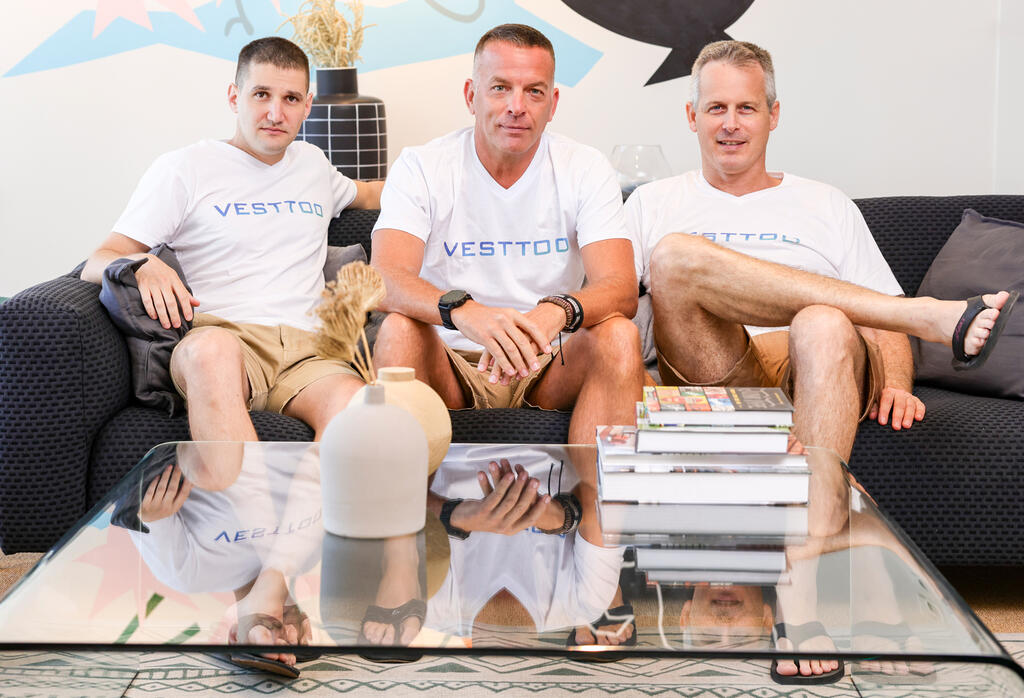
Image 1 / 1
Founding Story
Yaniv Bertele, Ben Zickel and Alon Lifshitz founded Vesttoo in 2018. Their combined backgrounds connected technology and financial modeling. Globes reported that Bertele previously worked in business development at Consumer Physics and Goji, Lifshitz came from the Bank of Israel and rating firm Midroog, and Zickel had also worked at Goji. The same report said Bertele knew Lifshitz through reserve military service and Zickel through earlier work. These details come from indexed coverage; the complete original article was not available in this review. [4] [5]
The proposition was to make insurance risk easier to model, structure and sell to investors. Insurance companies would gain capacity to write policies, while investors would gain exposure to returns outside conventional markets. The quality of the risk model and the existence of the pledged capital were separate requirements. [1] [2]
Bertele described the investment case in the October 2022 company announcement: “Our clients and equity partners understand the Vesttoo vision and the opportunity we provide”. In the August 2022 Clear Blue announcement, Lifshitz said: “Clear Blue are as data-driven as we are, and together we can grow the pot efficiently”. Both statements express the founders' pitch. They do not establish investment performance. [1] [2]
Timeline
- 2018: The three founders established Vesttoo in Israel. [4]
- 2021: Hanaco led its Series A; Mouro Capital led a subsequent Series B. [1]
- February 2022: Vesttoo and Corinthian Re announced VESCOR, a structure for investment in non-catastrophe insurance risks. [3]
- August 2022: Clear Blue and Vesttoo announced a plan to deploy $1 billion in reinsurance capacity over the following year. [2]
- October 2022: Vesttoo announced its $80 million Series C and expanded international operations. [1]
- August 2023: The group filed bankruptcy petitions; its board removed Bertele and Lifshitz from executive roles. [6] [7]
- February–April 2024: The court confirmed the liquidation plan, which then became effective. [8]
- 2025–2026: The trust and counterparties pursued claims while the estate remained in a wind-down process. [9] [10]
What They Built
Vesttoo worked between an insurer seeking protection and investors willing to supply capital. An insurer transfers part of its risk through reinsurance. The investor expects a return for supporting that obligation. Vesttoo used insurance data to model losses, price transactions and structure financial instruments. Its marketplace pitch included portfolio modeling, premium quotes and performance monitoring. Those were company-described capabilities; the reviewed evidence does not establish their predictive accuracy. [1] [2]
The Clear Blue relationship brought an insurer's underwriting and program data into that process. Its announced $1 billion was intended reinsurance capacity, not a financing round, software revenue or proof that a billion dollars of cash had arrived. [2]
VESCOR attempted a different packaging route. Corinthian Re would identify and manage a portfolio of insurance risks, while Vesttoo supplied modeling and financial engineering. The announcement proposed rated notes tied to multiple reinsurance transactions. Its first note was described against over $250 million in gross written premiums, with a later $2 billion premium target. Premium volume measures insurance written; it does not measure invested capital, transaction profit or completed placement. The announcement targeted a rating rather than establishing that every planned note was issued. [3]
The collateral was a separate dependency. Some transactions relied on letters of credit, bank undertakings that support payment if specified conditions occur. If the issuing bank never validly issued the undertaking, the expected protection can be missing even when the underlying insurance risk was modeled correctly. Vesttoo's own bankruptcy report describes the collateral allegations and resulting legal actions as the immediate operating crisis. [6]
Market Position
Target Customers
Vesttoo sold a complex institutional proposition. Insurers needed reinsurance capacity; capital providers wanted exposure to insurance returns. Clear Blue and Corinthian brought existing portfolios and distribution relationships. Aon later described Vesttoo as a third party identifying capital providers for insurance and reinsurance obligations, including property, cyber and collateral-protection insurance. [2] [3] [10]
This route could reach large transactions without acquiring individual consumers. It also linked Vesttoo's reputation to brokers, banks, insurers and specialist entities that each controlled a different part of the transaction. A familiar counterparty's involvement did not settle whether a particular guarantee was genuine or enforceable.
Market Size
The announced Clear Blue capacity and VESCOR premium targets show the scale of the company's ambition. They cannot establish a realized market share. Publicly comparable figures for completed genuine collateral, recurring customers and profitable transaction volume were unavailable in the reviewed evidence. A forecast for all reinsurance premiums would not answer those questions.
Competition
Vesttoo competed with traditional reinsurers and other routes for investing in insurance risk. Its claimed advantage was faster modeling and structuring for investors outside the usual reinsurance market. The resulting transaction still needed credible counterparties and usable collateral. [2] [3]
A present-day software alternative must also face existing finance infrastructure. Surecomp's 2025 RIVO materials describe full lifecycle support for letters of credit and guarantees, digital document exchange, workflow configuration and audit records. Its brochure offers subscription packages without public price amounts. Building a generic guarantee dashboard would overlap directly with that product. [11]
Business Model
Vesttoo combined technology with arranging and structuring financial transactions. CTech's later reporting describes fees collected on transactions. Neither that report nor the reviewed primary releases provides a reliable take rate, recurring software revenue split or audited margin. The profitability claim in its fundraising material lacks an independently verified operating baseline. [15] [1]
The financing signal was substantial but narrower than the commercial targets. The $80 million Series C bought equity at a stated $1 billion company valuation. Clear Blue's $1 billion capacity program was a different measure. Conflating these figures would exaggerate both funding and completed business. [1] [2]
Traction
By October 2022, Calcalist reported 140 employees and offices across several financial centers. Clear Blue had publicly endorsed the relationship, while Corinthian had committed to the VESCOR partnership. Those are concrete signs of organizational growth and market access. They do not verify the authenticity of collateral or the amount of profitable, completed business. [4] [2] [3]
Outcome and evolution
Vesttoo's September 2023 court report connected the collateral crisis to an inability to operate. It said White Rock sought a freeze on funds, “effectively halting Vesttoo’s ability to operate”. The same filing described investigations and a plan called Trade Forward. That was an attempted restructuring, rather than a completed recovery. [6]
The company later accused a subset of former executives and external parties of misconduct. Bertele and Lifshitz disputed the investigation and denied that evidence had been presented against them, according to CTech. The internal investigation's claims are distinct from a court finding of individual liability. [16] [7]
Management argued during restructuring that the analytics retained value despite the collateral failures. That is a credible alternative to a claim that the technology itself failed. The original operating business still entered liquidation. A 2025 court complaint records liquidation-plan confirmation on February 29, 2024 and effectiveness on April 11. The trust's July 2026 post-confirmation report appears in the case docket. [6] [8] [9]
Legal outcomes also differ by claim. Aon's 2025 financial-statement disclosure says Clear Blue and Aon filed a dismissal with prejudice in September 2025. It separately describes a trust lawsuit and Aon's intention to defend it. A closed lawsuit does not resolve every other case, and a filed complaint does not establish the defendant's liability. [10]
Bertele's current professional website says he leads Everoak Innovations, a life-settlement investment business. CTech reported that new venture in April 2025, and an Everoak website remains accessible. This establishes separate later activity, without verifying investment results or continuation of Vesttoo's original obligations. [13] [14] [15]
Key Lessons
- Vesttoo modeled insurance losses while relying on separate collateral documents. A risk estimate cannot authenticate the bank obligation that makes a transaction financially usable.
- Vesttoo's Clear Blue and Corinthian relationships gave it institutional reach. Distribution through established firms increased transaction scope without removing each participant's verification duties.
- Vesttoo's capacity announcements, premium targets and equity valuation measured different things. A commercial milestone needs a precise unit and evidence of completion.
- Vesttoo argued that its technology could survive the crisis, but the estate entered liquidation. Separate the value of a technical asset from the viability of the operating institution around it.
Sources
- Vesttoo Series C announcement
- Vesttoo and Clear Blue partnership
- VESCOR partnership announcement
- Calcalist 2022 founding and financing report
- Globes 2022 founder background report
- Vesttoo first interim report, court filing reproduced by Coverager
- Founders dismissed; response reported by CTech
- Liquidating trust procedural history in Appleby complaint
- Vesttoo bankruptcy docket
- Aon 2025 financial statement legal disclosure
- Surecomp RIVO for Banks 2025 brochure
- ICE NGX June 2025 letter-of-credit notice
- Yaniv Bertele current professional site
- EverOak Innovations website
- CTech on Everoak launch
- Royal Gazette reproduces Vesttoo September 2023 statement
- Bermuda court White Rock reasons