
Overview
Zeta Surgical was a Boston-based medical robotics startup founded in 2018 by Harvard graduates Jose Maria Amich and Raahil Sha, alongside Harvard neurosurgeon Dr. William Gormley. Incubated at the Harvard i-lab as "Z Imaging" and accelerated through Y Combinator's Summer 2019 batch, the company built an AI-powered surgical navigation platform designed to bring "GPS-like" precision to emergent, bedside neurosurgical procedures that historically relied on freehand technique. Over eight years, the company secured four FDA 510(k) clearances, completed a successful first-in-human trial in Singapore, and deployed its first commercial system in 2026.
Zeta Surgical failed because it built a technically superior navigation platform one regulatory and commercial cycle too early for its core market—acute, emergent neurosurgery—where fragmented adoption paths (procurement, credentialing, reimbursement) could not support venture-scale growth before capital ran out. The company's late pivot to transcranial magnetic stimulation (TMS) navigation for psychiatric indications arrived just as its runway was likely exhausted, leaving a portfolio of cleared products without the commercial engine to scale them.
As of this writing, Zeta Surgical shows no public announcement of shutdown or acquisition. The company's website remains active, and its most recent FDA clearance came in July 2026. The "failure" is inferred from the absence of subsequent funding rounds, a headcount of roughly 12 employees, and revenue estimated under $5 million annually—signals of a company that achieved regulatory success but never reached commercial escape velocity.

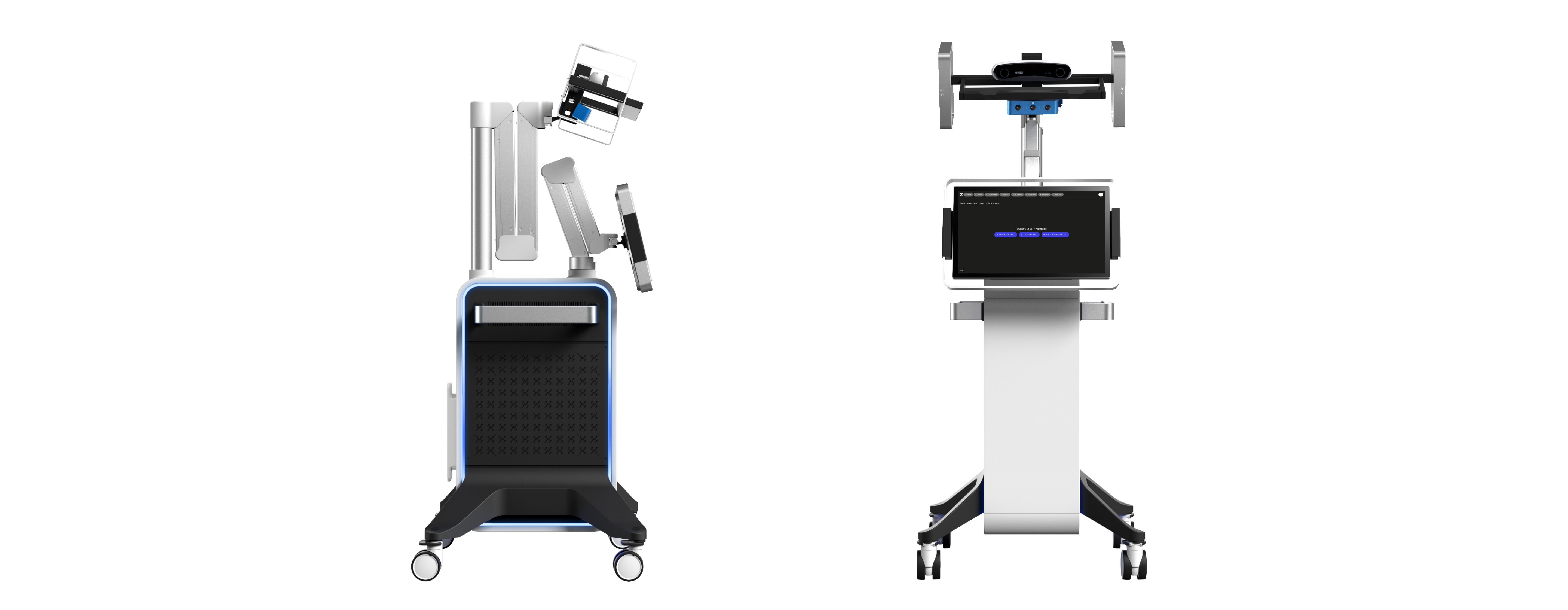
Image 1 / 2
Founding Story
Zeta Surgical's origin traces to an undergraduate curiosity at Harvard. Jose Maria Amich and Raahil Sha met as students—Amich studying Molecular and Cellular Biology with a minor in Global Health and Health Policy, Sha studying Computer Science with a focus on computational biology. Both graduated in 2018, and both became interested in how augmented and virtual reality could be applied to healthcare.[1]
The founding insight came from a clinical gap that Sha and Amich identified through their research. Surgical navigation existed—Medtronic and Brainlab had built stereotactic systems for planned, operating-room-based procedures—but it was invasive, required rigid head fixation, and took too long to set up for emergent cases. As co-founder Dr. William Gormley, a Harvard Medical School neurosurgeon and Director of Neurosurgical Innovation at Mass General Brigham, told TechCrunch in 2022:
"There is this giant disconnect between the precision we have on one hand, and the complete lack of technology and precision we have for the other group of surgeries. The reason for that is that lots of these are emergent, and the technology has just not been developed to take care of that group of patients."[2]
The trio incubated the company at the Harvard i-lab under the name "Z Imaging," later renamed Zeta Surgical Inc.[3] Amich brought research experience from Harvard Medical School under Professor Joan Brugge; Sha brought computational biology depth; Gormley provided the clinical credibility and access that a medtech startup needs to even begin.[4]
The initial vision was deliberately broad. Amich framed it in 2022:
"To date, the use of surgical guidance has been limited to long, operating room-based interventions, due to its invasiveness and complex deployment. Our goal is to provide physicians with a robust, fast, and accurate guidance system deployable during any case, irrespective of where they are in the hospital or what hospital they are in."[5]
Y Combinator's Summer 2019 batch provided early validation and network access, placing Zeta among 82 startups that launched on Day 2 of Demo Days.[6] The company emerged from stealth in March 2022 with a $5.2 million seed round led by Innospark Ventures, with participation from TSVC, Y Combinator, and Trevor Fetter, the former CEO of Tenet Healthcare.[7][8]
The company's technical choices reflected a disciplined pragmatism. The team explored AR/VR headsets for surgical guidance but rejected them as insufficiently accurate, instead building around an off-the-shelf Doosan robotic arm combined with proprietary navigation software.[2] This decision—prioritizing sub-millimeter accuracy over flashy interfaces—would define the product's identity.
Timeline
- 2018: Zeta Surgical founded (as Z Imaging) by Jose Amich, Raahil Sha, and Dr. William Gormley, incubated at Harvard i-lab.[3]
- August 2019: Accepted into Y Combinator S19 batch; presented at Demo Day.[6]
- March 2022: Came out of stealth with $5.2M seed round led by Innospark Ventures.[7]
- June 2023: Completed first-in-human trial at Singapore's National Neuroscience Institute for ventriculostomy.[9]
- September 2023: First FDA clearance reported by Boston Business Journal.[10]
- October 2023: SEC Form D filed, listing Amich and Sha as officers, Matt Fates as director.[3]
- January 2024: Zeta Cranial Navigation System received FDA 510(k) clearance (K230661).[11]
- October 2025: Zeta TMS Navigation System received FDA 510(k) clearance (K251927), first under product code SGE.[12]
- February 2026: RealTrack foundational patent published.[13]
- April 2026: Partnership with NRx Pharmaceuticals for military/first responder applications announced.[13]
- May 2026: Zeta Navigation System received FDA 510(k) clearance (K253663) for brain tumor biopsies, hydrocephalus, trigeminal neuralgia.[14]
- May 26, 2026: First commercial deployment of Zeta TMS Navigation System at HOPE Therapeutics.[15]
- June 23, 2026: First patient treated with Zeta TMS Navigation System at HOPE Therapeutics.[16]
- July 1, 2026: Announced European R&D hub in Greater Zurich Area; CEO Amich gave interview on adoption challenges.[17]
- July 10, 2026: Zeta TMS Robotic System received FDA 510(k) clearance (K261471).[18]
What They Built
Zeta Surgical's core product line centered on a navigation platform that brought stereotactic-grade precision to procedures that historically lacked it. The flagship Zeta Cranial Navigation System provided "GPS-like" surgical navigation with live, continuous tracking of patient movement at 20 times per second—without requiring rigid head fixation or general anesthesia.[19] This was the company's founding thesis made concrete: emergent procedures like ventriculostomy (draining fluid from the brain) and brain biopsies, which are often performed at the bedside with freehand technique, could be guided with the same precision as planned operating-room procedures.
The underlying technology, branded RealTrack AI, was the company's key differentiator. It registered a patient's MRI or CT imaging to their facial anatomy in under two minutes, without requiring external fiducial markers, and continuously tracked the surgical instrument or TMS coil position with sub-millimetric accuracy.[16] The system tracked patient movement in real time, automatically adjusting for any motion—a critical feature for procedures performed without general anesthesia.
The company's technical architecture reflected a pragmatic build-vs-buy philosophy. Rather than developing a custom robotic arm, Zeta used an off-the-shelf Doosan robotic arm combined with proprietary navigation software and tools.[2] The team explicitly rejected AR/VR headsets as a guidance interface, determining the technology wasn't yet accurate enough for surgical applications. This decision kept development costs down and time-to-market shorter, but it also meant the company's moat rested entirely on its software and regulatory clearances rather than proprietary hardware.
The product line expanded over time. The Zeta TMS Navigation System, cleared in October 2025, applied the same RealTrack technology to transcranial magnetic stimulation—a non-invasive treatment for depression, OCD, PTSD, and addiction disorders. The system delivered sub-millimeter targeting accuracy (0.45 mm mean translational error), compared with 2-5 mm reported in many existing TMS navigation systems, with setup in approximately one minute versus more than ten minutes in existing systems.[20] A single TMS suite could support up to five full treatment courses per week, a throughput advantage designed to improve clinic economics.[20]
The Zeta TMS Robotic System, cleared in July 2026, added robotic positioning of TMS coils, dynamically tracking patient movement and automatically adjusting coil position to maintain on-target delivery.[18] This was the company's most advanced product, combining its navigation software with robotic actuation.

The clinical evidence was strong. The 15-patient first-in-human trial for ventriculostomies at Singapore's National Neuroscience Institute demonstrated optimal outcomes across all cases: single-pass, ideal placements with a median setup time under three minutes and no adverse events.[21] A subsequent study with the University of Cambridge and Harvard Medical School demonstrated sub-millimeter translational and sub-degree angular precision in bench, phantom, and cadaver testing for navigated TMS.[12]
Market Position
Target Customers
Zeta Surgical's customer base evolved significantly over its lifetime. The original target was acute-care hospitals and neurosurgery departments—specifically, the clinicians performing emergent bedside procedures like ventriculostomy, external ventricular drain placement, and brain biopsies. These procedures are high-stakes but historically low-tech: a misplaced ventriculostomy can cause hemorrhage or infection, yet the standard of care often involves freehand insertion guided by anatomical landmarks.
The TMS pivot shifted the target customer to psychiatric clinics and neuromodulation centers treating treatment-resistant major depressive disorder (TR-MDD), which affects about one-third of patients with major depression worldwide, as well as OCD, PTSD, and addiction disorders.[12] This was a fundamentally different buyer: not neurosurgeons in acute-care hospitals, but psychiatrists and clinic operators in outpatient settings. The first commercial deployment was at HOPE Therapeutics, a subsidiary of NRx Pharmaceuticals, in West Palm Beach and Sarasota, Florida.[15]
Market Size
The addressable market for surgical navigation is substantial but fragmented. The global surgical navigation systems market was estimated in the low single-digit billions, dominated by a handful of incumbents. The emergent neurosurgery niche Zeta initially targeted—ventriculostomy, bedside biopsies—is a smaller subset, representing perhaps hundreds of thousands of procedures annually in the US. The TMS navigation market, by contrast, was growing faster, driven by the expansion of TMS as a treatment for depression and the emergence of new indications. However, TMS navigation is a relatively small slice of the overall TMS market, which itself is a fraction of the psychiatric treatment market.
Competition
Zeta Surgical entered a competitive landscape dominated by entrenched incumbents with decades of distribution relationships. Medtronic's StealthStation and Brainlab's navigation systems are the established standards in cranial and spinal navigation, with deep integration into hospital OR workflows, capital equipment sales teams, and service contracts. These incumbents had a structural advantage: they were already in the hospital, already credentialed, already on the procurement list.
Zeta's differentiation was real but narrow. Its markerless, real-time tracking with sub-millimeter accuracy was genuinely superior to many existing systems, and its portability (no rigid head fixation, no general anesthesia) opened a new use case—bedside emergent procedures—that incumbents had largely ignored. But this was a classic "new market" strategy: Zeta wasn't displacing Medtronic in the OR; it was creating a category that didn't exist. That meant Zeta had to educate the market, build the evidence base, and create the procurement pathway from scratch.
The competitive dynamics shifted when Zeta pivoted to TMS navigation. Here, the incumbents were different: companies like Localite and Rogue Research offered TMS navigation, but with less accuracy and longer setup times. Zeta's 0.45 mm accuracy versus 2-5 mm for existing systems was a meaningful clinical advantage, and its one-minute setup versus ten-plus minutes was a meaningful workflow advantage.[20] The company's claim to be the first TMS navigation device cleared under product code SGE suggested a regulatory first-mover position.[12]
The structural problem was distribution. In emergent neurosurgery, Zeta faced incumbents with entrenched hospital relationships. In TMS navigation, Zeta faced a market that was growing but still small, and where the buying decision was made by clinic operators who might not prioritize navigation at all—many TMS clinics operate without any navigation system, using anatomical landmarking instead. Zeta wasn't just competing against other navigation companies; it was competing against the status quo of no navigation at all.
Business Model
Zeta Surgical's business model was a capital-equipment sale: selling navigation systems to hospitals and clinics, with the Zeta TMS Robotic System representing a higher-priced robotic variant. The company never disclosed specific pricing, revenue figures, or unit economics.[19]
The available data suggests a company operating at very early commercial scale. Startupintros.com estimates approximately 12 employees and under $5 million in annual revenue.[19] PitchBook lists a Later Stage VC round of $8.85 million with 16 investors total, across multiple seed rounds (2018, 2022, 2023) and accelerator/incubator rounds.[22] Combining the $5.2 million seed round with the $8.85 million later-stage round suggests total disclosed funding of roughly $14 million, though the actual figure may be higher given undisclosed rounds.
Inference, not fact: With ~12 employees and a Boston office, Zeta's annual burn was likely in the $3-5 million range (medtech salaries, regulatory costs, lab space, clinical trial expenses). At that burn rate, $14 million in disclosed funding would fund roughly 3-4 years of operations. The company operated from 2018 to at least mid-2026—eight years—which suggests either additional undisclosed funding, significant revenue, or aggressive cost management. The absence of a disclosed Series A round is notable: a company with four FDA clearances and a first-in-human trial should have been able to raise a Series A if the commercial story was compelling.
The revenue model for TMS navigation was likely a capital sale plus potential recurring software or service revenue, though no such structure was disclosed. The HOPE Therapeutics deployment was described as a "commercial deployment," suggesting a paid sale, but the terms were not public.[15]
Traction
Zeta Surgical's traction was real but concentrated in regulatory and clinical milestones rather than commercial scale. The company achieved four FDA 510(k) clearances between January 2024 and July 2026—a remarkable regulatory cadence for a startup of its size.[11][12][14][18]
Clinical evidence was strong. The first-in-human trial in Singapore demonstrated optimal outcomes across all 15 cases, with single-pass placements and no adverse events.[21] The Cambridge/Harvard study validated sub-millimeter accuracy in rigorous testing.[12]
Commercial traction, however, was minimal. The first commercial deployment came in May 2026—more than two years after the first FDA clearance—and involved a single customer, HOPE Therapeutics, which was also a partner in the NRx ecosystem.[15] The planned "large-scale commercial pilot" with the Big 10 Neurosurgical Consortium was announced but no results were reported.[21] Revenue under $5 million annually with 12 employees suggests a company still in pilot mode, not scaling.[19]
Post-Mortem
Primary Cause: The Gap Between Regulatory Clearance and Clinical Adoption
Zeta Surgical's failure was not a failure of technology or regulatory execution—it was a failure of commercial timing. The company built a genuinely superior product, secured FDA clearance, and demonstrated clinical efficacy. What it could not do was convert those achievements into revenue fast enough to sustain a venture-backed business.
CEO Jose Amich articulated this problem with unusual clarity in a July 2026 interview:
"The United States is still one of the most important markets in the world for clinical innovation, and Boston has been an exceptional place for us to start. The frustration is not that there is a lack of demand for better technology. It is that every step between a cleared product and routine clinical use can be slow and fragmented."[17]
He elaborated:
"A medtech startup has to build clinical evidence, navigate procurement, hospital credentialing, cybersecurity and IT reviews, reimbursement questions, capital budget cycles, supply chain requirements, and physician training, often one health system at a time. For a young company, that means the pace of adoption can be much slower than the pace of technical progress."[17]
This is the core structural mechanism of Zeta's failure: in medtech, regulatory clearance is the beginning of the commercial process, not the end. A 510(k) clearance means the FDA has determined the device is substantially equivalent to a predicate—it says nothing about whether hospitals will buy it, whether insurers will reimburse for it, or whether clinicians will adopt it. Zeta cleared this first hurdle repeatedly and impressively, but the subsequent hurdles—procurement, credentialing, reimbursement, training—proved insurmountable within the company's capital runway.
The Emergent Neurosurgery Market Was Too Niche and Too Slow
Zeta's founding thesis targeted emergent neurosurgery—ventriculostomy, bedside biopsies—procedures that are high-stakes but relatively low-volume at any single institution. A typical hospital might perform a few hundred ventriculostomies per year. The addressable market per hospital was small, which meant the sales cycle economics were challenging: a sales rep could spend months navigating procurement for a system that might be used a few times per week.
The first-in-human trial results were excellent, but they were also a double-edged sword. The trial demonstrated that the system worked—single-pass placements, three-minute setup, no adverse events.[21] But it also highlighted the niche nature of the application. Ventriculostomy is an important procedure, but it's not a high-volume, high-revenue procedure that would justify a major capital purchase for most hospitals.
The TMS Pivot Came Too Late
The pivot to TMS navigation was strategically sound—TMS is a faster-growing market than emergent neurosurgery, with clearer reimbursement pathways and a larger addressable patient population. The product was technically excellent: 0.45 mm accuracy versus 2-5 mm for competitors, one-minute setup versus ten minutes, and the first FDA clearance under product code SGE.[20][12]
But the pivot came in October 2025, more than seven years after founding. The first commercial deployment followed in May 2026, and the first patient was treated in June 2026.[15][16] By this point, the company had been operating for eight years with roughly $14 million in disclosed funding.[22] The TMS products were cleared and deployed, but the company likely lacked the runway to build the sales organization, marketing engine, and clinical evidence infrastructure needed to scale.
The Zurich expansion, announced in July 2026, reads as a strategic retreat from the US market's friction rather than an aggressive global expansion. Amich's framing—"The frustration is not that there is a lack of demand for better technology"—suggests a founder who had hit the wall of US healthcare adoption and was looking for an alternative path.[17]
Structural Mechanism: The Feature-Product Trap
There is a deeper structural pattern here that goes beyond Zeta's specific execution. The company built a navigation platform—a technology that improves the precision of procedures but is not itself a procedure. In medtech, this is a fundamentally different business from building a device that performs a procedure. Navigation systems are enabling technologies: they make existing procedures better, but they don't create new revenue streams for hospitals. A hospital buys a navigation system to improve outcomes, not to generate new billable procedures.
This creates a challenging sales dynamic. The buyer (a hospital or clinic) must justify the capital expenditure based on improved outcomes, but the revenue impact is indirect. Contrast this with a company like Intuitive Surgical, whose da Vinci system enables minimally invasive surgery—a procedure that generates significant incremental revenue for hospitals. Zeta's navigation system made ventriculostomies more accurate, but hospitals were already billing for ventriculostomies; the system didn't create new billable volume.
The TMS pivot partially addressed this by targeting a market where navigation could improve treatment efficacy and thus drive better outcomes for existing TMS patients. But even here, the navigation system was an add-on to an existing TMS suite, not a new revenue generator.
Counter-Narrative: Was Zeta Simply Underfunded?
An alternative explanation is that Zeta was a well-executed company that was simply undercapitalized for the market it chose. Medtronic and Brainlab spent decades and billions building their navigation businesses. Zeta raised roughly $14 million in disclosed funding—a fraction of what its competitors had spent on R&D alone.[22] The company achieved four FDA clearances on a startup budget, which is remarkable. But the commercial infrastructure needed to sell into US hospitals—sales teams, clinical specialists, marketing, service networks—requires significantly more capital than Zeta had access to.
The absence of a Series A round is telling. A company with Zeta's regulatory track record should have been able to raise a Series A if the commercial story was compelling. The fact that it didn't—or couldn't—suggests that investors saw the same adoption gap that Amich described. The company's technology was validated, but the path to venture-scale returns was not.
Industry-Level Context
Zeta's failure also reflects a broader pattern in surgical navigation. The category has been structurally inhospitable to startups for decades. The incumbents—Medtronic, Brainlab, Stryker—have distribution networks, service organizations, and installed bases that create high switching costs. New entrants must either displace incumbents in existing procedures (a slow, expensive process) or create new categories (a risky, uncertain process). Zeta attempted the latter with emergent neurosurgery and then pivoted to the former with TMS navigation. Neither path generated revenue fast enough.
The TMS navigation market itself is a cautionary tale. TMS is a growing treatment, but navigation is not universally adopted—many clinics operate without it. Zeta was selling a solution to a problem that many clinicians didn't yet recognize as a problem. The company's superior accuracy was real, but it was selling against the status quo of no navigation at all.
Key Lessons
-
Regulatory clearance is not commercial validation. Zeta Surgical secured four FDA 510(k) clearances—a remarkable regulatory achievement—but clearance only means the FDA deemed the device substantially equivalent to a predicate. It says nothing about whether hospitals will buy it, insurers will reimburse for it, or clinicians will adopt it. Zeta's founder explicitly identified this gap: "every step between a cleared product and routine clinical use can be slow and fragmented."[17] Medtech startups must budget for the commercial cycle—procurement, credentialing, reimbursement—not just the regulatory cycle.
-
Enabling technologies face a harder sell than procedure-enabling devices. Zeta's navigation system made existing procedures more accurate but didn't create new billable revenue for hospitals. Contrast this with Intuitive Surgical's da Vinci, which enables a new procedure category. Navigation systems are a harder sell because the ROI is indirect. Zeta's TMS pivot partially addressed this, but the company had already spent years and most of its capital on the cranial navigation market.
-
Market timing in medtech is measured in decades, not years. Zeta launched in 2018 targeting emergent neurosurgery, a market where the standard of care was freehand technique. The company was technically ahead of the market—the technology existed, but the clinical community, procurement infrastructure, and reimbursement pathways did not. By the time the TMS pivot arrived in 2025, the company had been operating for seven years on startup capital. The market may eventually adopt markerless navigation, but Zeta couldn't wait for it.
-
The absence of a Series A is a signal, not a mystery. Zeta's disclosed funding was roughly $14 million across multiple seed rounds.[22] A company with four FDA clearances and positive clinical trial results should have been able to raise a Series A if the commercial story was compelling. The fact that it didn't suggests investors saw the same adoption gap that Amich described. For medtech founders, the ability to raise follow-on capital is itself a form of market validation—and its absence is an early warning sign.
Sources
- Emles Venture Partners - Transforming surgery with mixed reality and robotics
- TechCrunch - Zeta Surgical comes out of stealth with a $5.75M raise
- SEC Form D Filing - Zeta Surgical Inc.
- Robotics Summit - Jose Amich speaker profile
- The Robot Report - Zeta Surgical raises $5.2M in seed funding
- Hacker News - YC S19 Demo Day 2
- TechCrunch - Zeta Surgical comes out of stealth
- The Robot Report - Zeta Surgical seed funding
- PR Newswire - Zeta Surgical first-in-human trial at NNI
- Boston Business Journal - Zeta Surgical FDA clearance
- FDA 510(k) Database - K230661
- Zeta Surgical - TMS Navigation System FDA clearance
- Zeta Surgical - News and Publications
- Zeta Surgical - Zeta Navigation System FDA clearance
- Zeta Surgical - First commercial deployment at HOPE Therapeutics
- PR Newswire - First patient treated at HOPE Therapeutics
- Greater Zurich Area - Zeta Surgical success story
- Zeta Surgical - Zeta TMS Robotic System FDA clearance
- StartupIntros - Zeta Surgical profile
- Zeta Surgical - TMS Impact
- PR Newswire - Zeta Surgical FDA clearance expansion
- PitchBook - Zeta Surgical profile
- Y Combinator - Zeta Surgical