Blitz Esports (S15) at a glance
- The match was the channel. The fan app required users to seek out information; the desktop companion appeared inside a repeated playing habit. Distribution improved when the product met players at the moment of need.
- Exploration needs a retirement rule. Media insight helped uncover the coaching product, but carrying a fan app, newsroom, and companion at once spread a small team across three operating models.
- Platform proximity cuts both ways. Riot's investment offered alignment with the data owner, yet delayed disclosure weakened editorial trust. Access without explicit governance creates a second debt alongside the technical one.
- The buyers revealed the business. Discord wanted the team, Swift wanted the app and brand, and neither preserved the newsroom. A split acquisition showed that the pieces had clearer value than the combined company.
Overview
Blitz Esports began in 2015 as Instant eSports, a YC-backed mobile guide to scores, schedules, and news. It became an educational media company, then launched an automatic League of Legends desktop companion that supplied matchup-specific builds, runes, scouting, and post-game feedback. Six months into open beta, Blitz said the companion had appeared in more than 65 million games and that 45% of monthly users used it daily.[1]
Blitz did not die from lack of demand. It ended because a small team had assembled three different businesses with different labor, distribution, and buyer profiles. The fan app needed manual tournament data, the publication needed editors and video producers, and the desktop app needed software and game-data operations. In 2018 those pieces separated: Discord acquired most of the team, Swift bought the app and brand, and the editorial operation closed.[2]
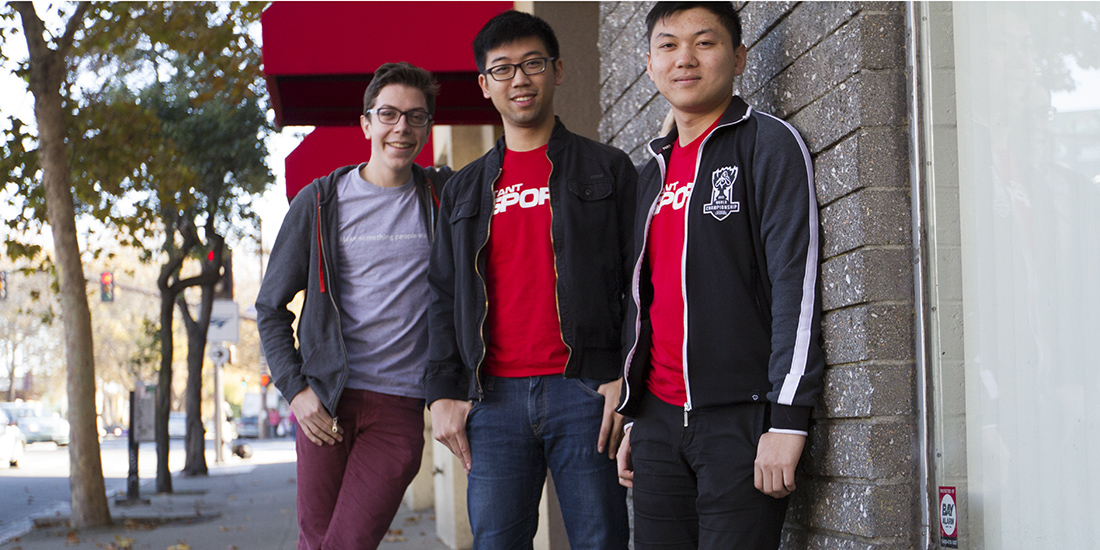


Image 1 / 3
Founding Story
The company started as Instant eSports after Sebastian Merz, Rick Ling, and Jonathan Lin organized the first Cal Hacks, a 36-hour event that drew more than 1,000 students. The three UC Berkeley alumni began discussing esports and experimenting with products in late 2014. They joined Berkeley's Venture Lab, won a small entrepreneurship competition, and entered Y Combinator's Summer 2015 batch.[3]
Their first insight concerned information, not coaching. Esports audiences were growing, but following a specific team required stitching together tournament pages, social posts, news, and streams. In the YC launch announcement, Instant eSports supported League of Legends and Dota 2, with CS:GO and Hearthstone planned. YC described the 2015 esports audience as 134 million and the market as $612 million.[4]
The founders were gamers, but they brought different forms of category knowledge. YC said Ling and Lin had worked in gaming, while Merz had been an ESL esports commentator. Merz told Berkeley Engineering, “We are trying to be anything but a publication. Right now we are something else, and I think something else is what we are good at.” Lin described the product more concretely: “The idea is basically to give fans everything they need to keep up with esports: the latest scores, an updated schedule, and news and social media feeds.”[3]
That distinction did not last. By February 2017 the company had renamed itself Blitz and shifted toward explanatory reporting and video. Designer Shawn Park wrote that it had moved “from just a news app to a high quality esports publication,” while retaining and redesigning the mobile product.[5] The original founding team later narrowed in public records: YC's current directory lists Ling and Lin, not Merz. The sources reviewed do not establish when or why Merz left.
Timeline
- Late 2014: Merz, Ling, and Lin began working together after organizing Cal Hacks.[3]
- June 2015: YC introduced Instant eSports in its Summer 2015 batch as a mobile scores, schedules, and news app.[4]
- 2015: Riot Games became an early investor while the company was focused on tournament data.[6]
- February 2017: Instant eSports rebranded as Blitz and concentrated resources on esports content.[5]
- December 2017: Ling acknowledged that Blitz should have disclosed Riot's investment more proactively in its coverage.[6]
- April 2018: Blitz opened its automatic League of Legends desktop app beta on Windows.[7]
- June 2018: The original mobile fan app shut down so the team could focus on content and the desktop companion.[8]
- November 2018: Discord acquired the team; content production stopped and the companion app moved to new ownership.[1]
- January 2019: ESPN reported that Swift, Team SoloMid's parent, had bought the app and brand in a multimillion-dollar transaction completed the prior November.[2]
What They Built
Instant eSports first offered a personalized mobile feed for competitive gaming. Users followed teams and players, checked schedules and scores, and received game-day coverage assembled from game APIs, social media, and a data scraper. The product aimed to make an unfamiliar sport legible without forcing fans across several specialist sites.[3]
Blitz's 2017 publication attacked the same comprehension problem with editorial craft. It produced interviews, explainers, narrative features, and strategy breakdowns across League of Legends, Overwatch, CS:GO, and Fortnite. Match pages combined head-to-head player presentation, statistics, highlight archives, and audience voting. Park's design account shows a deliberate house style, but it also records a breadth-over-depth product cadence.[5]
The desktop companion changed the job from understanding esports to improving one's own play. When a League player entered champion select, computer vision read the visible state and player names. Blitz then displayed teammate statistics, champion proficiency, play styles, counters, runes, skill order, and item builds. Recommendations updated as champions locked in and changed with the lane matchup. A button imported the recommended build into the League client. High-ranked players supplied short matchup tips for situations where statistics alone were inadequate.[7]
The wedge was automation. Existing sites could answer many of the same questions, but the user had to search. Blitz detected the match context and brought the answer into the player's pre-game routine. After play, it supplied match history and positive and negative feedback.[2] In August 2018 it added Clans, with weekly leaderboards and group statistics, extending the utility from individual advice toward friend-group competition.[9]
Market Position
Target Customers
The first product targeted esports fans who cared about particular teams but lacked a single reliable feed. The publication targeted viewers who wanted analysis rather than headlines. The desktop app addressed a larger, more frequent need: League players trying to make good choices during champion select and learn from each match. These audiences overlapped, but their consumption habits did not. Fans might watch a strategy video weekly; active players could run the companion every game.
Market Size
YC cited 134 million worldwide esports viewers and a $612 million market in 2015.[4] The company did not disclose an addressable market for coaching software. A later Newzoo forecast put the 2025 total esports audience above 640 million, but audience is not revenue and should not be treated as the companion-app market.[10]
The better demand signal came from behavior. Blitz reported 65 million assisted matches in six months and 45% monthly-to-daily usage.[1] Those company-reported metrics are not independently audited, yet they show why the desktop product was easier to value than the media business. It sat beside a repeat activity and could observe outcomes.
Competition
At launch, Rick Ling positioned the desktop app as an automated combination of OP.GG and Champion.gg.[7] The strategic contest was not exclusive data. Riot controlled the game and API; multiple tools could calculate popular builds. Blitz competed on context and delivery, translating public match data into the next useful decision without a search.
That advantage was useful but copyable. Today OP.GG automatically sets spells and provides builds, opponent data, and timers in an overlay.[11] Porofessor offers draft suggestions, build import, player tags, live overlays, detailed post-match analysis, and pro replays.[12] Mobalytics charges $7.99 monthly for a plan that includes matchup advice, recommendations, and guides.[13]
Riot is the structural gatekeeper. Its current policies require registration and audits, a free tier, supported data services, meaningful added value in paid content, and features that preserve player choice rather than create an unfair advantage.[14] A companion can win on coaching quality and trust, but it cannot own the underlying game context. Blitz's original Riot investment may have offered access and credibility, yet the delayed disclosure also created an editorial conflict.
Business Model
In 2015, Merz said monetization might come from in-app purchases, premium services, or advertising, but product came first.[3] Later products made advertising and sponsorship more concrete. The publication drew millions of monthly viewers, while the mobile app's shutdown announcement named Upcomer as a sponsor for Blitz's Overwatch and CS:GO content.[8]
Public sources reviewed do not disclose Blitz revenue, gross margin, advertising rates, or paid conversion. Forbes reported $3.6 million in funding and a monthly audience of 2.5 million competitive gamers.[15] Funding divided across a manual data operation, editorial team, and software product would buy less runway than the headline implies. That is an inference, not a disclosed burn figure.
The transactions reveal the assets buyers valued. Discord acquired personnel to work on its store, Nitro subscription, activity feed, and games tab. Swift bought the software and brand, then used ProBuilds and LoL Counter to distribute the app.[2] No buyer preserved Blitz's editorial operation.
Traction
Blitz reported that millions watched its content monthly. Forbes placed the strategy-video audience at 2.5 million per month.[15] The companion's reported 65 million matches in its first six beta months and 45% monthly-to-daily use were stronger signs of habit.[1]
The original mobile app showed shallower activity. Its farewell post counted 6,742 followed League matches and 243,180 chat messages across three years.[8] The measures are not directly comparable, but the gap supports the product shift: a tool used during play generated a much tighter loop than a destination for following tournaments.
Post-Mortem
Three products created three operating systems
The central problem was scope. Blitz itself wrote that it had “an esports mobile app, a media publication, and a gaming desktop app: three very different products, without the manpower to properly support them all.”[8] Each product made sense as an experiment, but each demanded a different company.
The mobile app required live schedules and statistics across fragmented esports circuits. Blitz thanked a human data-entry team when it closed the product, evidence that the supposed information layer still carried manual cost. The attempted remedy was prioritization: the company redirected users to Upcomer and stopped supporting the fan app in June 2018. That removed one burden but left software and media competing for attention.
Breadth found the answer, then made it hard to compound
The counterargument is that experimentation worked. Blitz moved from fan information to explanatory media, learned which advice players valued, and turned that knowledge into an automatic companion. Without the publication, it may not have developed the editorial and analytical judgment that made the app useful.
The problem was not exploration itself. It was carrying prior layers after the new habit emerged. Park wrote in 2017 that the team had built “many features that we eventually realized were half-baked.”[5] In 2018 the company acknowledged degraded mobile service while the desktop app was accelerating. The remedy was another narrowing, but it came only months before the acquisitions.
Distribution belonged to larger gaming networks
Blitz's app solved a recurring problem but depended on Riot's game, data, client behavior, and policy. Its media business also depended on access to leagues and publishers. The company faced criticism in 2017 for not foregrounding Riot's investment. Ling responded that Riot had no editorial control, while conceding, “It was incorrect of us to disregard it before.”[6]
The attempted remedy was disclosure. That addressed trust but not platform dependence. The eventual owners had stronger distribution: Discord already owned a ubiquitous gaming communication surface; Swift owned Team SoloMid, ProBuilds, and LoL Counter. Swift placed Blitz download prompts across those properties.[2] The app could remain useful, but its natural home was inside a broader gaming network.
The outcome was a split acquisition, not a clean company sale
Discord acquired most staff, but some editorial employees did not transition and received three months' severance. Content production stopped immediately. The app went first to the team behind Champion.gg and ProBuilds, then ESPN reported Swift's multimillion-dollar purchase of the software and brand.[16][2]
This was still a positive outcome for founders and investors relative to shutdown. Forbes estimated Discord's team deal in the high seven figures, though the price was not officially disclosed.[15] The split matters. The company did not discover one integrated flywheel among media, fandom, and coaching. Buyers separated the talent from the app, and neither paid to continue the newsroom. Blitz created value, but the market valued its pieces more clearly than its conglomerate.
Key Lessons
- Blitz's best distribution event was the match itself. The mobile app asked fans to open another destination. The desktop companion detected champion select and delivered advice inside an existing habit, producing far stronger reported engagement.
- Exploration needs a retirement rule. Media insight helped Blitz discover the coaching product, but keeping the fan app, newsroom, and companion alive together diluted a small team. Experiments compound only when the weaker layers are closed.
- Manual operations can hide inside a data product. Blitz's tournament product relied on a data-entry team. A broad promise to cover fragmented esports schedules carried a labor cost that the automatic, single-game companion avoided.
- Publisher proximity creates both access and distrust. Riot's investment aligned Blitz with a key data owner, but undisclosed proximity weakened the publication's claim to independence. A gaming tool needs explicit publisher governance before controversy forces it.
- An acquisition headline can conceal product unbundling. Discord bought people, Swift bought software and brand, and editorial staff lost their operation. Founders should know which asset each likely buyer values before building several businesses under one name.
Sources
- Blitz Esports, “The Blitz Team Joins Discord”
- ESPN, “Team SoloMid parent company Swift buys Blitz Esports app”
- UC Berkeley Engineering, “Instant eSports”
- Y Combinator, “Instant eSports (YC S15) Is ESPN for Competitive Gaming”
- Shawn Park, “Striking a Balance between Function & Form”
- Rick Ling, “About Riot Games x Blitz” (archived by Leaguepedia)
- Rick Ling, “Introducing the Blitz desktop app”
- Blitz Esports, “Saying goodbye to the Blitz Esports mobile app”
- Blitz Esports, “Blitz Beta Update 0.8.0: Introducing Clans”
- Newzoo, Global Esports & Live Streaming Market Report 2022 highlights
- OP.GG, desktop app getting-started guide
- Porofessor, app feature page
- Mobalytics, Plus plan
- Riot Games Developer Relations, General Policies
- Forbes, Blitz Esports profile
- Blitz Esports, “The Big Reveal: New Owners of the Blitz App”