Overview
castAR built glasses that projected three-dimensional game scenes onto a reflective surface. Friends could share a table while seeing different views of the same scene. The company attracted crowdfunding, venture investment and experienced game developers, but closed in June 2017 before its planned mass-market launch. Early prototypes had reached backers; the failure was not a complete absence of working hardware. [1], [6].
The central problem was turning an impressive optical demonstration into a complete gaming product before financing ran out. Founder Jeri Ellsworth later described gaps in games, usability, leadership and the evidence supporting another funding round. Those are her retrospective judgments, rather than an independent financial audit. The technology continued through a separate company, Tilt Five. [8].

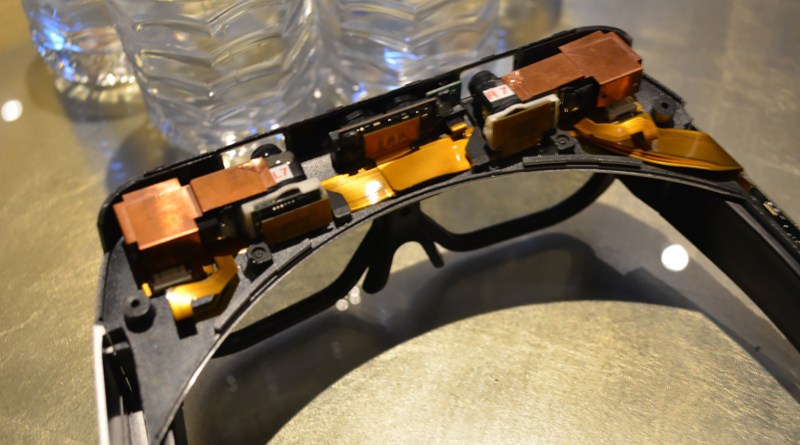
Image 1 / 2
Founding Story
Jeri Ellsworth and Rick Johnson founded Technical Illusions in 2013 after working on augmented and virtual reality at Valve. The company subsequently used the castAR name. Its 2015 announcement identified Mountain View operations and David Henkel-Wallace as CEO. The founders brought an existing research project into a startup; they still needed manufacturing, content and distribution around it. [1].
The founders demonstrated prototypes publicly, including at Maker Faires. At CES 2014, Road to VR interviewed both founders and tried an HD prototype. That coverage documents a tangible product and public interest, without establishing a repeat purchase habit. [13], [3].
Timeline
- 2013: Technical Illusions formed and ran its Kickstarter campaign. The campaign records $1,052,110 pledged by 3,863 backers against a $400,000 goal. These were pledges, not retail revenue. [2].
- January 2014: Road to VR tried an HD prototype and interviewed Ellsworth and Johnson at CES. [3].
- August 19, 2015: castAR announced a $15+ million Series A from Playground Global and seed investors, with a commercial launch expected in 2016. [1].
- December 2015: The company announced crowdfunding refunds and a later consumer product, including a promised free unit for qualifying backers. The refund decision preceded the shutdown. [4].
- November 2016: A company release announced the hiring of Eat Sleep Play’s development team into its Salt Lake City operation. It still described the platform as a 2017 release. [5].
- June 2017: Contemporary reports described the closure after unsuccessful fundraising. [6].
- 2019 onward: Ellsworth explained how the purchased technology supported Tilt Five. Its current website retains a games catalog and developer resources, while its store says it is out of stock. [8], [9].
What They Built
The system used projectors on glasses and a retroreflective surface, which sends light back toward its source. That arrangement let multiple people look at a shared play area without replacing the room with a fully enclosed virtual environment. The special surface also bounded the experience: the table was part of the display system. Contemporary reporting distinguished this approach from ordinary virtual reality headsets. [14], [13].
Early delivery and retail readiness were different milestones. Ellsworth told The Amp Hour: “we actually shipped units to the Kickstarter backers”. She estimated around 300 early units. That does not establish the number of final consumer systems sold. The company’s own 2015 release independently confirmed prototype shipments. [7], [1].
Content development expanded alongside the hardware. The November 2016 announcement named Scott Campbell’s Eat Sleep Play team and former Avalanche developers associated with Disney Infinity. It described a team hire; that release does not establish an acquisition price or purchase of an entire legal company. Adding experienced developers addressed a real content need, while increasing the work financed before launch. [5].
Market Position
Target Customers
The original crowdfunding audience included enthusiasts willing to support unfinished hardware. The retail ambition was broader: friends and families who could put on the system and play together. Those groups tolerate different setup burdens. A development kit can succeed at demonstrating an optical effect while remaining unsuitable for an ordinary game night.
Market Size
The campaign established a paying supporter pool of 3,863 backers. It did not establish the addressable market for a finished product, the size of its eventual installed base or repeat game purchases. No defensible company-specific market forecast or audited retail sales series emerged from the reviewed sources. [2].
Competition
A customer could choose ordinary board games or screen-based games without buying a new display platform. castAR’s shared physical setting was a meaningful distinction, but each player still needed a compatible system. Its competitive burden included the whole evening: available games, setup, comfort and the cost of inviting friends.
That comparison remains relevant. Tabletop Simulator currently lists a $19.99 individual license and $59.99 four-pack on Steam. Tilt Five’s own catalog already lists tabletop, party and creative software. A new entrant cannot assume that projected tabletop play lacks content. [12], [11].
Business Model
The planned consumer business sold a hardware platform supported by games. Crowdfunding financed development; venture capital funded further product work and recruitment. These funding sources should not be added together and described as customer revenue.
The public record does not establish final retail margins, recurring software revenue or a sustainable hardware price. A later founder recollection of a $299 target was a target, not proof of a profitable shipped system. Nor does the evidence support a precise investor loss calculation. [7].
Outcome and evolution
The immediate constraint was an inability to fund continued operations. Ellsworth said the company approached Series B investors in fall 2016 without market proof and with unfinished prototypes, then pursued financing as its options narrowed. She also described conflicting leadership and expansion from roughly 20 to 90 staff. Her account connects spending and organizational choices to the financing problem, but does not independently isolate each cause. [7].
Her later account also included a product criticism: the team had not completed the games and user experience around its technology. Describing Tilt Five’s revised approach, she said: “We’re making a complete package this time.” She reported that a core group purchased patents, software, tracking and optical technology from the bank. This was an asset-based continuation in a new company, not evidence that castAR remained operating. [8].
Tilt Five’s current store lists a $359 single-player bundle and multi-player bundles, but prominently says it is out of stock. It invites partners and institutions to contact the company. Its developer site describes a free SDK with no developer hardware markup. These pages establish a continuing product and developer presence, without proving current consumer availability, profitability or a particular installed base. [9], [10].
Key Lessons
- Separate prototype delivery from consumer readiness. Early units can validate an optical system while leaving comfort, setup and a complete game unresolved.
- Connect the next round to observable progress. A larger team and a retail ambition do not substitute for working hardware and evidence of customer demand.
- Budget for the activity around the device. Content and interaction design were central to the purchase, rather than optional additions after the optics worked.
- Follow assets and companies separately. Useful technology can continue under a new owner even when its original venture closes.
Sources
- Company Series A announcement
- Original castAR Kickstarter
- CES founder interview and hands-on
- Refund announcement reporting
- Eat Sleep Play team hire announcement
- Contemporary shutdown coverage
- Jeri Ellsworth postmortem, The Amp Hour 394
- Jeri Ellsworth on Tilt Five, Polygamer 94
- Tilt Five current store
- Tilt Five current developer page
- Tilt Five current games catalog
- Tabletop Simulator Steam store
- Hackaday shutdown and hardware photo
- UploadVR team expansion reporting