Overview
Houseparty changed the social cost of starting a video conversation. Opening the app announced that someone was available; friends could drop in. It grew from Life On Air, the company behind Meerkat, and became part of Epic Games in 2019. Epic discontinued the app on October 14, 2021.[1][2][3]
The trajectory shows two different limits. The independent startup needed enough growth to support its ambitions. After acquisition, a widely used app still needed sustained attention from its owner. The underlying interaction could remain useful while the standalone product ended.
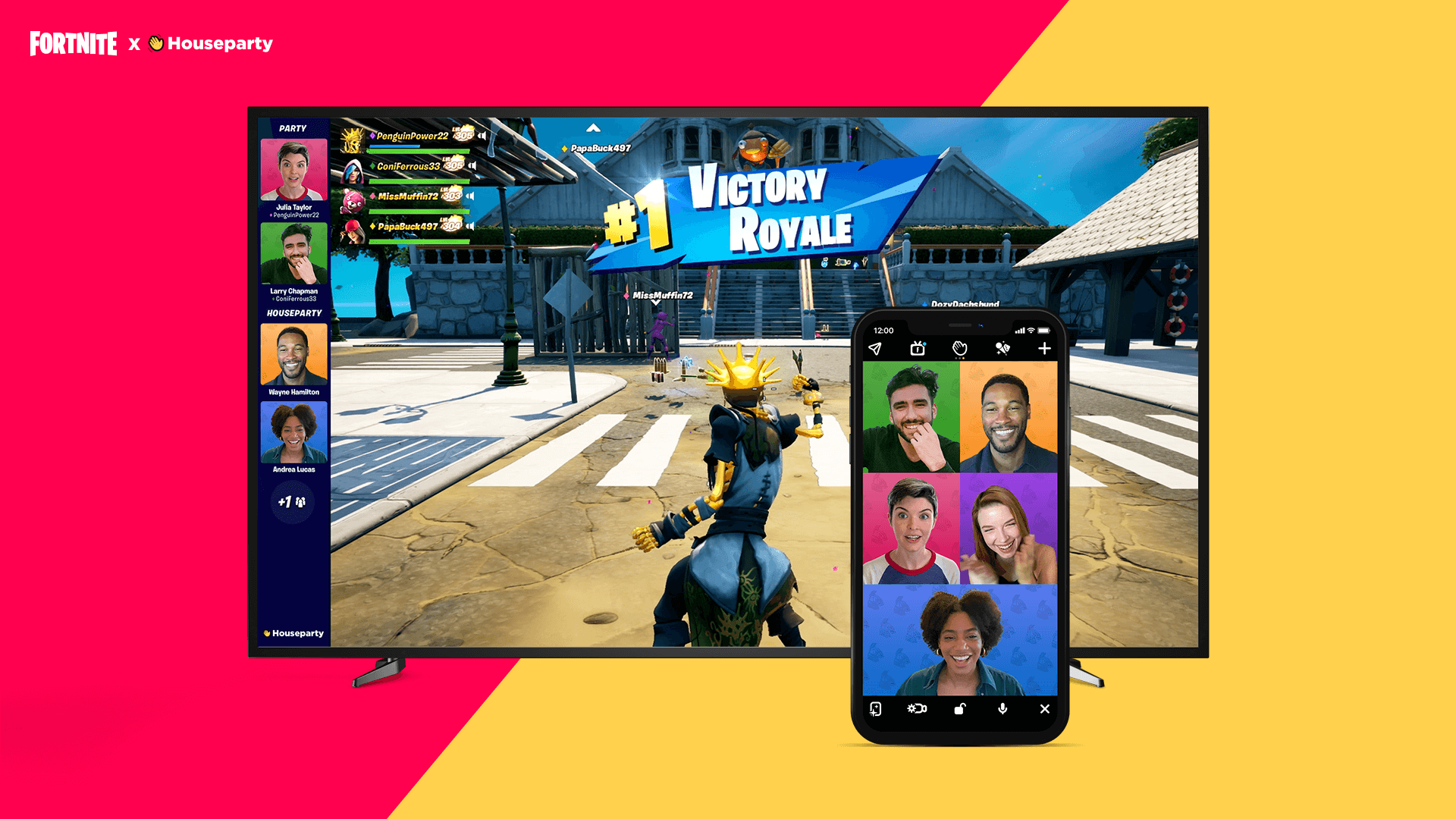

Image 1 / 2
Founding Story
Ben Rubin and Itai Danino founded Life On Air in Israel in 2012. Its early products included Yevvo and Air, followed by Meerkat's mobile live broadcasts. Houseparty was a later product from that company, rather than a separate startup that began with its 2016 launch.[4]
Sima Sistani met Rubin at South by Southwest in 2015, when Meerkat attracted intense attention. Their later interview with Sequoia described a revealing pattern: people enjoyed a friend or family member appearing on a stream. Sistani said, “It was about your real-life friendships and connections.” The team moved toward conversations among known people instead of public broadcasting.[5]
Meerkat also depended on Twitter for distribution. Rubin's account describes Twitter restricting that access while competing through Periscope. His diagnosis went beyond losing a channel: ordinary users did not become persistent broadcasters. Existing public networks could compete for the creators who did broadcast regularly.[4]
Houseparty found a different behavior, but the team eventually faced another decision about scale. In the later NFX interview, Rubin recalled, “We needed to sell or pivot.” That account links the acquisition decision to growth below the team's financing ambitions, rather than proving that nobody wanted the product.[4]
Timeline
- 2012: Life On Air began; Yevvo, Air, Meerkat, and Houseparty belonged to its product history.[4]
- 2015–2016: Meerkat's public-broadcast experiment gave way to Houseparty's small-group conversations.[5]
- January 17, 2019: Houseparty introduced Heads Up! with free and purchasable decks.[6]
- June 12, 2019: Houseparty and its counsel announced the Epic acquisition.[2][7]
- May 15–17, 2020: In The House combined scheduled entertainment with friends watching together.[8]
- November 2020 and April 2021: Epic introduced video chat alongside Fortnite, then gameplay streaming into Houseparty.[3][9]
- July 27, 2021: Epic promoted the PC and Mac desktop app.[10]
- October 14, 2021: Houseparty was discontinued, according to Epic's updated product pages.[3]
What They Built
Houseparty used presence, meaning an indication that someone was online and willing to talk, to reduce the obligation of a phone call. An employee's 2017 account explains that friends received notifications and could join without arranging a meeting. Rooms could also expose who was talking to whom and allow friends of participants to enter unless locked.[1]
That openness made spontaneous encounters possible and made access controls part of the experience. Epic's integration instructions described room locking, blocking, reporting, and parental controls. They also warned that a participant recording or streaming could include other people's video. A friendly room was not a guarantee that its contents stayed private.[3]
Games supplied something to do after joining. The Heads Up! partnership brought The Ellen DeGeneres Show's game into calls. Later Epic materials showed UNO and karaoke. The interaction combined conversation with a shared activity, reducing the need for someone to carry the entire encounter.[6][10]
The Fortnite integration required linked Houseparty and Epic accounts, a mobile device for Houseparty, and a supported PC or PlayStation. Video appeared beside gameplay; the later release let friends watch a game stream. This was a concrete integration with Epic's core product before Houseparty ended.[3][9]
Market Position
Target Customers
Houseparty focused on people who already knew one another and wanted casual contact. The Sequoia interview describes family use that had not worked for Meerkat. Gaming added another reason for friends to spend time together. The product centered on friends spending time together.[5][9]
Market Size
Pandemic restrictions created unusual demand for remote social contact. In April 2020, Sistani reported 50 million sign-ups in the preceding month. That is a period-specific acquisition claim, not a count of retained or paying customers. The reviewed sources do not establish an addressable paying market or subscriber revenue.[11]
Competition
Meerkat competed with public networks that already had audiences. Houseparty changed the use case to smaller existing groups. By 2026, casual video and shared presence also existed inside products people already used: Discord documents direct and server video calls, while Slack offers huddles inside channels and messages.[4][12][13]
Business Model
The Heads Up! release described three free decks and purchases of extra topics. Houseparty presented shared experiences as an alternative to selling user data. That documents a monetization mechanism, but the announcement does not disclose conversion, revenue, content costs, or video-service margins.[6]
NFX's founder interview describes a $50 million Sequoia-led round with Greylock and Aleph. Its account connects the later sale decision to insufficient growth after that financing. Fenwick says acquisition terms were undisclosed. Without reliable proceeds and ownership data, those figures cannot establish an investor return.[4][2]
Traction
The 2020 sign-up surge showed that changes in people's circumstances could alter demand for an existing product. In The House added celebrity performances, cooking, and workouts to watch with friends. The campaign provided an appointment around which people could gather, alongside the app's unscheduled drop-ins.[11][8]
Neither those sign-ups nor the entertainment lineup establishes sustained post-lockdown retention. The reviewed sources do not provide comparable cohorts before and after restrictions eased. Treating a temporary demand surge as proof of a permanent business would go beyond the evidence.
Outcome and evolution
The 2019 acquisition announcement initially promised no change to access or friendships, with accounts remaining separate. Subsequent Fortnite releases demonstrate deliberate integration, so the acquisition produced shipped work before retirement.[7][9]
Epic said it could not give Houseparty enough attention while the team worked across its wider products.[14] Epic's surviving pages record the final app discontinuation on October 14, 2021. That does not establish that Life On Air's legal subsidiary dissolved or that Epic itself stopped operating.[3]
The evidence favors a two-stage explanation. Before acquisition, the team faced a mismatch between its growth and its financing ambitions. After acquisition, product continuity depended on the owner's priorities. The pandemic demand and shipped Fortnite integration show that casual video had value beyond the independent startup’s financing outcome. That value could support features inside larger products without ensuring a permanent standalone Houseparty service.
Key Lessons
- Meerkat made distribution easy through Twitter, then lost access to that channel. Channel dependence and weak broadcaster retention were separate problems.
- Houseparty changed the invitation from an interrupting call to visible availability. That product judgment created a different social behavior.
- Houseparty's games and events supplied reasons to gather. Sign-ups alone could not show whether those reasons persisted after lockdown.
- Epic shipped Houseparty integrations before ending the app. Useful technology and an acquired team still need an owner committed to the customer-facing product.
Sources
- Houseparty employee on presence
- Fenwick acquisition confirmation
- Epic video integration and discontinuation update
- NFX founder and investor retrospective
- Sequoia interview with Ben Rubin and Sima Sistani
- Houseparty Heads Up! business-model announcement
- Houseparty acquisition announcement
- In The House event reporting
- Epic gameplay streaming release
- Epic July 2021 desktop release
- Sima Sistani interview, Bloomberg reproduced by The Economic Times
- Discord current video-call documentation
- Slack current huddle features and free limits
- Epic's attention and team-allocation explanation