Overview
Poparazzi made friends responsible for filling each other's photo profiles. That change removed the usual self-promotion and created a new dependency: users needed their friends to contribute. Millions tried the app, but the company later wound down. Its history separates a strong invitation to join from the harder task of sustaining a reciprocal habit.[1][2][3]
The evidence supports that distinction more clearly than any single explanation for the closure. The founders disclosed large cumulative activity, while outside reporting later described sharply lower active use. Public data does not establish which feature, competitor, or spending decision caused users to leave.
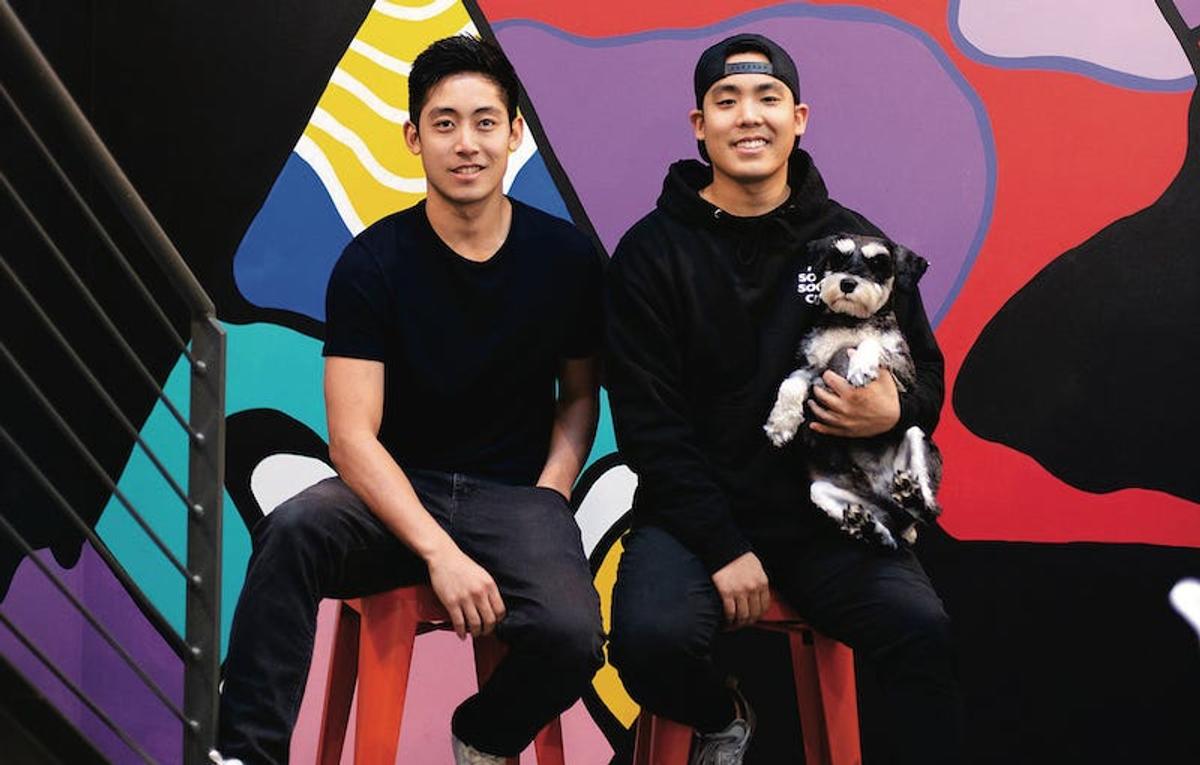

Image 1 / 2
Founding Story
Brothers Alex and Austen Ma founded the underlying company in 2018. It operated as TTYL Inc. before the Poparazzi product launched in 2021. TTYL was also the name of an earlier social audio app. The corporate history therefore began before the photo app became visible.[4][5]
Alex described the ambition in a PAPER interview as creating a place for existing friends, away from the competition to build an audience. The distinction affected the basic unit of the product. A profile represented how friends saw someone, rather than what that person chose to publish about themselves.[6]
In the May 2021 launch post, Alex Ma wrote, “We built Poparazzi to take away the pressure to be perfect.” The rule against self-posting directly expressed that goal.[1]
“Poparazzi is about friendships and putting the attention back on the people you're with,” Alex told PAPER in June 2022. His account focused on existing relationships rather than building an audience.[6]
That design also transferred work between people. A user could take a picture and create value for a friend, but could not independently fill their own profile. The proposed reward depended on another person returning the favor. This is a product-design inference, not a measured explanation of later retention.
Timeline
- 2018: Alex and Austen Ma founded the company behind TTYL and later Poparazzi.[4]
- May 24, 2021: Alex announced Poparazzi's public launch.[1]
- May 31, 2022: he reported more than five million downloads and 100 million shared photos and videos.[2]
- August 2022: TTYL prepared Made With Friends, extending friend-created profiles beyond photos.[7]
- April 28, 2023: Alex announced discontinuation and a June 30 content-download deadline.[3]
- July 2023: Business Insider reported that Meta hired four former staff, including Alex, without acquiring Poparazzi's assets.[5]
What They Built
The launch product let users photograph friends and publish to those friends' profiles. People depicted could remove unwanted pictures. Alex's launch post also described a private-account option restricting who could photograph a user. A feed let people see moments their friends captured together.[1]
The experience joined a social rule to an activation rule. In an August 2022 test, Kaspersky observed an onboarding screen saying a profile would unlock after a friend posted. Its tester found that one follower was sufficient to unlock it, despite the screen requesting three friends. The invitation mechanism tried to bring a social group into the app before its new member had much to see.[8]

Privacy had to support the same promise. Kaspersky's test found public profile content by default, removal and blocking controls, and no private-account switch in its tested settings. That differs from the founder's earlier description. The sources do not resolve whether product versions, availability, or implementation caused the difference. A promise of less social pressure still needed controls over who could publish and view a person's image.[8]
Made With Friends broadened the experiment to prompts and other contributions. An archived listing identifies TTYL Inc. as its developer and shows updates through January 2023. The listing preserves the product's existence; it does not establish an ongoing service.[9]
Market Position
Target Customers
The company reached a predominantly young audience. In May 2022, Alex said 95% of active users were under 21 and more than 75% were 14–18. He described a mostly U.S. community. Those are founder-reported audience shares, not an independently audited census.[2]
Market Size
The audience was large enough to attract venture funding, but no reviewed source establishes a paying market. A photo-sharing download has no necessary relationship to revenue. PAPER's interview described typical groups of roughly seven to ten friends. That suggests useful activity depended on small groups more than national downloads.[6]
Competition
Poparazzi competed with familiar social apps and other products promising more candid sharing, including BeReal and Dispo. Its anniversary marketing brought influencers onto a yacht, even as its product discouraged public self-promotion. Both dot.LA and PAPER documented that event. The event showed the proposition to people; it did not establish a repeatable acquisition cost or a lasting user habit.[10][6]
BeReal's later trajectory argues against treating authenticity as a category with no demand. Voodoo announced its acquisition in June 2024 at a €500 million valuation. In March 2026, Voodoo reported €30 million of BeReal revenue for 2025 and a rebuilt product effort. Those are the buyer's statements about a different company, not evidence that Poparazzi could have achieved the same result.[11][12]
Business Model
The company's financial backing arrived before a demonstrated revenue model in the reviewed material. dot.LA reported a $15 million Benchmark-led Series A raised shortly after the 2021 launch. Business Insider's later account identified a separate $2 million seed round for the earlier TTYL effort. These are different financing rounds, not app revenue.[10][5]
No reliable revenue, gross-margin, or customer-acquisition-cost figures were found. Funding supported the product while repeat use weakened. The evidence does not show that a particular monetization plan caused the shutdown.
Traction
At launch, Alex reported 10,000 beta testers within days, more than 500,000 pre-installs, and over 100,000 shared photos. A year later, the company reported five million downloads and 100 million media items. These counts demonstrate reach and production; neither report disclosed a retained-user cohort.[1][2]
Business Insider's July 2023 account cited Sensor Tower estimates of about 1.1 million monthly active users in 2021, falling to about 3,000. Estimates differ from company disclosures and depend on the provider's methods. Even with that limit, the direction fits the observed closure better than cumulative download totals do.[5]
Outcome and evolution
The founder's April 2023 notice announced discontinuation and gave users until June 30 to retrieve their content. June 30 is an export deadline in that source; it does not independently verify the exact instant servers stopped. Alex separately confirmed company wind-down and planned capital returns to TechCrunch.[3][13]
Meta's later hires continued some people's work without preserving the app or purchasing its assets, according to Business Insider. No return amount or investor distribution was established.[5]
The strongest supported diagnosis concerns the gap between joining and returning. A friend-created profile made the initial proposition distinctive and introduced a recurring coordination burden. Privacy friction may also have weakened trust, but the reviewed evidence cannot rank it against competition or novelty wearing off. Neither the public goodbye nor the financial disclosures provide a complete internal postmortem.
Key Lessons
- Poparazzi's friend-created profiles made participation depend on reciprocal effort. Group activity matters more than isolated installs when users create value for one another.
- Poparazzi's launch claims and later privacy testing describe different controls. Product promises need verification in the ordinary user flow.
- Poparazzi disclosed cumulative downloads and uploads without retained-user cohorts. Investors could see scale more easily than habit durability.
- TTYL ended its product and company effort while some staff joined Meta. Team continuity, customer continuity, and capital returns require separate evidence.
Sources
- Alex Ma's launch announcement
- Alex Ma's first-year update
- Alex Ma's discontinuation announcement
- Preqin TTYL company profile
- Business Insider Japan's staff-hire report
- PAPER's founder interview and anniversary event
- Made With Friends contemporaneous report
- Kaspersky's August 2022 product test
- Archived Made With Friends app listing
- dot.LA's founder interview and anniversary reporting
- Voodoo's BeReal acquisition announcement
- Voodoo's March 2026 update
- CEO wind-down confirmation in TechCrunch