Overview
Jibo tried to sell social presence as a consumer product. Its tabletop robot turned toward people, recognized familiar faces, spoke, and danced. Cynthia Breazeal founded the venture in 2012 after years of social robotics research at MIT. A partner account also identifies Jeri Asher as cofounder. [1][2]
The company shipped the robot in 2017, then stopped operating in late 2018. Its assets and some robot services continued under later owners. That sequence matters: the original business failed, but neither every physical robot nor the underlying research ended at the same moment. [6][7][9]
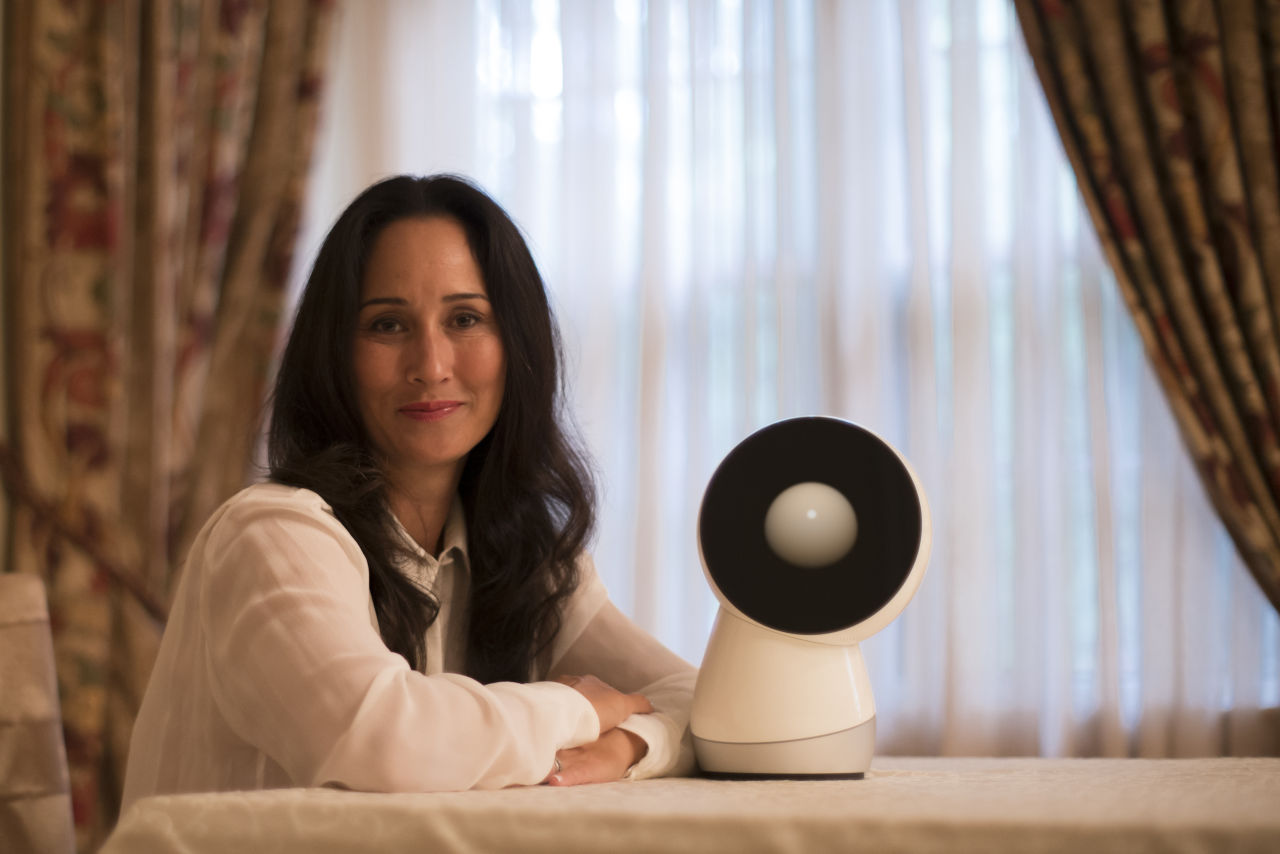
Image 1 / 1
Founding Story
Breazeal led the Personal Robots Group at MIT's Media Lab. Her research asked how machines could engage people socially. Jibo moved that work toward a household product, with a stationary body and expressive movement. [1]
In a 2014 IEEE Spectrum interview, Breazeal said, “The purpose of doing the crowdfunding campaign right now is we want to build a community.” She wanted both owners and developers involved early. The developer platform was part of the original commercial plan, rather than a late response to missing applications. [3]
Breazeal later told Popular Science, “our goal is to put a social robot in every home.” Her emphasis was shared household interaction: several people could engage with the same device. That ambition differed from a personal screen, but still required ordinary setup, reliability, and a reason to keep using the product. [4]
Foley Hoag's 2015 financing announcement identified former Nuance executive Steven Chambers as CEO. GitHub's account separately identified Asher as cofounder and described multidisciplinary teams building speech, robotics, security, and character behavior. These sources distinguish founding from executive management; they do not explain how Breazeal and Asher first met. [5][2]
Timeline
- 2012: The Jibo venture was founded. [1]
- July 2014: Jibo launched its crowdfunding campaign with a planned 2015 delivery. [3]
- January 2015: Financing counsel announced a $25.3 million Series A. [5]
- Late 2017: Customers received a robot reviewed at approximately $900, with several promised capabilities still missing. [6]
- 2018: Layoffs and an asset transfer to SQN accompanied the end of the original operation. Contemporary accounts disagree on the precise transfer date. [7][8]
- March 2019: Owners encountered warnings that cloud services would become limited. [8]
- 2020: NTT described an English-language Jibo trial, and reporting confirmed continued use under the new owner. [12][9]
- March 2024: MIT organized a Jibo community research-platform workshop. [10]
What They Built
The physical product used a screen as a face, microphones to hear people, cameras to recognize them, and motors to turn its body. Its movements made an interaction visible to everyone in the room. It could initiate a greeting rather than waiting for a command. [6]
The original campaign instructed buyers to connect Jibo to Wi-Fi, teach it their faces and voices, and connect its mobile app. Personalization required explicit setup; it did not mean the device understood everyone immediately. [14]
The proposed platform combined this body with applications called skills. GitHub described an SDK, a simulator, and skills built on Electron. Its customer story also described developers combining an IFTTT capability with home automation. These examples show an actual ecosystem effort; they do not establish a mature marketplace or adoption at scale. [2]
IEEE described a prototype with preprogrammed actions. SlashGear's 2017 review later found engaging movement but missing utilities, including music streaming and video calls. Demonstration quality and practical completion remained different tests. [3][6]
Market Position
Target Customers
Jibo initially addressed households and developers who might extend its skills. Owners wanted useful experiences, while developers needed a viable installed base. [14]
Market Size
The reviewed evidence does not establish an addressable market for paid social companionship. Crowdfunding interest and press attention show curiosity and commitment from early supporters. They cannot measure repeat purchases, subscription willingness, or long-term engagement among typical households.
Competition
Amazon Echo and Google Home offered broader practical functions when Jibo reached buyers. Jibo's physical expression and recognition provided a different experience, at a higher price. [6][7]
The strongest counterargument to a utility-only explanation comes from owners. WIRED's reviewer described attachment that persisted despite limitations. The account supports emotional value for that owner, not a general claim about clinical benefit or mass-market demand. [8]
Business Model
Jibo depended on hardware purchases while also promising future capabilities from its own team and external developers. The original preorder offer was $499; a late-2017 review listed $899.99. Those are prices at different stages, not equivalent net revenue figures. [3][6]
The verified financing is the $25.3 million Series A announced by counsel. Later reports offer differing lifetime totals. Revenue, manufacturing cost, warranty expense, cloud cost, and investor proceeds remain unavailable. [5][7][8]
The recurring service obligation was clearer than its economics. A robot that recognized people and answered through cloud services needed continued operation after the initial sale. The business had to fund that relationship as well as manufacture a device.
Outcome and evolution
Contemporary accounts agree that the original operation ended in 2018 and SQN acquired assets. Voicebot dates an asset purchase to June; WIRED describes November. Those reports may refer to different stages, but the legal transfer sequence is unresolved here. Neither establishes that every robot stopped functioning that year. [7][8]
The March 2019 warning was also not a universal permanent shutdown date. In July 2020, The Verge reported that owners still used their robots and that NTT Disruption had acquired assets. NTT's own annual report described a paid English-language proof of concept launched in March 2020. [9][12]
Later work continued in distinct settings. NTT described Jibo within Connected-AI in 2024. MIT's 2024 workshop offered loaned robots and programming sessions for a community research platform. These are documented sequels, not proof of renewed consumer sales or the original company's operation. [11][10]
As reviewed on October 23, 2026, current consumer Jibo availability and price remain unverified. ElliQ provides an active comparison: its official FAQ describes a leased companion device with a recurring membership and a $249 initiation fee. It explicitly ties operation to an active membership. That makes the continuing service cost visible; it does not prove that the model is profitable. [13]
Key Lessons
- Jibo's expression and movement created value that a utility checklist could miss. That value still needed repeated paid demand beyond an impressive demonstration.
- Jibo planned a developer platform early, but owners needed useful capabilities at delivery. Promised extensions could not replace a complete first experience.
- A one-time hardware sale left a continuing cloud and support commitment. The device's value depended on the operating service behind it.
- Jibo's company, assets, consumer services, and research platform followed different timelines. Closure and acquisition claims need that level of precision.
Sources
- WBUR founder and prototype profile
- GitHub Jibo customer story
- IEEE Spectrum launch interview
- Popular Science founder interview
- Foley Hoag financing announcement
- SlashGear hands-on Jibo review
- Voicebot on company closure and asset transfer
- WIRED owner account of declining service
- The Verge on NTT acquisition and continuing robots
- MIT HRI2024 community research workshop
- NTT2024 Connected-AI description
- NTT2020 annual report
- Current ElliQ FAQ and membership terms
- Original Indiegogo campaign, indexed content