Overview
Musical.ly made performing easier than inventing. A familiar song supplied the script; a phone supplied the stage. Its founders turned that small creative act into a teen social network. ByteDance acquired the company in 2017, then moved its creators, videos and fans into TikTok in August 2018. The independent brand ended, while its community continued inside a larger product. [13][1]
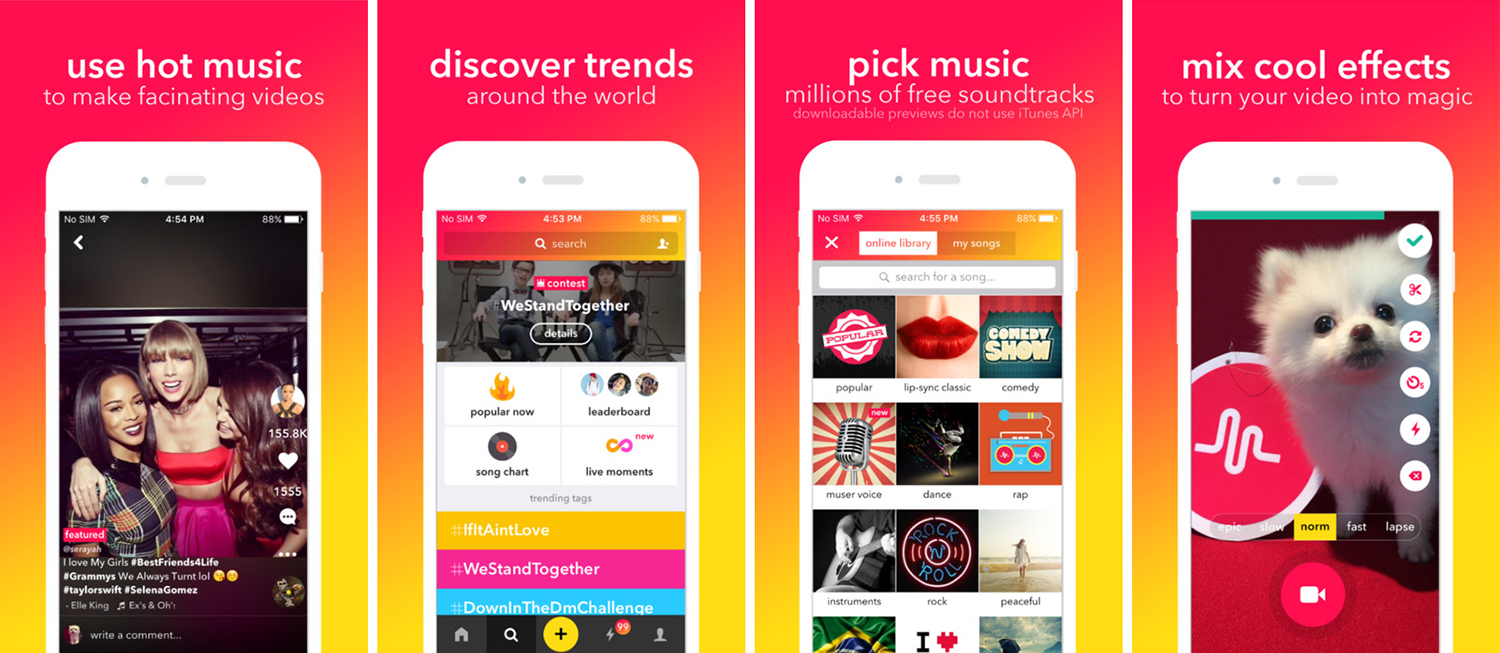

Image 1 / 2
The useful founder lesson is the connection between creation, discovery and recognition. Each needed a different mechanism. Cheap creation supplied videos. Sharing exposed the app elsewhere. Recognition gave creators a reason to return. The company also shows how choosing young users creates operating responsibilities that growth cannot defer.
The pivot changed the work required
Alex Zhu and Luyu Yang, also known as Louis Yang, first worked on Cicada, a mobile education app. [6] They raised $250,000 and asked experts to explain subjects in short videos. Yang later described the supply problem: few people could explain their knowledge clearly within the format. The team reused its technology and remaining money to launch Musical.ly in 2014. [2]
The change reduced the work demanded from each contributor. A music clip already had structure, emotion and a stopping point. Users could contribute a performance without planning a lesson. This is an interpretation of the founders’ accounts, rather than proof that entertainment always outperforms education. Cicada’s missing supply and Musical.ly’s accessible format explain this particular pivot.
A tool brought people in; people brought them back
In his 2016 interview with investor Josh Elman, Zhu described using an unusually descriptive App Store name to catch search traffic. He argued that early users needed a useful creation tool before a network had enough people. Elman’s own event recap confirms that search and influencer development were central topics. The surviving transcript is a later, unofficial reproduction. [3][4]
Exported videos were another acquisition channel. Zhu attributed an acceleration to moving the logo so Instagram and Twitter crops would preserve it. Inside the app, combined videos, BFF relationships and video questions gave users reasons to interact. These accounts support a linked growth mechanism; they do not isolate the logo change’s causal effect. [5]
Zhu also described deliberately concentrating attention on early stars, then spreading opportunities to ordinary contributors. My reading is that visible success recruited new performers, but broader recognition was necessary to keep them. A network can attract people with exceptional winners and still lose them if most contributors receive no response. [4]
Baby Ariel supplied a concrete example of the creator path. Forbes reported that her Musical.ly audience supported expansion into other media. Vine’s closure also left creators seeking another short-video home. That external opening is an alternative to explaining every gain through Musical.ly’s own product choices. [6]
Music and campaigns shaped the business
Music was both an input and a partner ecosystem. A June 2017 MIDiA presentation records Warner Music’s June 2016 licensing deal and Apple Music integration. A surviving blank publishing-rights agreement shows another layer of the rights work. Its existence does not prove that every publisher signed or that every upload was cleared. [7][8]
Coca-Cola and agency UM turned lyric-bearing bottles into prompts for performances. Jason Derulo helped launch the challenge. Their award entry reports 953,000 Musical.ly submissions and 134 million views. These are campaign-owner figures, rather than independently measured sales. The campaign’s mechanism matters more than its scale: participants supplied the creative, while music and recognizable packaging constrained the task. [9]
Contemporaneous Digiday reporting places the Coke campaign in June 2016 and describes a FaceTime prize with Derulo. It also documents Ariana Grande and Good Morning America campaigns. The app sold access to participation, rather than relying only on interruptions between videos. [10]
Forbes reported a roughly $100 million 2016 funding round led by GGV, at roughly a $500 million valuation, using unnamed sources. It also described virtual gifts and promotional videos as ways creators earned money. The company said its gift share covered transfer costs. That distinction matters: creator income could support retention before the platform established meaningful revenue. Standalone profit and licensing costs remain undisclosed in the evidence reviewed. [6]
The team also expanded the formats. Live.ly added live streaming in 2016. By June 2017, Musical.ly announced professionally produced shows with Viacom, NBCUniversal and Hearst. The announced programs included MTV comedy and E!’s CRUSH, with episodes averaging about four minutes. The partners initially paid nothing to distribute them, and the shows were ad-free. This broadened the entertainment offer without proving a new revenue source. [19][20]
The audience created a second obligation
In February 2019, Musical.ly agreed to pay $5.7 million to settle Federal Trade Commission allegations of violating children’s privacy law. The agency’s complaint alleged that the company knew children under 13 used the app and received more than 300 parental deletion requests within two weeks in September 2016. It alleged that closing accounts did not remove stored videos and profile information. [11][12]
These allegations describe an operating gap directly connected to the growth strategy. Targeting young creators required reliable age handling, parental processes and deletion. A nominal age rule could not resolve known child use. The settlement does not establish that this problem caused the acquisition or brand retirement; neither source supplies that causal link.
Outcome and evolution
Early investor Cheetah Mobile announced the signed ByteDance merger agreement on November 10, 2017. Reuters reported an estimated purchase range of $800 million to $1 billion, citing a person familiar with the plans. The investor announcement did not disclose a price. [13][14]
TikTok’s August 2018 announcement promised automatic transfer of existing accounts, content and fans. Zhu reported 100 million monthly active Musical.ly users. The combined app retained a community feed alongside a personalized For You feed. This was a migration of a functioning network, with distribution and recommendation joined under one brand. The available evidence does not establish Musical.ly’s standalone counterfactual. [1]
What a founder could build today
As checked on November 5, 2026, the successor already offers artist analytics and album pre-release campaigns through TikTok for Artists, launched in June 2025. Its July 2026 Commercial Music Library guide describes a free TikTok business catalog with region and placement filters. A new entrant cannot assume music promotion or usable soundtracks are absent. [15][16]
A narrower hypothesis is an artist-owned performance challenge: one cleared excerpt, simple recording, an approved gallery and exportable submissions. Gleam already collects video entries, while BeatStars already runs remix and TikTok challenges. The possible distinction is a tightly integrated recording experience for independent labels that control both recording and composition rights. Demand for that combination, and willingness to pay, still require customer tests. [17][18]
Timeline
- 2014: Zhu and Yang launched Musical.ly after Cicada. [2]
- 2016: Creator campaigns and Warner licensing expanded the ecosystem. [7][10]
- November 2017: ByteDance merger agreement announced. [13]
- August 2018: Existing accounts and audiences moved into TikTok. [1]
- February 2019: FTC privacy settlement announced. [11]
- June 2025: TikTok for Artists launched artist analytics and pre-release campaigns. [15]
Sources
- TikTok: Musical.ly and TikTok unite
- Fast Company: How Musical.ly became a pop culture phenomenon
- Josh Elman: ProductSF 2016
- Alex Zhu interview transcript, reproduced in 2024
- Business Insider: How a failed education startup turned into Musical.ly, via Yahoo
- Forbes: From musers to money
- MIDiA: Gen Z, June 2017
- Musical.ly independent-publisher agreement form
- UM and Coca-Cola: Share a Coke award entry
- Digiday: What is Musical.ly?
- FTC: Musical.ly case summary
- FTC: Complaint filed February 2019
- Cheetah Mobile: Musical.ly merger agreement
- Reuters: ByteDance buying Musical.ly, via The Indian Express
- TikTok for Artists launch
- TikTok: Commercial Music Library guide
- Gleam: Accepting media entries
- BeatStars: Challenges
- HBS AI Institute: Musical.ly’s creative tools and Live.ly
- Forbes: Musical.ly launches video series