Overview
Rovio found an unusually clear game mechanic, then spent years learning how to operate a business around it. Angry Birds turned a small Finnish developer into a global entertainment brand. Later results show why recognizable characters, profitable live games, and repeatable new releases must be evaluated separately.
Founded in 2003 as Relude by Niklas Hed, Jarno Väkeväinen, and Kim Dikert, the company became Rovio in 2005. Its own history calls Angry Birds its fifty-second game. Sega completed its acquisition in August 2023. Rovio continues operating, although Sega later wrote down acquired assets after performance missed expectations.[1][2][3]
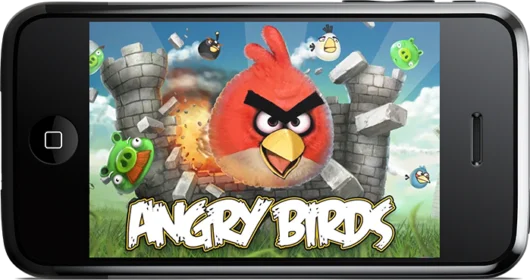
Image 1 / 1
Experience met a new storefront
The early catalog matters because Rovio had practiced making mobile games before its breakout. Apple's anniversary account identifies Bounce as a precursor. Lead programmer Tuomo Lehtinen described the iPhone and App Store as central to a new strategy. Designer Jaakko Iisalo supplied the birds concept; adding a slingshot made the touchscreen action easier to understand.[4]
Players aimed a bird, watched structures collapse, and tried again. The visible chain of cause and effect made failure understandable. A developer could add levels without teaching a different central interaction. This is an inference from the documented mechanic, rather than evidence that every earlier Rovio game was a commercial failure.
Distribution also changed. Rovio initially used publisher Chillingo for the iOS hit. By October 2010 it was self-publishing Angry Birds Halloween. The shift gave Rovio more control over subsequent releases after the first title established demand.[5] In March 2011, Yle reported an announced $42 million investment led by Accel and Atomico, with Felicis participating. This describes the announced transaction, not a verified amount of new cash retained by the company.[6]
A new distribution channel rewarded a familiar, immediately readable interaction from an experienced team. The number of earlier games alone does not explain the result.
A brand introduces different risks
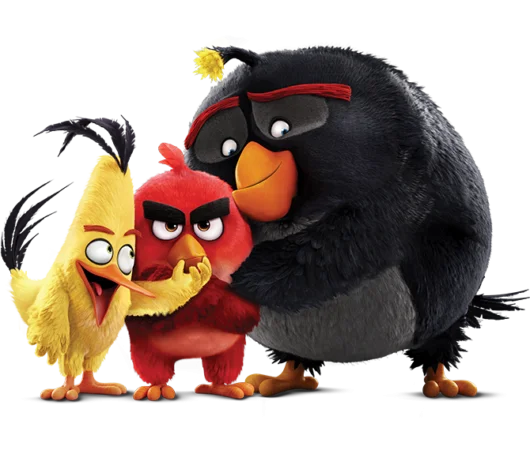
Rovio expanded into merchandise, animation, and film. Sony's original distribution announcement said Rovio would develop, produce, and finance the first Angry Birds film. That commitment exposed Rovio to production costs as well as potential licensing income.[7]
The subsequent financial record complicates claims that licensing either saved or ruined the company. Rovio's corrected offering disclosure reported that Games operating profit fell from €19.5 million in 2014 to €4.1 million in 2015. It attributed that decline mainly to Angry Birds 2 launch marketing and higher fixed expenses. Brand Licensing separately lost €13.1 million in 2015, compared with €0.7 million in 2014, because retailer demand for merchandise fell.[8]
The first film then contributed €36 million of Rovio revenue in 2017. That figure is company revenue for one financial year, not worldwide box-office receipts. Brand Licensing generated €49.2 million of total 2017 revenue. Rovio also changed its sequel financing approach to a licensing model, reducing its own production investment.[9]
These were distinct choices. Owning a character permits several ways to earn money, but each has different costs, timing, and partners. Film attention cannot by itself establish that spending to attract mobile players will repay its cost.
A live game is a continuing investment
By 2022, games produced €306.7 million of Rovio's €317.7 million revenue; Brand Licensing produced €11 million. Its annual report described a twelve-month required payback period for paid user acquisition at the portfolio level. Rovio spent to attract players, then relied on purchases, advertising, and continued play to recover that spending.[10]
The 2022 financial bulletin reported €96.5 million of user acquisition investment, or 31.5% of Games revenue. Group operating profit was €28.6 million; adjusted operating profit was €39.2 million. Reported revenue grew 11%, but comparable revenue declined 1.2% after currency and acquisition adjustments. Growth headlines therefore overstated the improvement in the existing business.[11]
Individual games also differed. The annual report says Angry Birds Journey generated €26.9 million in 2022 gross bookings. After its early growth, Rovio reduced acquisition spending; fourth-quarter bookings fell to €4.4 million. This does not establish that marketing cuts alone caused the fall. It shows why launch volume and durable economics need separate measures.[10]
Old products created another operating cost. In its 2021 fan letter, Rovio said legacy games used aging technology and required substantial work to remain compatible with devices and stores. It later rebuilt the original game in Unity. Portfolio decisions could therefore affect both maintenance cost and fans' access to a familiar product.[12][13]
What Sega bought, and what did not follow
Sega's acquisition offered an established mobile operation and intellectual property. Rovio's August 2023 announcement reported that the tender offer had met its ownership and regulatory conditions. Sega's subsequent annual report confirms completion that month.[14][2]
In February 2026, Sega described a gap between those expectations and results. Existing titles declined faster than expected, planned new games were canceled or delayed, and applying Rovio's Beacon operating tools to Sega titles had not produced the expected sales and profit gains. Sonic Rumble, a collaborative release, also missed performance targets. Sega attributed the deterioration to both internal execution and competing games' large advertising investments.[15]
That is management's explanation, with an incentive to explain an expensive acquisition. It nevertheless identifies testable mechanisms: weaker launches, less efficient advertising, and tools that failed to transfer into expected earnings. A recognized brand did not remove those dependencies.
For the financial year ended March 31, 2026, Sega reported ¥31,993 million of impairment losses on Rovio goodwill and other intangible assets. An impairment reduces recorded asset values when expected returns weaken. It is neither that year's cash marketing spend nor evidence that Rovio closed.[3]
The current portfolio still offers several business models
On November 5, 2026, the U.S. App Store listed Angry Birds 2 as free with optional purchases, alongside daily challenges, clans, and events. Red's First Flight, the classic remake, showed $4.99 and advertised no in-app purchases or intrusive pop-up ads. A current builder therefore cannot assume Rovio has abandoned paid, finite puzzle play.[16][17]
Rovio also launched Angry Birds Bounce on Apple Arcade in July 2025, changing the viewpoint to a brick-breaking game. Apple Arcade currently costs $6.99 monthly in the United States and offers games without ads or in-app purchases.[18][19] Paramount currently schedules The Angry Birds Movie 3 for December 23, 2026. That remains a planned release, with no resulting box-office performance yet established.[20]
Timeline
- 2003–2005: Relude formed and became Rovio.[1]
- 2009–2011: Angry Birds launched, subsequent self-publishing expanded, and Rovio announced outside investment.[1][5][6]
- 2015–2017: Marketing and merchandise pressures preceded film revenue and a change in sequel financing.[8][9]
- 2023: Sega acquired Rovio in August.[2]
- 2025–2026: Bounce launched; Sega recognized impairment; games remained available and another film remained scheduled.[18][3][20]
Sources
- Rovio history
- Sega Sammy 2023 annual report
- Sega Sammy FY March 2026 results
- Apple's developer interview
- Rovio begins self-publishing sequels
- Yle on the announced investment
- Sony's original film agreement
- Corrected offering disclosure
- Rovio 2017 financial bulletin
- Rovio 2022 annual report
- Rovio 2022 financial bulletin
- Rovio's letter about older games
- The classic remake
- Acquisition conditions met
- Sega's February 2026 review
- Angry Birds 2 current U.S. listing
- Red's First Flight current U.S. listing
- Bounce launch and developer account
- Apple Arcade pricing
- Movie 3 current release schedule