Overview
TapToLearn built educational games for touch screens. Its early apps covered grammar, spelling, arithmetic and fractions. The company joined Y Combinator’s Winter 2012 batch and treated the iPad as a way to make learning interactive. [1]
The public record supports a successful early distribution story and a later shift toward broader mobile gaming. It does not establish why the education business became inactive. YC now lists Tap to Learn as inactive, while the linked domain still presents its educational app catalogue. That combination requires a narrower conclusion than a conventional shutdown story. [1][2]
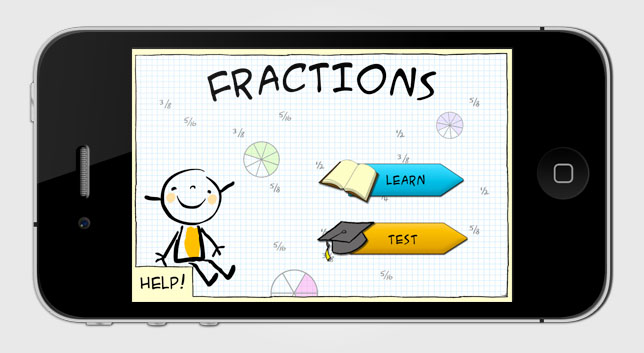
Image 1 / 1
Founding Story
TapToLearn operated as a brand of June Software. A July 2012 VCCircle report placed its founding in 2010, after the iPad announcement. Roby John told the outlet the team expected tablets to change learning, “especially with Touch changing the way we interact with devices.” [3]
The wider studio has an earlier origin. In a 2017 Indian Express interview, John said: “We started in 2007, when the first iPhone came out.” The report dates the TapToLearn platform launch to May 2010. These dates describe different stages; 2007 is not a verified launch date for the education brand. [4]
YC identifies Roby Thomas John, Avinash Pandey, Aamir Poonawalla, Priyanthy Aprain Srampical and Sreejit Jayanthan as founders. It does not explain how the group came together. Their current profiles include later careers at LILA Games and Orchestra; those careers do not establish an acquisition of TapToLearn. [1]
Timeline
- 2007: John dates the wider studio’s beginning to the first iPhone period. [4]
- May 2010: TapToLearn’s platform launched, according to John’s later interview. [4]
- Winter 2012: The company joined YC. Contemporary reporting also records ImagineK12 participation. [1][3]
- July 2012: VCCircle reported more than $1 million raised and a company claim of more than one million app users. [3]
- 2014–2016: June Software expanded into mass-market games and licensed-character releases, according to its CEO’s PocketGamer interview. [5]
- October 2026: YC lists Tap to Learn as inactive. Its linked website remains accessible. No verified closure date was found. [1][2]
What They Built
Each app concentrated on a subject and used touch interaction to turn practice into a game. The current catalogue includes Math vs Zombies, Tiny Fractions, Tiny Countries, Grammar App and Spelling Hero. This was a portfolio of subject-specific products, rather than one comprehensive school system. [6]
Tiny Fractions presents visual models, tutorials and tests. Its preserved screenshot shows separate learning and testing paths. The current page describes hands-on fraction practice and claims more than 800,000 downloads. That is a publisher claim, without a disclosed measurement period. [7]
Math vs Zombies connects arithmetic answers to a rescue game. Spelling Hero uses word lists, pronunciation and definitions. The design linked a child’s repeated action to subject practice. Whether that practice produced durable learning is a separate question; download totals cannot answer it. [6]
Market Position
Target Customers
Children used the apps; parents and teachers selected or paid for them. Early products spanned several ages and subjects, including GRE flash cards. That breadth widened discovery opportunities but made the portfolio’s educational purpose less uniform. [3]
Market Size
No reliable addressable-market estimate or paying-customer count was found. The current website claims 36 million downloads, 150,000 weekly downloads and five billion questions answered. It does not date those figures or define active users. They should not be treated as current revenue or independently measured learning outcomes. [2]
Competition
Current alternatives already combine play and learning. Khan Academy Kids offers free, ad-free activities for ages two to eight, personalized paths and parent/teacher features. DragonBox distributes subject-specific mathematics games, including institution purchases through app stores. A new product must explain a useful difference against both a free library and focused paid games. [8][9]
Business Model
The historical record describes app-store monetization and later free-to-play games. July 2012 funding reportedly included Ron Conway, Andreessen Horowitz and Yuri Milner; the same article names BackFlip Studios as an investor whose game expertise John expected to use. This was access to game-production knowledge as well as capital. [3]
In 2017, John discussed different payment expectations in India and the United States, with licensed characters, advertising and subscriptions among the approaches explored. His reported Nazara relationship involved Chhota Bheem and Motu Patlu. These were specific distribution experiments, not evidence of a profitable education subscription. Revenue, margins, customer acquisition costs and investor returns remain undisclosed. [4]
Post-Mortem
A studio changed its product mix
June Software continued building games beyond its education portfolio. In 2016, John described work on MaskGun, Toon Squad Neo and Chhota Bheem titles. He also discussed a publishing relationship with Tango. The studio’s later releases should be distinguished from TapToLearn’s education portfolio. [5]
By 2017, John said, “We focus on free to play category.” This supports a change in studio emphasis. It does not prove that educational apps failed financially or that every product closed. The accessible catalogue is evidence of a continuing web presence, not verified app-store availability or an operating support team. [4][2]
Distribution and learning require different proof
The structural tension is between a game’s ability to attract repeated play and an education product’s ability to demonstrate learning. Touch interaction, app-store exposure and licensed characters can improve discovery. They do not establish concept retention or willingness to pay. This is an interpretation of the documented product and distribution choices, rather than a claimed cause of closure. [3][4][6]
A rebuild should preserve concrete manipulation and test understanding separately. Otherwise it risks measuring engagement while promising education. The public evidence does not support assigning TapToLearn’s outcome to runway, competition or a platform-policy change.
Key Lessons
- Keep the brand and studio timelines separate. June Software’s earlier origin and TapToLearn’s 2010 launch describe different events. Later gaming projects should not become a fabricated education shutdown date.
- Treat touch as an interaction choice. Tiny Fractions made a mathematical idea visible. A new version should record what the learner did and test whether the concept transfers.
- Identify who pays. The portfolio reached children through parents, schools and app stores. Its later localized distribution experiments show why one global pricing assumption is weak.
- Separate reach from educational results. TapToLearn’s claimed downloads demonstrate distribution claims, not retained knowledge. A small learning product needs evidence beyond sessions and installs.
Sources
- Y Combinator: Tap to Learn
- TapToLearn: current website
- VCCircle: June Software receives over $1M, July 2012
- The Indian Express: June Software interview, June 2017
- PocketGamer: June Software interview, November 2016
- TapToLearn: app catalogue
- TapToLearn: Tiny Fractions
- Khan Academy Kids
- DragonBox: educational downloads