Overview
Waze turned drivers into a source of road information, then turned that information into better journeys. Its durable asset combines current traffic observations, a map maintained by volunteers, and a reason to contribute again tomorrow. More downloads alone did not make that system work. Former CEO Noam Bardin described an early period when registrations rose while driving activity stalled. The team had to improve the experience before growth became useful.[1]
Google acquired Waze in June 2013. Google's annual filing records $969 million in total cash consideration. Waze remains a separate, free navigation product under Google, with continuing product releases. The founder lesson concerns building useful local participation and managing the tradeoffs of acquisition.[2][3][4]
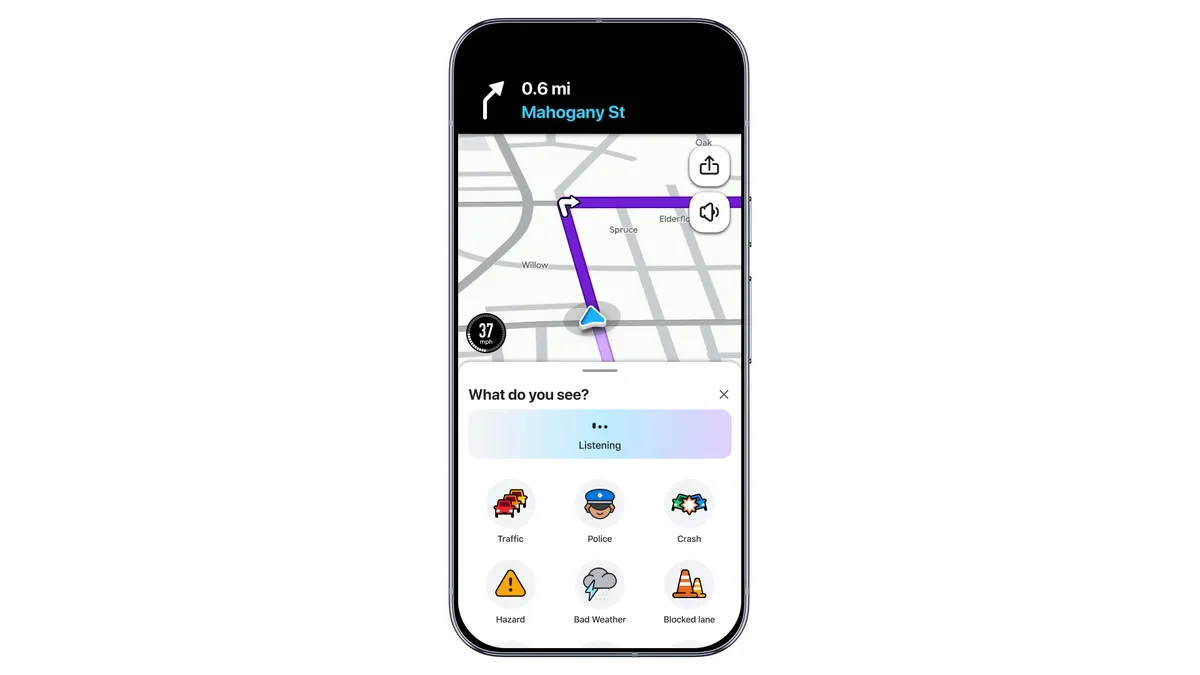
Image 1 / 1
A map needed people before it needed scale
The project began with Ehud Shabtai's FreeMap Israel in 2006. Waze's commercial formation followed in 2008 with Shabtai, Amir Shinar, and Uri Levine. These dates describe different stages, which explains some conflicting founding years. In a 2013 interview, Levine described the three meeting in 2007 and legally establishing the company early the following year.[5][6]
Contemporaneous reporting identifies Shabtai as CTO, Shinar as the development leader, and Levine as president. It also credits Arie Gillon with introducing the early partners. Shinar initially participated among the volunteers mapping Israel. Contributors helped produce the map before a large commercial audience existed.[7]
Bardin joined as an external CEO in 2009, rather than founding the original project. In a later interview, he described spending months with the founders before approaching investors together. He also recalled that employees had to attend community meetings. That practice connected the people building software with the volunteers maintaining its usefulness.[8]
The useful network was local and perishable
Drivers contribute in different ways. Their location and speed help reveal congestion. Explicit reports describe incidents. Map editors correct the underlying road network. Waze's partner documentation distinguishes traffic jams inferred from movement from reports submitted by people. It also describes reliability and confidence scores that incorporate other users' reactions.[9]
The resulting local network effect means more relevant observations can improve a journey, which gives drivers a reason to keep using the app. The relevant unit is a road at a useful time. A new user elsewhere does little for a driver whose route still lacks current observations. Volunteer editing and automatic speed collection also do different jobs; neither replaces the other.
The early retention problem tests this explanation. Bardin wrote that users blamed insufficient nearby participation, but the team's investigation also found poor regional maps, slow routing responses, and confusing navigation prompts. Waze paused growth work and concentrated on retention. He reported that US 90-day driver retention rose from 8% to 30% over six months. These are his retrospective figures, rather than an independently audited experiment.[1]
The lesson is narrower than “get more users.” Density matters only when the product can turn observations into dependable instructions. The source does not isolate the effect of any single fix. It supports treating reliability and participation as joint constraints.
Waze also uses tunnel-mounted Bluetooth Beacons to maintain location where GPS disappears. Other navigation apps can use the technology for free, according to Waze. This extends coverage through physical infrastructure where ordinary phone observations are insufficient.[25]
Distribution followed a specific traffic problem
Los Angeles supplied a useful recruiting moment. Ahead of the July 2011 closure of the 405 freeway, ABC 7 promoted Waze through broadcasts and its website. LA Metro documented the campaign before the closure. A large local disruption gave drivers an immediate reason to try a traffic app, while the broadcaster reached people facing the same roads.[10]
This was a better match for Waze's local data needs than undirected national attention. That is an inference from the campaign's geography and product mechanics. The observed sources establish the promotion, but do not measure its incremental retention or prove that Waze prevented a traffic crisis.
Capital supported expansion before the acquisition. Contemporary reporting records a $25 million funding round in December 2010, involving BlueRun, Magma, Vertex, and Qualcomm Ventures. A further $30 million followed in October 2011 from Kleiner Perkins and Horizons Ventures. The same report put the community above seven million users; that user count was not specified as a monthly-active measure.[11]
Partnerships also reduced friction within the driving session. Spotify's March 2017 announcement described music controls inside Waze and directions inside Spotify. This gave users fewer reasons to switch away while navigating. It documents product integration, rather than a measured growth contribution.[12]
Businesses and cities used different sides of the system
Waze could earn money from businesses seeking nearby drivers while keeping navigation free. In the indexed text of his 2013 interview, Levine described advertising for physical businesses such as gas stations and pharmacies. He also described selling traffic information to authorities. That historical account should not be applied to today's free Cities program.[6]
The Connected Citizens Program began in October 2014 as a free exchange with ten city partners, according to Waze's program factsheet. The April 2018 Waycare agreement added another two-way connection. Waycare could use Waze observations in its traffic-management platform; cities could send warnings back to drivers. This relationship extended Waze's information supply beyond motorists alone.[13][14]
These relationships suggest why partners valued the driving audience and traffic information. They do not establish a profitable standalone business. The reviewed sources do not disclose profitability or the share of revenue each activity generated.
Google bought a community and accepted overlap
Google's acquisition announcement emphasized timely road corrections, community participation, and traffic features. It proposed bringing Waze traffic information into Google Maps and Google's search capabilities into Waze. Those stated goals support a complementary-data explanation for the deal. They do not establish every motive behind Google's bid or what Waze would have achieved independently.[15]
Bardin's later assessment is mixed. He said Google honored substantial product autonomy, but distribution benefits fell short of his expectations. He criticized corporate hiring and promotion incentives and time spent on internal requirements. He also reported growth from ten million monthly active users when acquisition talks began to 140 million when he left. The same executive describes both expansion and organizational costs; his counterfactual claim that independence could have produced faster growth remains untested.[16]
Waze did close one important experiment. In August 2022, it announced the retirement of Carpool, citing changed driving patterns after COVID. Errands and travel had surpassed commuting in its drive mix. The announcement reported 150 million monthly active users for Waze overall. A navigation audience therefore did not guarantee a durable carpool service: matching riders also requires compatible origins, destinations, and schedules.[17]
The current product changes the build opportunity
As checked on November 5, 2026, Waze remains free for drivers. Google's July 2026 release describes personalized routes, reduced voice prompts, and conversational suggestions for map changes. Local editors verify those suggestions. Motorcycle routing was rolling out in named markets, while conversational destination search was a beta release. These are dated rollout claims, not proof of universal availability.[3][4]
Google Maps already shares incident reporting from the Maps and Waze communities. Apple Maps supports downloaded maps and offline directions. Its current US App Store listing is free.[24] A new consumer app must compete with those capabilities and established road coverage. Adding voice reports alone offers little distinction.[18][19]
Today's Waze for Cities is free and admits eligible event organizers and venue operators after review. It supports road closures and information shared with Google Maps. Current Google Ads documentation offers promoted Waze locations through Performance Max campaigns; advertiser costs depend on campaign configuration, rather than a fixed driver subscription.[20][21]
A smaller builder can test an adjacent job: helping an event traffic consultant reconcile an approved closure plan with field changes and publication receipts. Even this market has strong alternatives. OnePlan maps access routes and parking, while Causeway one.network manages road events and navigation integrations. The plausible opportunity is a tightly scoped operational handoff, with willingness to pay still to establish.[22][23]
Timeline
- 2006: Shabtai starts FreeMap Israel.[5]
- 2008–2009: Commercial formation precedes Bardin joining as CEO.[6][8]
- 2011: ABC 7 promotes Waze around the Los Angeles freeway closure; another funding round follows.[10][11]
- June 2013: Google acquires Waze.[2]
- 2014–2018: City data-sharing and the Waycare partnership broaden the information network.[13][14]
- 2022: Waze announces Carpool's retirement.[17]
- 2026: Waze continues releasing navigation and contribution features.[4]
Sources
- Noam Bardin, What is a Startup CEO's real job?
- Google 2013 Form 10-K
- Google for Cities FAQ
- Waze's July 2026 product announcement
- Samuel Neaman Institute, Israel Economy and Industry
- Uri Levine interview, La Tercera; indexed text
- Globes, The Waze millionaires
- Aleph, Noam Bardin interview and transcript
- Waze data-feed specifications
- LA Metro, ABC 7 and Carmageddon
- Global Venturing, October 2011 financing
- Spotify's Waze integration announcement
- Waze Connected Citizens Program factsheet
- Waycare's partnership announcement
- Google's acquisition announcement
- Bardin's account of leaving Google
- Waze's Carpool retirement announcement
- Google Maps and Waze's July 2024 updates
- Apple's offline Maps documentation
- Waze for Cities
- Google Ads, Local Ads
- OnePlan traffic management
- Causeway one.network traffic management
- Apple Maps US App Store listing
- How Waze Beacons work