Overview
Wolt began in Helsinki in 2014 and found stronger demand after adding restaurant delivery to its pickup app. It built software and local operations for customers, merchants and couriers, then expanded internationally. DoorDash completed its acquisition on May 31, 2022. Wolt continues operating, although it exited some countries in 2026.[1][5][14]
Founders must make each local delivery network work and decide which networks deserve further investment. A completed acquisition did not settle the economics of every city.
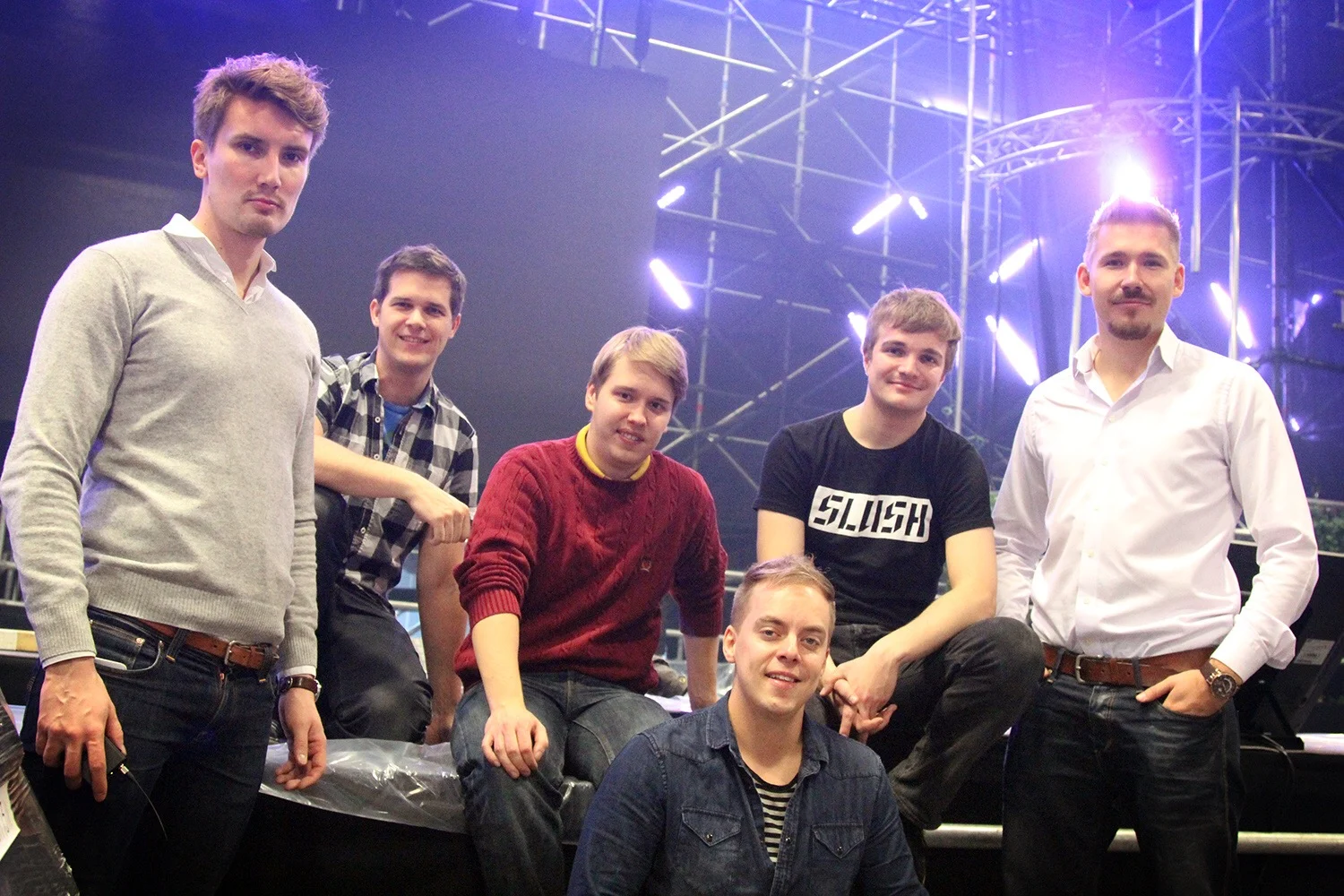
Image 1 / 1
Delivery changed the product
The six founders were Miki Kuusi, Juhani Mykkänen, Elias Aalto, Lauri Andler, Mika Matikainen and Oskari Petás. Five had product or technology backgrounds. Their first service let restaurant customers order to a table or collect food themselves. Wolt’s 2019 account dates the beta to March 2015 and delivery to July. Pickup attracted interest, but the team judged demand too small for its ambitions.[1][2]
Adding delivery meant coordinating three groups. Restaurants needed useful orders and a workable preparation flow. Customers needed selection and reliable arrival times. Couriers needed worthwhile tasks. An attractive consumer app could not satisfy these needs by itself.
Wolt describes Sweden as a difficult first international launch in 2016, followed by Estonia. It initially entered one country at a time and changed its launch playbook before accelerating. Kuusi emphasizes choosing local leaders carefully. This is evidence for learning through staged expansion; it does not prove that every later launch repeated the same economics.[1]
Density mattered more than downloads alone
In 2019, Wolt explained its balancing problem as customer delivery charges, restaurant commissions and courier earnings. It argued that denser orders, repeated pickup locations and similar delivery directions could improve courier productivity. It had also built restaurant and courier apps alongside the consumer product, with local support in fifteen languages.[2]
The mechanism is plausible: shorter travel and less waiting can let a courier complete more deliveries during the same period. But the size of that benefit depends on geography, restaurant readiness and demand at each hour. The 2025 transparency report describes task assignment using location, availability, vehicle type and special capabilities. Its city optimizer adjusts priorities as conditions change. The report describes pricing inputs including travel time, distance, order size and weather.[7]
These descriptions explain operating choices, not audited unit costs. Public evidence here does not establish an all-country cost per delivery or a profitable order-density threshold. Courier pay per active delivery hour also differs from earnings per hour available for work, especially when demand is uneven.
Funding bought time to build the network
Wolt announced €137 million in recent funding in June 2019. In January 2021, an ICONIQ Growth-led $530 million round brought its stated cumulative financing to $856 million. That release reported 23 countries, 129 cities and more than 30,000 restaurant partners. It also described expansion into grocery and retail, including more than 1,500 stores.[2][3]
The same release reported preliminary calendar-2020 revenue of $345 million and a $45 million net loss. These were company-reported preliminary figures, not proof of positive cash flow. They support a narrower conclusion: Wolt had substantial sales before its acquisition and still used capital while expanding.[3]
Capital supported the technology, country teams and merchant relationships needed to compete. It also exposed Wolt to a recurring decision: opening another market can add future potential while increasing present losses. A region-wide growth rate cannot tell a founder which city is ready to support itself.
The announcement price and closing value differed
The November 2021 announcement valued the share transaction at approximately €7 billion. It said Wolt would retain its name, product and Helsinki headquarters, while Kuusi would lead DoorDash’s international operations. This described the agreement and intended organization; it preceded the completed sale.[4]
DoorDash’s closing filing dates completion to May 31, 2022. Its 2022 annual report records acquisition-date consideration of $2.838 billion, including $2.705 billion of common stock and $133 million of awards attributable to pre-acquisition services. It valued the shares using DoorDash’s closing market price on the acquisition date. Certain employee awards for later service were accounted for separately as compensation.[5][6]
The difference illustrates the exposure sellers retain when paid in shares. Announced deal value and acquisition-date accounting value are different measures. Neither should be described as cash paid to founders.
The annual report also records $259 million of Wolt revenue and a $345 million net loss included from acquisition through December 31, 2022. This is a partial ownership period, with acquisition accounting, rather than Wolt’s full-year result. It cannot be compared directly with the preliminary 2020 figures to calculate an operating growth rate.[6]
The current offer reaches beyond restaurant discovery
As checked on November 5, 2026, Finland’s Wolt+ page lists €5.99 per month. Eligible orders have a maximum five-kilometer delivery distance and venue-specific minimum baskets. The page offers delivery-fee savings and a 5% pickup discount. Those benefits do not remove every possible checkout charge.[8]
For merchants, Wolt Drive supports deliveries from their own websites or apps, with on-demand and scheduled service. Merchants can use an API, supported integrations or a browser application. Its Finnish page says merchants pay for completed deliveries but does not publish a fixed numerical tariff. Storefront adds branded ordering through a merchant’s website, social channels or QR codes, using existing Wolt equipment or point-of-sale connections.[10][11]
The Finnish merchant-fee guide directs businesses to their agreement for actual charges. It distinguishes delivery, pickup and Wolt+ commissions and says some fees vary by market. It also describes device repayments and billing corrections. A single advertised commission percentage would conceal those differences.[9]
Distribution now includes retail partners and advertising. In September 2026, REWE’s new service began with five stores in Cologne, with staff picking orders at the store. That launch was not nationwide German coverage. In October, Wolt and Deliveroo announced Spotlight, Sponsored Products and an upgraded Ads Manager for use across the two brands in nearly forty countries. An announcement across brands does not establish availability at every Wolt merchant.[13][12]
Country economics and rules still change
DoorDash announced a four-country withdrawal across its Wolt and Deliveroo brands in February 2026 after a country-specific review. Wolt’s Japanese notice said service would operate through March 4. Kun.uz reproduced Wolt’s notice ending new orders in Uzbekistan from March 5.[25] Qatar and Singapore belonged to the broader group announcement; they should not all be labeled Wolt exits.[14][15]
These decisions challenge the idea that expanding a regional platform makes every market attractive. The evidence supports selective retrenchment, while leaving the relative effects of competition, operating costs and execution unresolved.
Finland also changed. Foodora’s company announcement ended local service after February 27, 2026. Uber Eats announced its Helsinki launch on May 6, with Espoo and Tampere planned for later that month. The former Wolt–Foodora comparison is therefore stale; current coverage needs an address-level check.[16][17]
Labor classification affects the operating model. Finland’s Tax Administration says the May 2026 court decision changes courier tax treatment and that revised guidance applies from January 1, 2027. Its notice also describes the earlier employment-status ruling. Wolt acknowledged the tax decision and said it would work with the authority on implementation.[18][19]
Wolt’s Finnish account page says accounts become personal from August 1, 2026, with implementation language referring to individual cities. It describes verified holders and a waiting list linked to city capacity. An application page is therefore not evidence of immediate admission or guaranteed earnings. Those Finnish conditions should not be generalized to every country.[20]
A smaller founder test can serve the delivery workforce
Rebuilding broad delivery discovery would require recruiting all three sides again. A smaller hypothesis is Spoke Shift: prebooked bicycle-maintenance clinics for Helsinki couriers, operated with an existing repair shop. A short intake would identify the bike, common wear-part needs and a mechanic-approved slot before the rider travels there.
This is an operating-service test, with software added only if needed. Existing supply is visible: Easycrew’s indexed page advertises a Wolt-courier repair discount in Helsinki. Bikebook Workshop already offers booking, messages, stock tools and bicycle-service workflows. The gap is not established by either source.[21][22]
The pilot would test a specific difference: whether parts prepared in advance and agreed clinic hours reduce repeat visits or time without a usable bicycle. Compare it with the shop’s current phone process and an existing booking product. A mechanic must confirm repair scope and completion; the software should make no safety diagnosis. Stop if existing tools and normal appointments provide the same result.
Timeline
| Date | Event |
|---|---|
| 2014 | Six founders start Wolt in Helsinki. [1] |
| March–July 2015 | Pickup beta precedes the delivery launch. [2] |
| 2016 | Sweden and Estonia become early international markets. [1] |
| June 2019 | Wolt announces €137 million in recent financing. [2] |
| January 2021 | $530 million round announced. [3] |
| November 2021 | DoorDash acquisition agreement announced. [4] |
| May 31, 2022 | Acquisition closes. [5] |
| 2026 | Wolt exits Japan and Uzbekistan; merchant products and retail partnerships continue expanding elsewhere. [13–15] |
Sources
- Wolt founder retrospective
- Wolt 2019 funding Q&A
- Wolt 2021 funding announcement
- SEC-filed acquisition announcement
- DoorDash closing 8-K
- DoorDash 2022 10-K
- Wolt 2025 algorithmic transparency report
- Finland Wolt+
- Finland merchant fee explanation
- Finland Wolt Drive
- Finland Wolt Storefront
- Wolt and Deliveroo ads announcement
- REWE launch
- DoorDash four-country wind-down
- Wolt Japan termination
- Foodora Finnish exit announcement
- Uber Eats Finnish launch
- Finnish Tax Administration decision notice
- Wolt response to tax ruling
- Finland personal courier accounts
- Helsinki Easycrew offer
- Bikebook Workshop current features
- Bikebook Workshop pricing
- Wolt careers history and founder image
- Wolt Uzbekistan withdrawal notice, reproduced by Kun.uz