Overview
Zynga learned how to turn existing friendships into a game network, then had to rebuild the business when its distribution changed. Its early advantage combined easy games, Facebook's social connections, and continuous experiments. Its later recovery depended on keeping familiar games useful and buying studios with durable mobile hits.
Take-Two completed its acquisition on May 23, 2022. Zynga continues as a publishing label, with games including Toon Blast, Words With Friends, and Zynga Poker contributing to its parent's business in 2026. The useful founder lesson spans both periods: getting players into a game and giving them reasons to return require different capabilities. [12][14]
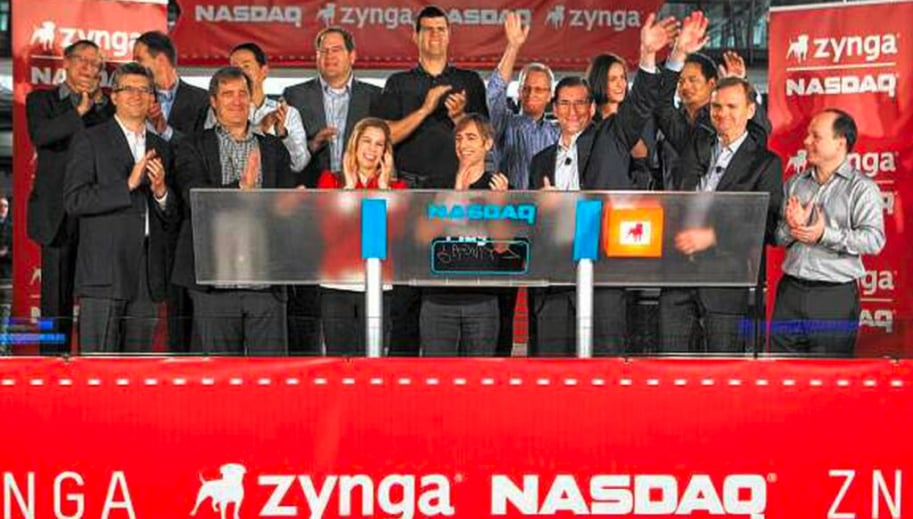
Image 1 / 1
Friends supplied the starting network
Mark Pincus began the project in 2007. The founding team included Eric Schiermeyer, Justin Waldron, Michael Luxton, Steve Schoettler, and Andrew Trader. Pincus later credited that group in his acquisition letter. This was a team effort, despite the company's close identification with its founder. [1][3]
Investor Fred Wilson's January 2008 description explains the initial insight. Online poker could connect people who already knew each other, rather than seat them with strangers. Zynga used social-network connections to help players find friends ready to play. Its network also included Bebo and Friendster, so the original ambition extended beyond Facebook. Wilson reported almost 700,000 unique daily players across the network. [2]
Outside capital financed development and expansion. Union Square Ventures records its first investment as a 2007 Series A. In July 2008, Wilson reported a $29 million round led by Kleiner Perkins and IVP. Funding helped Zynga assemble a network of games and developers before FarmVille became its defining brand. [1][7]
FarmVille made returning part of play
FarmVille launched in June 2009. Players planted and harvested crops, tended animals, decorated farms, exchanged gifts, and helped friends. The loop tied personal investment to visible progress: another visit advanced a farm that other people could see. [4]
Brian Reynolds, then Zynga's chief designer, described the operating method at DICE in 2010. Teams measured reach, retention, and revenue, then tested changes with subsets of players. Crops that withered when neglected created pressure to return; Reynolds explicitly connected that pressure to friends seeing an unattended farm. This explains a retention mechanism, without establishing that every returning player enjoyed the obligation. [6]
That design creates a trade-off. A timer can make tomorrow's visit meaningful, but it can also make leisure feel like maintenance. The evidence here describes management's design choices; it does not measure their long-term effect on player satisfaction. Continued content, social attachment, and pressure to avoid losing progress can produce similar activity numbers.
Zynga also sold virtual goods and advertising. Free entry let friends join without a purchase, while optional spending could speed progress or personalize a farm. The model required both a broad audience and people willing to pay within it. [4]
Distribution could grow faster than control
The partnership with 7-Eleven moved the game into physical retail. A May 2010 announcement described branded products and virtual gifts across nearly 7,000 stores in the United States and Canada. GagaVille later let FarmVille visitors hear songs from Lady Gaga's Born This Way album. These campaigns turned game participation into a channel for brands and entertainment. [21][4]
Facebook remained the critical dependency. Zynga estimated that Facebook generated 93% of its revenue in each of the first three quarters of 2011 and 94% in the fourth. Zynga also reported that Facebook's communication restrictions, introduced in early 2010, reduced its player numbers. [5]
Payment control compounded that exposure. After the migration to Facebook Credits, completed in April 2011, Facebook remitted 70% of the credits' face value to Zynga. A company could improve its games yet lose reach or accept different payment economics because another company controlled the channel. [4]
Facebook alone does not explain the subsequent difficulties. Mobile games required different product execution, and a successful title could still fade. Zynga's 2013 annual report records a $95.5 million impairment of acquired OMGPOP intangible assets in the third quarter of 2012 after weaker forecasts and discontinued development. Buying a popular game did not remove the need to judge its durability. [9]
The mobile recovery required selection
Zynga bought Newtoy, the developer of Words With Friends, in 2010 and went public in December 2011. Mobile was already on its agenda before the difficult transition.
Leadership changed during the transition. Don Mattrick took over from Pincus in 2013; Pincus returned in 2015; Frank Gibeau became CEO in 2016. Zynga's own history says an earlier emphasis on new releases hurt its established franchises. That is the company's retrospective explanation, with the incentives of a corporate account. [8]
Mobile competitors included Candy Crush Saga and Clash of Clans. Gibeau told TIME that Zynga had spread talent across too many projects. His team concentrated resources on fewer priorities and regular updates to existing games. The inference is that analytics became more useful when paired with experienced production leadership and a narrower portfolio. Metrics could guide improvement, but they could not decide which games deserved years of investment. [22]
Acquisitions expanded that portfolio. NaturalMotion brought mobile development capabilities in 2014. Small Giant added Empires & Puzzles in 2019; Peak added Toon Blast and Toy Blast in 2020. Rollic expanded Zynga into hypercasual publishing, while Chartboost added advertising technology in 2021. These were different bets on production, retained audiences, and monetizing reach. [8]
In the fourth quarter of 2021, Zynga reported 184 million average mobile monthly active users and 37 million average mobile daily active users. [11]
The accounting shows why the recovery needs qualification. For the year ended December 31, 2021, Zynga reported $2,800.5 million in revenue, $2,825.8 million in total bookings, and a $104.2 million net loss, all in US dollars. Mobile revenue was $2,719.0 million; mobile bookings were $2,735.3 million. Bookings measure sales activity with adjustments for deferred revenue and other items; they are neither recognized revenue nor profit. [10]
Revenue growth also included acquired businesses. The filing attributes major increases to Toon Blast and Toy Blast, acquired in July 2020, as well as Harry Potter: Puzzles & Spells. Therefore, the larger company demonstrates a successful mobile expansion, but its consolidated growth does not isolate organic growth in older games. [10]
Outcome and evolution
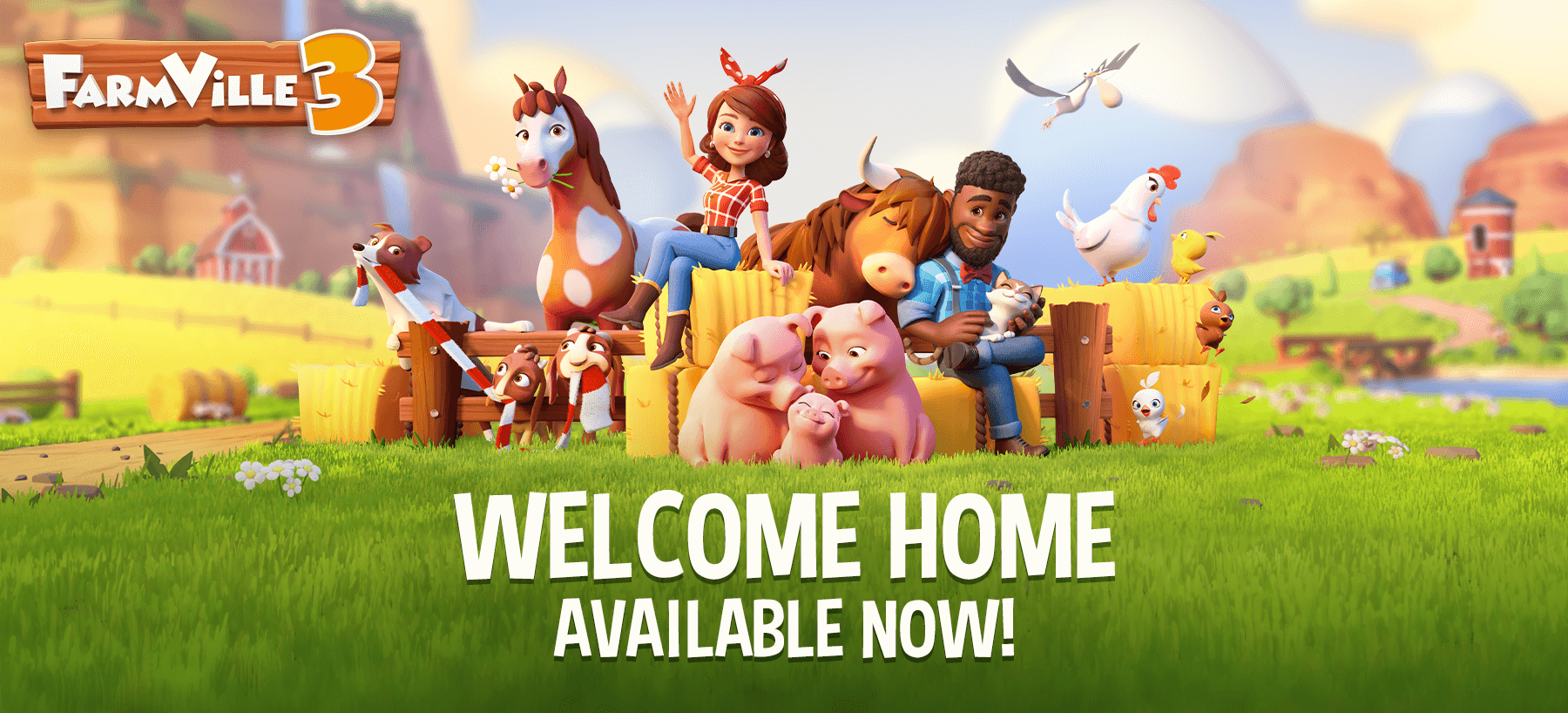
The original Facebook FarmVille ended in December 2020 as Flash support ended. That product closure happened before the Take-Two deal and did not close Zynga or the FarmVille franchise. FarmVille 3's current official page offers Android and iOS play and promotes its Royal Circle web store. [17][16]
Take-Two's completion announcement specifies $3.50 in cash plus 0.0406 Take-Two shares for each Zynga share. Those terms describe consideration received; a headline transaction value at announcement would use a different valuation date. [12]
The portfolio kept changing after acquisition. LoopMe acquired Chartboost from Zynga in December 2024 for undisclosed financial terms. Zynga also announced that Star Wars: Hunters would end service on October 1, 2025. The publisher's sunset message is reproduced by Gematsu. [13][18]
For the quarter ended June 30, 2026, Take-Two listed Toon Blast, Match Factory!, Empires & Puzzles, Words With Friends, and Zynga Poker among its largest bookings contributors. Its prepared remarks reported 8% year-over-year bookings growth for both Toon Blast and Words With Friends. The same remarks describe direct consumer purchases as a revenue and margin channel. Those results support continued franchise value, without revealing Zynga's separate profitability. [14][15]
For a new founder, a broad FarmVille replacement faces an operating incumbent and several mature alternatives. A smaller opportunity would need its own audience and reason to switch. Nostalgia alone does not establish demand for another farming game.
Timeline
- 2007–2008: Zynga builds a social game network and raises outside capital. [1][2]
- June 2009: FarmVille launches. [8]
- 2011: Facebook supplies over 90% of quarterly revenue. [5]
- 2012: Zynga records the OMGPOP intangible-asset impairment. [9]
- 2016–2021: Gibeau leads mobile expansion through established franchises and acquisitions. [8]
- May 2022: Take-Two completes the combination. [12]
- 2024–2026: Chartboost changes ownership; Zynga's games continue contributing to Take-Two. [13][14]
Sources
- [1] Founding team and company identity
- [2] Zynga Game Network
- [3] Pincus letter on combination
- [4] Zynga S-1 amendment
- [5] Zynga 2011 annual report
- [6] Chief designer at DICE
- [7] Zynga announces new investment
- [8] Zynga corporate history
- [9] Zynga 2013 annual report
- [10] Zynga 2021 annual report
- [11] 2021 results release
- [12] Take-Two completion announcement
- [13] LoopMe acquisition of Chartboost
- [14] Take-Two fiscal Q1 2027 release
- [15] Take-Two fiscal Q1 2027 prepared remarks
- [16] FarmVille 3 product page
- [17] FarmVille shutdown reporting
- [18] Hunters shutdown announcement reproduction
- [21] 2010 7-Eleven announcement
- [22] Gibeau mobile turnaround interview