Exec Briefing
Actionable insights
If you only have a few minutes to spare, here’s what investors, operators, and founders should know about Airware (W13).
- Fragmentation did not guarantee platform demand. Integrated aircraft vendors improved bundled software and weakened the case for a neutral operating layer.
- Pivots inherit commitments. Hardware, consulting, analytics, and investing added obligations while the original thesis still consumed capital.
- Partnerships did not equal runway. Tokyo and Mitsubishi news arrived four days before operations ceased.
- Selective asset survival reveals value. Analytics, employees, dealers, and customers transferred; the original flight-control products did not visibly continue.
Overview
Airware was a commercial-drone platform company founded by Jonathan Downey around 2010 or 2011 and accepted into Y Combinator's Winter 2013 batch. It began with a standardized flight-control platform for drone manufacturers, then moved into aircraft, enterprise consulting, and aerial-data analytics.[1][2]
The company ceased operations on September 14, 2018 after raising a reported $118 million. Its official explanation was that the commercial-drone market matured more slowly than expected and repeated pivots exhausted runway. Evidence also supports interacting risks from hardware bundling, capital-intensive product shifts, long engineering cycles, and failed fundraising. There is no single proven cause.[3]
Delair later acquired key assets, Redbird analytics intellectual property, and part of the Paris team. There is no evidence that Flight Core, Ground Control Station, AT-28, or Cygnet survived as products.
Founding Story
Downey's thesis began during an autonomous-drone competition at MIT. His undergraduate team built an aircraft from scratch, finished second-to-last, and discovered that rebuilding basic flight systems consumed attention that should have gone to the mission application.[4] Available military autopilots were closed black boxes, while open-source flight code was fragile.
Downey then spent five years at Boeing working on the autonomous A160 Hummingbird and also worked as a commercial pilot. Those experiences gave him both systems and operator perspectives. Airware began around 2010 or 2011, but the exact incorporation date was not verified. This report uses 2011 in metadata while preserving the ambiguity.
Sources differ on the full founding team. YC names Jonathan Downey and Brad Schiller as founders. MIT describes the company as initially run by Downey, later joined by Buddy Michini and other Boeing engineers. The available record does not resolve founding equity or every early role. Prototypes were tested at MIT before Airware joined Lemnos Labs and YC W13.
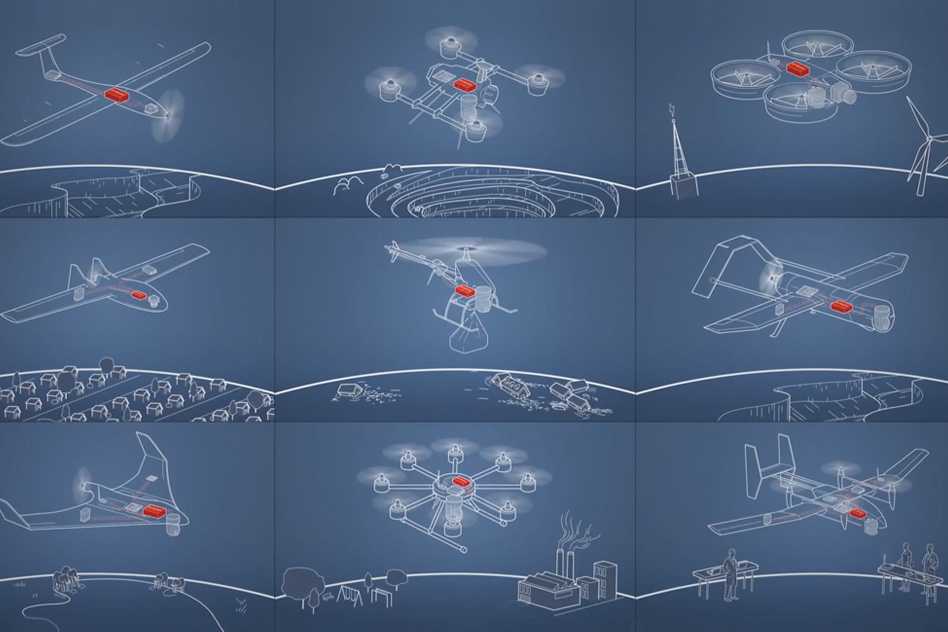
The platform analogy was Intel plus DOS for personal computers: a common layer that could serve many aircraft and applications. Airware tracked more than 600 manufacturers and aimed to connect different vehicles, sensors, actuators, communications modules, and missions through shared infrastructure.
Downey told Wired: “What you need is a platform.”[4] The research packet surfaced no second direct founder quote. Rather than invent one, the gap matters: later causal accounts come primarily from the company's shutdown statement and unnamed former employees, not a detailed founder post-mortem.
Timeline
- 2010-2011: Airware began; sources vary on the founding year.
- Winter 2013: Airware entered Y Combinator.
- May 2013: The company raised a $10.7 million Series A led by Andreessen Horowitz, with Google Ventures participating.[5]
- September 2014: Airware reported $40 million raised and growth from five to more than 50 people.
- April 2015: Flight Core, Ground Control Station, and the cloud platform launched commercially.[6]
- 2015: Airware created a Commercial Drone Fund to invest across the ecosystem.
- September 2016: Airware acquired 38-person Paris analytics company Redbird after first investing through its fund.[7]
- September 10, 2018: The company announced a Tokyo office, Mitsubishi investment, and partnership.
- September 14, 2018: Airware told employees it would cease operations immediately.
- October 2018: Delair acquired key assets and Redbird analytics intellectual property; 26 Paris employees joined Delair.[8][9]
What They Built
Airware's first product was a standardized operating layer for commercial drones. Flight Core was a Linux-based autopilot box that flew the aircraft, connected components, and collected sensor data. Configuration software let manufacturers select a vehicle, camera, sensor, actuator, and communications setup, then distribute settings across a fleet.
Mission software handled planning, real-time monitoring, mid-flight adjustments, and upload to a cloud platform for aggregation and analysis. Operators could draw a route on a map instead of manually piloting the aircraft. Flight data returned automatically.
Unlock the full Airware teardown
Read the complete post-mortem, the rebuild playbook, and the exact reasons Airware is still worth studying now.