Overview
Arrival proposed changing both electric vehicles and the factories that built them. Founded in 2015 by Denis Sverdlov, it developed commercial vehicles around modular components, software, composite body panels, and small local factories. Hyundai, Kia, and UPS provided prominent support.[1][2][3]
The UK operating companies entered administration on February 5, 2024. Subsequent equipment sales and a later intellectual-property transfer preserved parts of the asset base. They did not establish continued vehicle production by the original group. Companies House records Arrival UK Ltd's dissolution on October 1, 2026.[6][7]
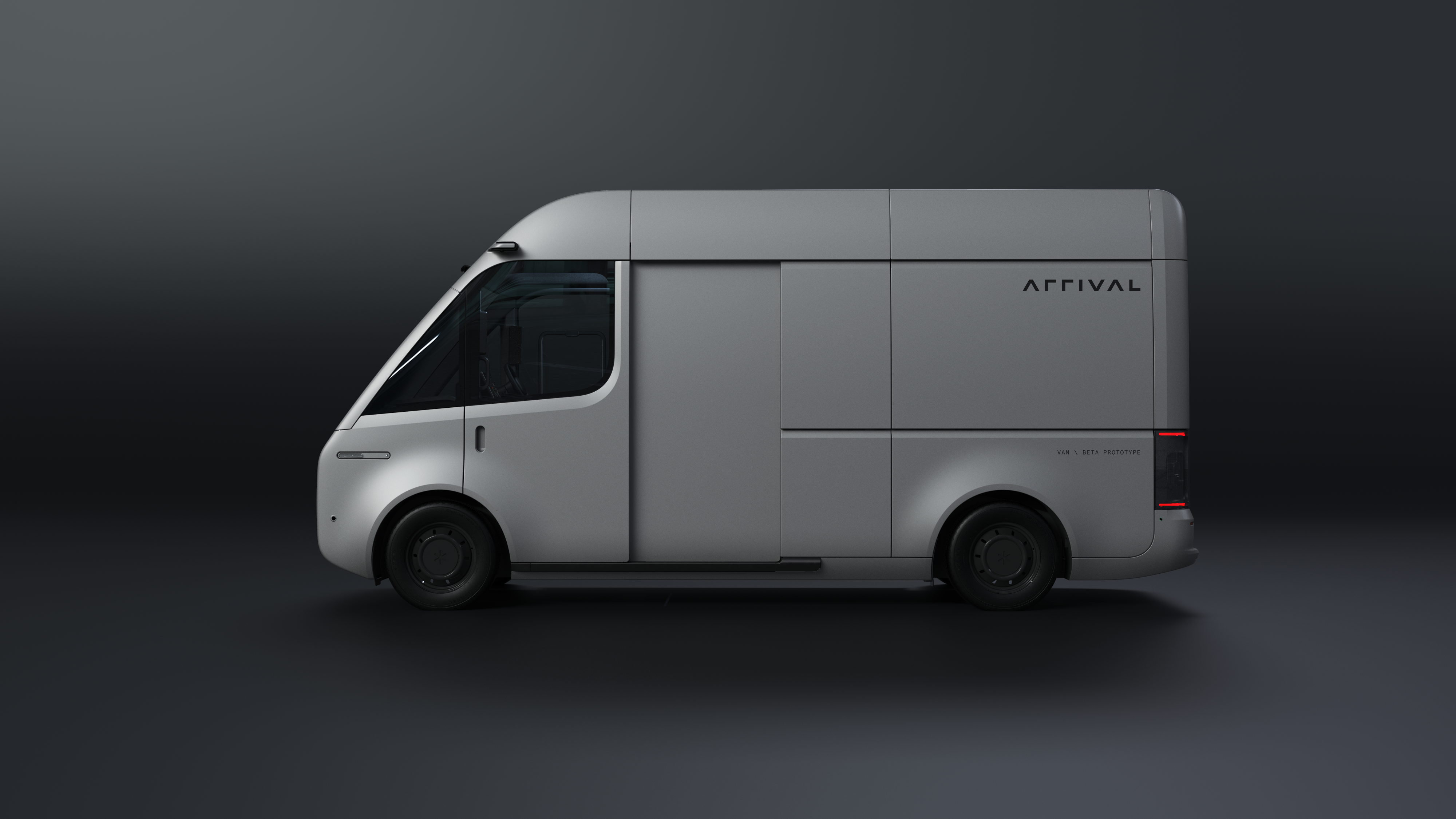
Image 1 / 1
Founding Story
Sverdlov framed manufacturing as part of the product. The company's 2020 presentation argued that conventional large factories and standardized output made commercial vehicles hard to customize economically. Its answer combined in-house components with robotic assembly cells in smaller buildings. That made the vehicle design and production system depend on each other.[3]
The UK operating company was incorporated on March 6, 2015. This date concerns Arrival UK Ltd, rather than every later group entity. The public parent was governed by Luxembourg law, while development and manufacturing involved operating subsidiaries.[7][4]
Strategic partners supplied a concrete use case. UPS said collaboration began in 2016 and announced a minority investment and a commitment for 10,000 vehicles in January 2020. Hyundai and Kia separately announced a €100 million investment, split €80 million and €20 million, with vehicle co-development planned.[1][2]
Timeline
- 2015: Arrival began; the UK company was incorporated in March.[7]
- January 2020: Hyundai and Kia announced their investment; UPS announced its investment and vehicle commitment.[1][2]
- November 2020: The proposed public-market merger presentation forecast rapid factory and revenue growth.[3]
- August 2022: Arrival reported delayed US manufacturing and expected no revenue that year.[4]
- September 2022: Its first production-verification van was completed; the founder described initial vehicles as unsold trial and optimization units.[5]
- February 5, 2024: Both named UK operating entities entered administration.[6]
- March 2024: Canoo announced purchases of selected Arrival manufacturing assets.[8]
- February 2026: Arrival UK Ltd's remaining digital intellectual property transferred to a lender-created company.[10]
- October 1, 2026: Arrival UK Ltd was dissolved.[7]
What They Built
Arrival's platform placed core electric drivetrain elements within a modular vehicle base. Hyundai's announcement describes batteries, motor, and driveline components, with adaptations for different commercial vehicles. UPS's description adds in-house chassis, body, and electronic controls, designed around delivery work and maintenance.[1][2]
The factory concept used robotic cells rather than a conventional continuous assembly line. Composite panels were intended to avoid the stamping, welding, and paint-shop processes associated with metal bodies. In 2020, management modeled a factory costing $45 million, with annual capacity of 10,000 vans or 1,000 buses. Those figures described an intended system, rather than demonstrated throughput.[3]
In his October 2022 letter, Sverdlov acknowledged integration problems and said, “prototypes are easy, production is hard.” On the initial vehicles, he specified, “they will not be sold to customers.” These statements distinguish a verification milestone from customer deliveries or proven production economics.[5]
Market Position
Target Customers
Delivery fleets and passenger-transport operators bought availability, operating cost, and a vehicle suited to their routes. UPS's involvement offered practical input on driving, loading, and back-office needs. A fleet commitment therefore supplied more information than a general claim that consumers wanted electric vehicles.[1]
Market Size
Arrival's 2020 presentation forecast roughly $1 billion revenue in 2022 and more than $14 billion in 2024. These were company projections. By August 2022, its outlook instead anticipated no revenue for that year. The contrast establishes a large planning revision without treating an order announcement as earned revenue.[3][4]
The 2022 release also combined non-binding memoranda and orders into about 149,000 vehicles of potential demand. The conditional value could not fund production until the relevant contracts, vehicles, and acceptance conditions produced cash.[4]
Competition
Arrival proposed winning through both vehicle ownership costs and factory economics. Conventional manufacturers could offer a longer service history, supplier relationships, and established production. The startup needed to prove its new process while also meeting normal vehicle requirements. Lower intended factory cost could not substitute for repeatable delivery of a usable product.
Business Model
The commercial plan depended on selling vehicles produced in local factories. Shared components and software were expected to reduce cost across models, while distributed production would limit the investment needed at each site. The same integration also increased the number of technologies that needed to work together before regular sales.[3]
The reported June 2022 cash balance was $512.6 million; the quarter's loss was $89.6 million and capital expenditure was $95.2 million. These measures describe different things and cannot simply be added into a cash-burn estimate. The company also established a facility to sell up to $300 million of stock, which represented financing capacity rather than money already received.[4]
Outcome and evolution
Sverdlov attributed 2022 delays partly to supply chains and a changing environment, alongside manufacturing integration. A funding shortage can end a promising industrial project before optimization finishes. That alternative remains plausible. The record nevertheless shows the risk of planning rapid expansion before the production process has demonstrated repeatable output.[5]
The asset history has several branches. Canoo's March 2024 release identifies manufacturing equipment from Arrival Automotive UK and earlier US assets. Canoo itself filed Chapter 7 in January 2025. Its purchases therefore do not establish a durable Arrival successor business.[8][9]
Arrival UK Ltd's June 2026 final report records a separate February 18 sale of remaining digital intellectual property to a company created by secured lenders. Consideration took the form of £50 million in released debt, rather than a £50 million cash payment. The report says ordinary unsecured creditors had no available distribution; employee claims with preferential status received 50 pence per pound.[10]
Arrival Automotive UK followed a different path through liquidation. Its final account records ordinary unsecured dividends of 0.6 pence and 0.05679 pence per pound. These entity-specific recoveries must remain separate from Arrival UK Ltd's position and from any shareholder recovery.[11]
The current evidence supports an inactive original venture, asset transfers, and the named UK company's dissolution. It does not establish all group entities' final disposition or a current commercial licensee producing Arrival vehicles.
Key Lessons
- Prove repeatable production before assuming that a factory design can be copied quickly.
- Separate orders, non-binding interest, acceptance, revenue, and cash.
- Keep financing capacity distinct from proceeds already received.
- Follow assets and obligations by legal entity; a transferred machine or patent is only part of a company.
Sources
- UPS investment and purchase commitment
- Hyundai and Kia investment
- Arrival 2020 merger presentation transcript
- Arrival second-quarter 2022 results
- Founder production-verification letter
- EY insolvency case documents
- Arrival UK Ltd current registry
- Canoo equipment acquisition
- Canoo subsequent Chapter 7 filing
- AUK final administrators report
- Automotive UK final liquidators account