Overview
Lightning eMotors supplied electric commercial vehicles, powertrains and charging systems for fleets. Its business began as Lightning Hybrids in 2008, years before its public listing. It moved from hydraulic hybrids toward battery-electric vehicles, using existing vehicle platforms and specialist partnerships. [1], [2]
Real deployments and large announced opportunities did not produce a sustainable business. A receiver took control in December 2023. The February 2024 asset sale preserved engineering resources, while ending the original vehicle sales and service operation. [3], [4]
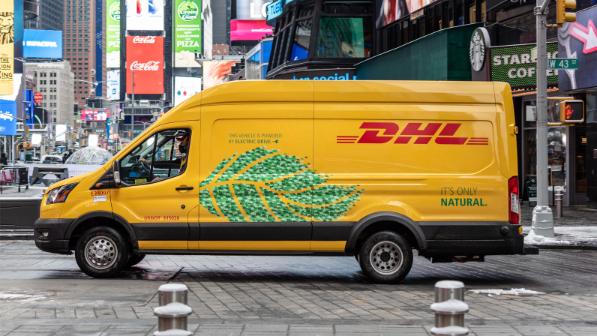
Image 1 / 1
Founding Story
Dan Johnson and Tim Reeser founded Lightning Hybrids in 2008. Its earlier systems recovered braking energy mechanically through hydraulic accumulators, rather than batteries. The company marketed them for medium- and heavy-duty vehicles, including installations on existing trucks and buses. That origin is different from the later battery-electric business. [1]
Reeser later described an initial ambition to build a highly efficient hybrid car for the Automotive XPRIZE. At the 2009 Denver Auto Show, a Colorado fleet official instead expressed interest in putting the technology into trucks or buses. Reeser said that conversation redirected the business toward commercial fleets. His explanation was: “we started with a hybrid car.” Reeser also told ICE: “One of my passions is, and has been listening to the customers.” [5]
In the December 2020 merger presentation, Reeser dated founding to October 2008. Bill Kelley described joining in 2017 at the start of the electrification effort. The same presentation positioned the company around configurable vehicles for fragmented commercial applications. Its forecasts described what management hoped to achieve, rather than completed production. [2]
Timeline
- 2008–2014: Lightning began with hydraulic hybrid technology and expanded fleet installations. [1]
- 2017: The battery-electric effort began, according to management’s later account. [2]
- March 2021: DHL described nine pilot vans and plans to deploy 89 more. [6]
- May 2021: The GigCapital3 business combination brought Lightning public. [7]
- August 2021: A Forest River arrangement outlined a potential multiyear opportunity; Lightning also withdrew its annual guidance. [8]
- June 2023: Lightning announced next-generation GM-based ZEV4 work trucks. [9]
- December 15, 2023: A Colorado court appointed Cordes & Company as receiver. [3]
- February 23, 2024: The asset sale to GERCO closed for $12.6 million, subject to adjustment. [10]
What They Built
Lightning sold complete vehicles and electric powertrains that partners could install. Its range included cargo vans, shuttle buses, ambulances and work trucks. Charging equipment, telematics and services extended the offering beyond the drivetrain itself. This variety helped it address specialized jobs, while increasing the number of configurations and dependencies it needed to support. [8]
DHL supplied a concrete customer example. In March 2021, it reported a successful initial pilot with nine Lightning Electric Ford Transit vans and planned a further 89 during the year. Its announcement also described telematics and analytics. This establishes a pilot and expansion plan; it does not independently verify every later deployment. [6]
The product continued changing near the end. In June 2023, Lightning announced a GM-based ZEV4 platform for applications such as box, utility, stake-bed and dump trucks. The company described a 120 kWh battery and multiple charging options. The launch showed continued development, without resolving the cash and service obligations of the broader business. [9]
Market Position
Target Customers
Lightning targeted commercial fleets with identifiable routes and specific payload needs. A school bus, airport shuttle and delivery van could need different battery capacity and body equipment. Reeser argued that customization around known daily work could avoid paying for unnecessary range. The operational challenge was delivering that fit repeatedly, then supporting each configuration. [5]
Market Size
The Forest River opportunity was described as up to 7,500 vehicles, with associated products and services potentially worth up to $850 million. Those ceilings described a multiyear commercial opportunity. They were not funds raised, cash collected or recognized revenue. Treating the headline as a completed $850 million sale would obscure the work still required. [11]
Competition
Lightning needed to persuade fleets to buy a specialized electric vehicle instead of continuing with existing vehicles or another supplier. Its approach also complemented established vehicle and body manufacturers. A June 2023 launch could offer a wider choice of applications, but a fleet also needed parts, qualified maintenance and a credible support path. [9]
Business Model
The business depended on selling hardware and related services at a cost that could support engineering and continuing maintenance. Partnerships added distribution and assembly capacity, while still requiring available chassis, batteries and reliable integration. In August 2021, Lightning explicitly withdrew its full-year guidance because of chassis production disruptions and pandemic delays. [8]
Configuration was a selling point and a cost commitment. A buyer could value a vehicle tailored to its route, yet every combination still required validation, documentation and service capability. Reeser’s fleet-focused argument made commercial sense as a customer proposition; it did not establish positive economics across the product range. [5]
Traction
Lightning had vehicles in use, rather than only reservations. Its second-quarter 2021 release reported 36 complete vehicles and one powertrain system sold. By September 30, 2023, however, it held approximately $6 million in cash. The nine-month filing recorded about $49.9 million used in operating activities and a $95.6 million net loss. These are different accounting measures, not interchangeable descriptions of cash spent. [8], [12]
Battery problems added obligations. The filing described recalls involving Romeo and eMatrix packs, with risks including lost propulsion and, for the eMatrix issue, potential fires. Remedies and recovery from suppliers remained uncertain. An integrator remained responsible to customers even when the underlying component came from another company. [12]
Outcome and evolution
Cordes & Company took control through a Colorado receivership in December 2023. This was a court-supervised receivership, rather than a claim that Lightning filed federal Chapter 11. [3]
The receiver’s February closing report said proceeds would go to creditors according to applicable priorities, after administrative expenses. It explicitly said shareholders would receive no distribution through the receivership or transaction. That statement concerns this sale process, rather than every separate legal claim a shareholder might have. [10]
GILLIG identified GERCO as its wholly owned subsidiary. The buyer acquired assets and hired engineers for a new Colorado Technology Center, while explicitly stating it would not resume Lightning’s vehicle sale and service business. GILLIG’s current site still identifies the Loveland engineering hub. The team’s later work belongs to GILLIG’s operations. [4], [13]
Former customers also had a legal sequel. In June 2024, the receiver issued a supplemental claims notice concerning Romeo-equipped vehicles and the associated recall. The notice shows how customer obligations remained after the equipment and engineering assets changed hands. It does not establish that every claimant recovered its losses. [14]
Separately, securities litigation produced a $13.35 million settlement arrangement. Defendants denied the allegations. A reproduced docket records final judgment approving the settlement on December 3, 2024. The fund is separate from the receivership sale, and final individual payments are not established here. [7], [15]
Key Lessons
-
Commercial opportunity is not collected revenue. A multiyear ceiling still depends on production, delivery and customer acceptance. Separate each stage when planning cash needs.
-
Integration carries continuing responsibility. A supplier’s battery failure can become the vehicle provider’s recall, refund and service problem. Support must survive component changes.
-
Customization needs repeatable support. Fit a vehicle to the job, then fund the documentation, parts and qualified maintenance needed throughout its use.
-
An asset sale can preserve expertise while ending service. Engineers and tools can move to another manufacturer without transferring the original customer operation. State that boundary clearly.
Sources
- Company history
- founder’s filed presentation
- Receivership filing
- buyer’s explanation
- Founder interview
- Customer announcement
- Settlement administrator’s transaction history
- Company update
- Product announcement
- Closing filing
- Reproduced Forest River announcement
- 2023 quarterly filing
- current GILLIG site
- Receiver’s notice filed with NHTSA
- reproduced court docket