Overview
Byton pursued an electric car built around a connected cabin. Its M-Byte SUV combined a 48-inch dashboard display with touch controls, digital services, and an ambitious international launch plan. The company attracted a $500 million Series B in June 2018, including FAW, CATL, and Tus-Holdings. Interior announcement, Funding announcement
The vehicle did not reach its promised commercial launch. After suspended operations and an attempted manufacturing rescue, two Nanjing operating entities entered bankruptcy-liquidation proceedings on June 14, 2023. Administrator notices establish those specific legal events. They do not establish a simultaneous dissolution of every company in the group. Industry account, First entity notice, Second entity notice
Founding Story
The company originated as Future Mobility Corporation in 2016. Its founding investor, China Harmony, records the Byton brand’s launch in September 2017. Keeping those milestones separate explains why accounts give different founding years. Investor filing, page 17
Co-founders Carsten Breitfeld and Daniel Kirchert brought experience from BMW and Infiniti. Breitfeld had led BMW’s i8 vehicle program. He told McKinsey that changing a large automaker’s business model was difficult, which motivated him to start again. His intended benefit was plain: “We want to create enjoyable time on the move.” That was a vision for the cabin and eventual mobility service, not evidence that the planned autonomous functions were ready. Founder interview
Kirchert described four requirements in the 2018 financing announcement: “Technology, Product, Capital and Factory.” The company was attempting to develop all four across a manufacturing base in Nanjing, software research in Silicon Valley, and design work in Munich. Original funding release
Timeline
- 2016: Future Mobility Corporation was established. Founding investor
- September 2017: The company launched the Byton brand. Investor filing
- June 2018: Byton announced its $500 million Series B. Company release
- October 2019: The company announced pre-production and targeted initial Chinese deliveries for mid-2020. Pre-production announcement
- January 2020: Byton announced content partnerships and a capital and business alliance with Marubeni. Content release, Marubeni
- July 2020: Operations were suspended for reorganization. Reuters report
- 2021: Foxconn cooperation sought another path to production, but was later put on hold. Cooperation report, Later account
- June 2023: The court accepted liquidation proceedings for two operating entities. Administrator notices, Second entity
What They Built
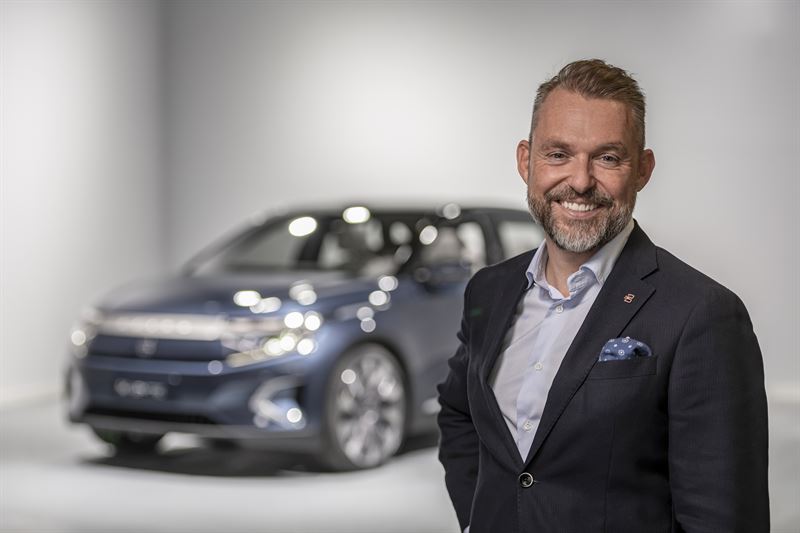
The M-Byte’s cabin carried the clearest product distinction. Byton’s June 2019 design release described the large shared display, a seven-inch driver tablet, an eight-inch central touchpad, and physical steering-wheel buttons. It also described front seats rotating inward. These were announced design features for the intended production vehicle, not proof of customer deliveries. Interior design release
The screen also needed an ecosystem. At CES 2020, the company named ViacomCBS and ACCESS for entertainment, AccuWeather for weather, CloudCar for infrastructure, and other service partners. It announced a developer program and described a broader role for the car’s battery technology. A partnership list demonstrated planned content and integrations; it could not establish a production-ready vehicle or sustained software revenue. Original CES release
Manufacturing was a separate undertaking. The 2018 release described a Nanjing factory under construction, with prototypes, pilot production, and launch scheduled as successive steps. By October 2019, the company said pre-production had begun. That distinction matters: a prototype, a pilot line, and a vehicle delivered with service support represent different operating commitments. Funding and factory release, Pre-production release
Market Position
Target Customers
Byton targeted premium SUV buyers interested in a connected experience. Its planned European entry price was €45,000 excluding VAT and subsidies. International distribution would combine direct digital channels with local retail and service partners. Those were planned terms before commercial launch. European plans
Market Size
The founders saw a large opportunity in China and in future shared mobility. The relevant question for Byton was narrower: could it produce, support, and sell its first model at sustainable cost? Public reservations and industry-wide electric-car growth did not answer that question. The reviewed evidence does not establish a reliable sales or contribution-margin base for the startup.
Competition
The product had to compete with electric vehicles from established manufacturers and other new entrants. Breitfeld argued that a new company could organize itself around software and a different business model. The engineering challenge extended beyond that interface: the company still needed a working vehicle program and the resources to launch it. Founder interview
Business Model
Breitfeld envisioned earnings from mobility and digital content as well as selling cars. That depended on vehicles reaching customers and carrying services they used. Marubeni’s January 2020 alliance proposed exploring sales, marketing, energy storage, and vehicle-related services. Its announcement was an agreement to pursue those opportunities, not a report of profitable operations. Founder interview, Marubeni release
Traction
Byton claimed more than 50,000 reservations worldwide in October 2019, including over 14,000 in Norway. The release did not establish completed purchases or the proportion backed by non-refundable deposits. These are demand signals, not booked vehicle sales. The company also named prospective retail partners, including Hedin, BYmyCAR, Salvador Caetano, and Modern Driving. Company release
Outcome and evolution
Byton suspended operations in 2020. A January 2021 cooperation framework with Hon Hai and the Nanjing Development Zone aimed to accelerate M-Byte production. Hon Hai’s March investor presentation still placed M-Byte mass production on its future roadmap. A roadmap did not establish that production had begun. Contemporary account, Hon Hai presentation
The rescue did not lead to a commercial launch. Electrive’s later account reports that cooperation ended amid continuing financial problems. More decisively, the two administrator notices identify accepted bankruptcy-liquidation cases in June 2023. One covers Nanjing Zhixing New Energy Vehicle Technology Development; the other covers Nanjing Zhixing Electric Vehicle. The proceedings are specific to those entities. Earlier 2021 applications should not be substituted for their 2023 acceptance dates. Industry account, First notice, Second notice
The customer idea continued elsewhere. Current Android Automotive guidance supports parked video applications while imposing restrictions during driving. That provides a concrete example of digital cabin services reaching an existing platform, with boundaries around use. It does not establish a sale or transfer of Byton’s technology. Current Android guidance
Key Lessons
- Separate vehicle milestones. A cabin demonstration, pre-production line, reservation, and delivered car establish different things.
- Match the software plan to the hardware dependency. Content revenue required a viable vehicle program and customers using its services.
- Treat partner announcements as conditional. Retail, content, and manufacturing agreements did not complete the launch.
- Track legal entities and dates. The 2023 liquidation proceedings are stronger outcome evidence than earlier applications or broad shutdown labels.
Sources
The record combines original funding and product releases, a founder interview, investor filings, and primary administrator notices. It leaves final creditor recoveries, intellectual-property ownership, and group-wide dissolution unresolved. The inaccessible original website is not assigned a current operating status.