Overview
Fitbit made everyday movement visible, then struggled to earn enough from the people who kept using its devices. Google completed its acquisition in January 2021. The product continues under Google, with new hardware and a broader health app.[14][18]
Its strongest founder lesson concerns the difference between user engagement and the economics of selling replacement hardware. A growing community can coexist with falling prices, retailer discounts and expensive product development.
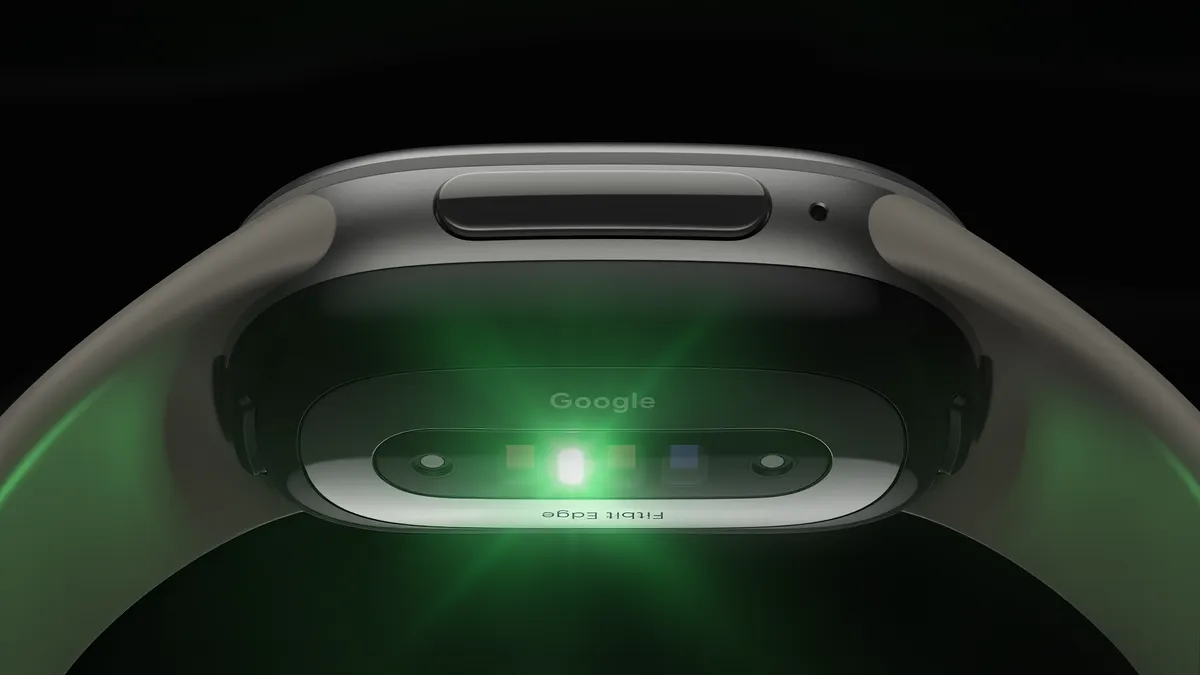
Image 1 / 1
A small device with a daily job
James Park and Eric Friedman founded Fitbit in 2007. Court records place its first product announcement in September 2008 and initial shipments in September 2009. The delay matters: announcing a desirable device and producing it reliably were separate milestones.[1]
The original opportunity was practical. People could measure activity throughout an ordinary day, then see it in software. By its IPO filing, Fitbit combined wearable trackers, mobile apps, a web dashboard, social tools and coaching. Its more advanced devices added heart rate and GPS; its connected scale extended measurement beyond exercise.[2]
This combination reduced the work of keeping a fitness diary. Automatic measurement gave users something concrete to revisit. Goals and social comparison supplied reasons to return. That is an interpretation of the product mechanics, rather than evidence that every buyer changed their behavior permanently.
True Ventures and SoftTech VC participated in a $2 million round in 2008. Fitbit later sold shares publicly in June 2015. Its IPO produced approximately $415.7 million in net proceeds to the company after underwriting and offering costs; proceeds from selling shareholders were separate.[3][4]
Distribution grew beyond the enthusiast
Retail and institutional channels made the device accessible beyond people who already wanted to quantify their exercise. By 2019, Fitbit reported distribution through more than 39,000 stores in over 100 countries.[7]
The UnitedHealthcare Motion integration illustrates a different buyer and incentive. Announced with Qualcomm Life in January 2017, it brought Charge 2 into an employer-sponsored program. Eligible participants could earn health-account credits by meeting activity goals. The insurer supplied a reason to participate and a route to distribution.[9]
Healthcare also changed the product requirements. Google Cloud’s April 2018 collaboration described Fitbit’s newly acquired Twine Health platform and plans to connect wearable information with care providers. This was a route toward care-team workflows, with more integration work than a consumer step counter required.[10]
The NIH’s All of Us program added a research use case through a bring-your-own-Fitbit initiative. These relationships demonstrate useful institutional demand. They do not establish that Fitbit had become a high-margin software company.[23]
Engagement did not settle the economics
Fitbit earned $175.7 million in GAAP net income on $1.858 billion in full-year 2015 revenue. In full-year 2016, it reported $2.17 billion in revenue and a $102.8 million GAAP net loss. Active users rose to 23.2 million from 16.9 million at year-end 2015. Demand for the product and financial strain therefore appeared together.[5]
Fitbit pursued a fuller smartwatch. It bought Pebble assets in December 2016, and Ionic arrived in 2017 with GPS, workouts and an app gallery. Launch partners included adidas, Pandora, Starbucks and Strava. Expanding the ecosystem also expanded what Fitbit had to build and maintain.[6][8]
The 2019 filing provides a sharper test than an Apple-killed-Fitbit explanation. Device volume increased 15%, but average selling price fell 17% to $87. Fitbit cited weak Versa Lite demand, lower-priced trackers and retailer promotions. Gross margin fell from 40% to 30%; it identified product mix, promotions and higher costs. Full-year revenue was $1.435 billion, with a $320.7 million GAAP net loss. Active users reached 29.566 million, although its broad 90-day definition did not measure continuous retention. Health Solutions represented about 7% of revenue.[7]
The mechanism is narrower than a claim that consumers abandoned tracking. Selling more devices at lower prices could reduce the money available for software, support and new hardware. Tariffs and warranty costs also mattered. These facts prevent attributing the entire decline to a single competitor.
Subscriptions offered another way to earn from continued use; Fitbit already sold an earlier Premium membership before the newer service launched.[6] The August 2019 Premium launch bundled personalized guidance, sleep features, workouts and health reports. In August 2020, Fitbit reported more than 500,000 paid subscribers. That was evidence of willingness to pay, without proving the service could already offset hardware pressure.[11][12]
Safety and data became operating constraints
Physical products carried costs that an app-only comparison misses. The CPSC recalled Force in March 2014 because users could develop skin reactions. It recalled Ionic in March 2022 because its battery could overheat. The latter recall covered about one million U.S. units and followed reported burn injuries.[17][16]

These are distinct incidents across different products. The later recall cannot explain an earlier acquisition decision. It does show why hardware support and safety reporting remain obligations after a sale. In January 2025, CPSC commissioner Rich Trumka Jr. described a $12.25 million penalty for delayed Ionic hazard reporting.[24]
Health data created another constraint. The European Commission’s December 2020 approval required commitments covering advertising data, developer access and Android interoperability. The value of a health ecosystem depends partly on users and partners trusting continued access, rather than solely on owning the sensors.[15]
Outcome and evolution
The November 2019 agreement valued Fitbit’s fully diluted equity at approximately $2.1 billion, or $7.35 per share in cash.[26] Google completed the acquisition on January 14, 2021.[13][14]
As checked November 5, 2026, the successor remains a substantial competitor. Google announced the Fitbit app’s transition to Google Health in May 2026, alongside a $99 screenless Fitbit Air. Google Health Premium starts at $9.99 monthly or $99 annually and includes Health Coach. Google also announced Fitbit Edge in October at $179.99, with retail availability from October 27.[18][20]
Google Health connects wearable data, Apple Health, Health Connect and, for U.S. users, medical records. A new entrant cannot assume that an independent health-data aggregator or general coaching app fills an empty space.[19]
A more defensible starting question concerns who pays for a specific job. Fitbit’s institutional integrations linked measurement to a funded program. A present-day founder should test that buyer’s unresolved work before funding another consumer device or broad wellness subscription.
Timeline
- 2007–2009: Park and Friedman founded Fitbit, announced its first tracker and began shipping.[1]
- June 2015: Fitbit entered the public market.[4]
- 2016–2017: Fitbit acquired Pebble assets and launched Ionic.[6][8]
- 2018–2020: Care integrations and Premium expanded; hardware economics remained difficult.[10][11][7]
- January 2021: Google completed the acquisition.[14]
- 2026: Google Health, Fitbit Air and Fitbit Edge continued the product’s evolution.[18][20]
Sources
- U.S. district court record on Fitbit’s early history
- Fitbit June 2015 IPO prospectus
- TechCrunch: Fitbit’s 2008 institutional round
- Fitbit second-quarter 2015 filing and IPO proceeds
- Fitbit full-year 2016 financial results
- Fitbit 2016 annual report
- Fitbit 2019 annual report
- Fitbit Ionic launch announcement
- Fitbit, Qualcomm Life and UnitedHealthcare Motion
- Google Cloud and Fitbit healthcare collaboration
- Fitbit Premium launch, August 2019
- Fitbit Premium paid subscriber announcement, August 2020
- Fitbit acquisition terms, reproduced announcement
- Google acquisition completion, January 2021
- European Commission conditional merger approval
- CPSC Ionic recall, March 2022
- CPSC Force recall, March 2014
- Google Health and Fitbit Air announcement, May 2026
- Google Health data connections, May 2026
- Fitbit Edge announcement, October 2026
- Wellable current subscription pricing
- Wellable wellness platform features
- NIH All of Us Fitbit initiative
- CPSC commissioner statement on Ionic reporting penalty
- TechCrunch: Fitbit integration with Wear OS
- Google acquisition agreement announcement, November 2019