Overview
iRobot proved that a household robot could earn its place by doing one familiar chore. Its later difficulty was keeping that product attractive and economical as competitors advanced. The failed Amazon sale removed a potential source of support, but the evidence also shows product, cost, and cash problems that an acquisition announcement could not solve.[2][9][11]
Roomba continues under new ownership. Picea completed its acquisition of all iRobot equity on January 23, 2026, following a court-supervised restructuring. Amazon's earlier proposed acquisition ended in January 2024 without closing.[14][6]
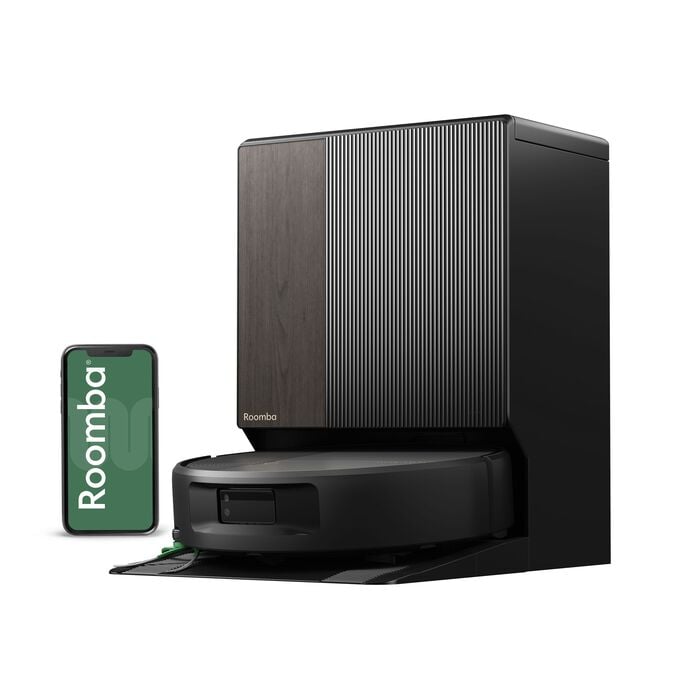
Image 1 / 1
Twelve years before the household hit
MIT roboticists Colin Angle, Helen Greiner, and Rodney Brooks founded iRobot in 1990. The company worked on robots for several settings before introducing Roomba in 2002. Its history also includes PackBot deployments, mine-detection work, and a robot used to explore the Great Pyramid.[1]
In a Wharton interview, Greiner dated Roomba development to about 1999. She described a broader approach of finding practical uses for robotics, including military and archaeological work. The founders' technical ambition therefore preceded the household product by years. Roomba gave consumers a task they already understood and a result they could inspect: a cleaner floor.[2]
The product evolved beyond its original cleaning routine. The 2015 Roomba 980 added visual mapping and navigation, app scheduling, and the ability to recharge and resume a cleaning job. The relevant customer benefit was less supervision over a whole floor, rather than navigation technology for its own sake.[3]
Focus sharpened the business
By 2016, iRobot was concentrating on consumer robots. It completed the sale of its defense and security business to Arlington Capital Partners for consideration of up to $45 million, including a contingent payment. The maximum announced price should not be read as cash received at closing.[5]
The consumer business depended heavily on retail and distributor relationships. Its 2016 filing said fifteen customers accounted for 72.8% of consumer robot revenue, while direct online stores accounted for 5.1%. The company also announced plans to acquire the iRobot-related business of its longstanding Japanese distributor, Sales On Demand, and described AWS as infrastructure for its connected robots. Distribution and the service behind the device mattered alongside the hardware.[4]
This model could support growth, but it exposed the business to retail orders, promotions, inventory, and returns. A consumer recognizing the Roomba name did not guarantee a retailer would reorder the next model at an attractive margin. That distinction becomes important in the later financial results.
Amazon was an uncertain exit
Amazon and iRobot announced their acquisition agreement in August 2022. They terminated it in January 2024, saying there was no path to European regulatory approval. The European Commission's subsequent merger brief explains its concerns about Amazon restricting rival robot vacuums' access or visibility in Amazon stores. The investigation ended without a formal final decision after the parties abandoned the transaction.[6][7]
That account is more precise than saying regulators issued a final prohibition. It also explains why the buyer's distribution power was central to the review: Amazon was both a sales channel and a prospective owner of one brand sold through that channel.[7]
The $94 million termination payment did not become an unrestricted rescue fund. The 2024 annual report records $18.8 million in professional fees, $35 million used to repay part of the term loan, and $40 million initially restricted for debt repayment, subject to limited inventory-purchase rights. Angle stepped down as chief executive when the agreement ended.[8]
Declining demand met a costly product system
For fiscal 2024, iRobot reported revenue of $681.8 million, down from $890.6 million in fiscal 2023. Its GAAP operating loss was $103 million. The company cited competition, promotions, order timing, and manufacturing-transition charges. These are annual revenue and operating-loss measures, not a valuation or a count of active households.[9]
The pressure continued in 2025. Third-quarter revenue fell to $145.8 million from $193.4 million a year earlier. Cash and equivalents stood at $24.8 million on September 27, 2025. Management attributed the shortfall to market conditions, production delays, and shipping disruptions, and said lower revenue left fixed costs harder to cover.[10]
The competing explanations deserve separate treatment. In a statement reproduced by TechRadar, Angle argued that regulatory opposition removed the most viable route to global scale. Incoming CEO Gary Cohen emphasized older operating problems. In his interview, he described expensive, difficult-to-manufacture products and a production model that left too much engineering, tooling, and purchasing within iRobot. He said Picea became more involved across those activities as the range changed.[12][11]
Both accounts can contain truth. Losing a buyer can damage a company already facing weak economics. The financial results support that combined explanation, but they cannot show whether an Amazon-owned iRobot would have recovered. Cohen also had an interest in explaining why his restructuring was necessary; his diagnosis is an attributed management account.
The supplier became the owner
iRobot filed for Chapter 11 on December 14, 2025. The filing describes a restructuring of secured debt held by Picea and certain manufacturing obligations owed to it. This made Picea more than an outside bidder: the company depended on it for production and finance.[13]
The January 2026 closing announcement says Picea acquired 100% of equity and iRobot emerged as a private company. It also announced iRobot Safe, a separate U.S. subsidiary intended to protect U.S. consumer data, with an independent U.S.-citizen board and security leadership. Those are announced governance arrangements, not an independent security audit.[14]
The mechanism matters for founders building hardware. A supplier that helps rescue development and provides credit can become the party with the strongest claim when cash runs short. The arrangement can preserve the product business while ending the company's independence. Bankruptcy here did not mean Roomba stopped operating.
The product continues in a crowded market
As observed on November 5, 2026, iRobot's U.S. store lists the Max 875 Combo with AutoWash dock at $1,199.99 and the Plus 515 Combo at $699.99. The Max 875 page advertises LiDAR, camera-based obstacle recognition, heated mopping, and automatic dock maintenance. These are current manufacturer descriptions and listed prices, not results from cleaning tests conducted for this report.[15][16]
The company also launched Roomba Mini in the UK and Europe in March 2026. Roborock's current Qrevo Curv family offers overlapping navigation, obstacle recognition, and washing-dock functions. The existence of both ranges rules out treating a capable household cleaning robot as an unserved category.[17][18]
Connected-device compatibility is less uniform. Home Assistant documents support for several older Roomba models, but says its integration does not work with newer 105, 405, and 505 models. A common brand name does not establish a common control interface across generations.[19]
An additional 2026 constraint remains unresolved at model level. An indexed FCC notice says foreign-produced advanced robotic devices entered its Covered List in July, with conditional approvals excepted. The full notice and current list were inaccessible during this review. Store listings alone therefore do not establish authorization for every newly introduced U.S. model.[23]
A practical new entrant could test local repair and return for existing owners. iFixit documents repair guides and replaceable parts; independent shops already sell repair. Yet iRobot's own refurbished store listed a j7+ at $189.99 when checked. Repair must beat a real replacement offer after parts, labor, and a warranty reserve. There is a service opportunity to test, but little evidence for another premium robot brand without a distinct cost or distribution advantage.[20][21][22]
Timeline
- 1990–2002: iRobot is founded; Roomba reaches the market after years of broader robotics work.[1][2]
- 2015–2016: Connected mapping arrives; the defense business sale closes and consumer focus increases.[3][5]
- 2022–2024: Amazon proposes an acquisition, then both companies terminate it amid regulatory concerns.[6][7]
- 2024–2025: Revenue declines, operating losses continue, and liquidity narrows.[9][10]
- December 2025–January 2026: Chapter 11 leads to Picea ownership; iRobot continues as a private company.[13][14]
- 2026: Roomba launches Mini abroad and continues listing new products; model-specific U.S. authorization remains a separate question.[17][15][23]
Sources
- iRobot history
- Helen Greiner interview, Wharton
- Roomba 980 launch specifications
- iRobot 2016 annual report
- Defense business sale closing
- Amazon and iRobot terminate agreement
- European Commission merger brief
- iRobot 2024 annual report
- Full-year 2024 financial results
- Third-quarter 2025 financial results
- TechRadar interview with CEO Gary Cohen
- Colin Angle statement reproduced by TechRadar
- Chapter 11 filing announcement
- Picea transaction closing
- Current Roomba US combination robots
- Roomba Max 875 official product page
- Roomba Mini UK/Europe launch
- Roborock Qrevo Curv product family
- Home Assistant Roomba integration
- iFixit Roomba repair and parts
- iRobot certified refurbished eBay store
- Tuff Techies robot vacuum repair
- FCC notice DA 26-996
- iRobot Restored listings