
Overview
Mendral built an AI agent for the work around software delivery: diagnosing failed builds, repairing unreliable tests, and reviewing dependency changes. Sam Alba and Andrea Luzzardi founded it in 2025 after working together at Docker and Dagger. It joined Y Combinator's Winter 2026 batch.[1]
Its strongest idea was that a coding model needed a company's operational history before it could diagnose its delivery problems. The founders built that data layer, then learned that measuring whether an agent finished was much easier than measuring whether it was right. In July 2026, the team announced it would join Anthropic's Claude Platform organization and wind down the hosted product.[2][3]
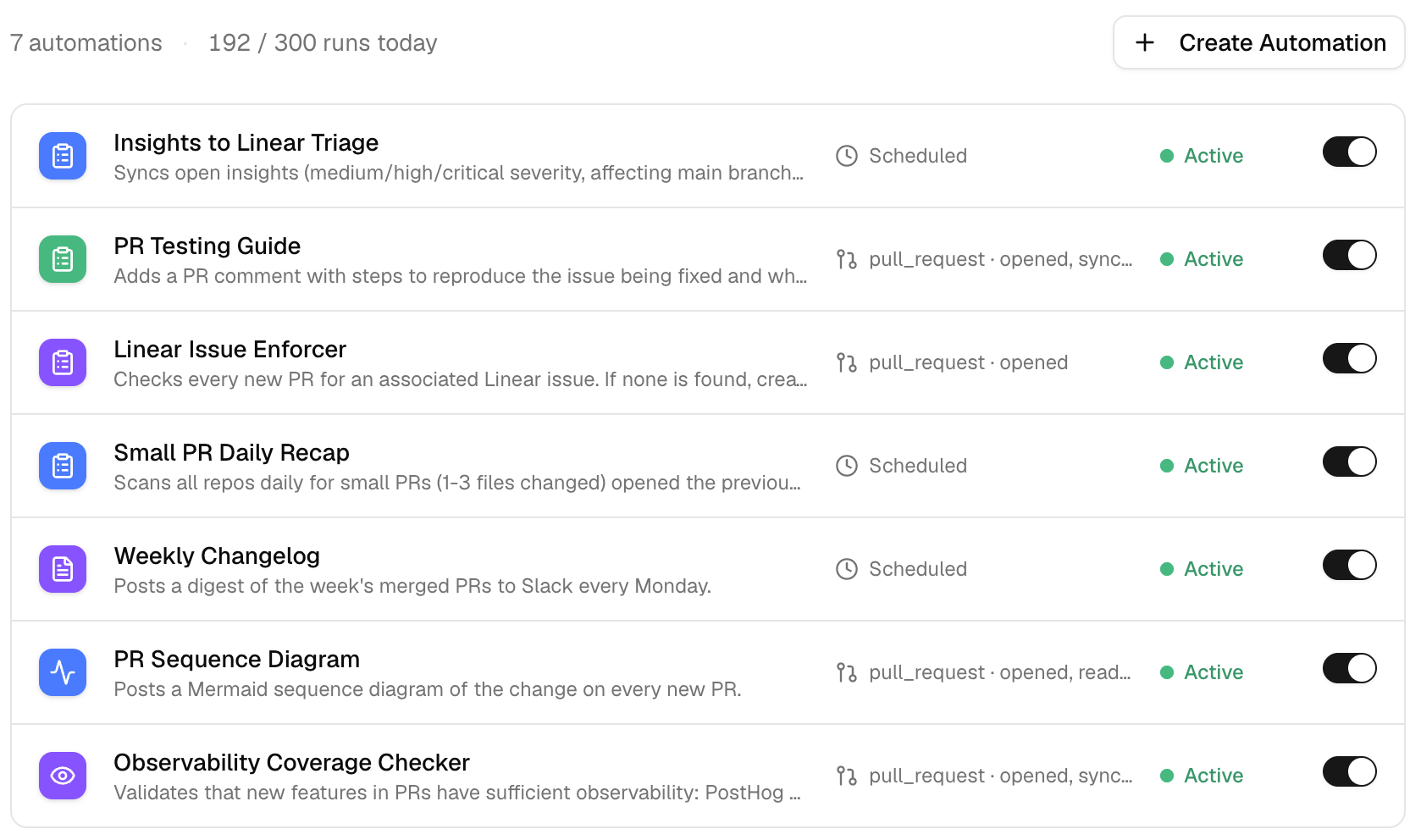
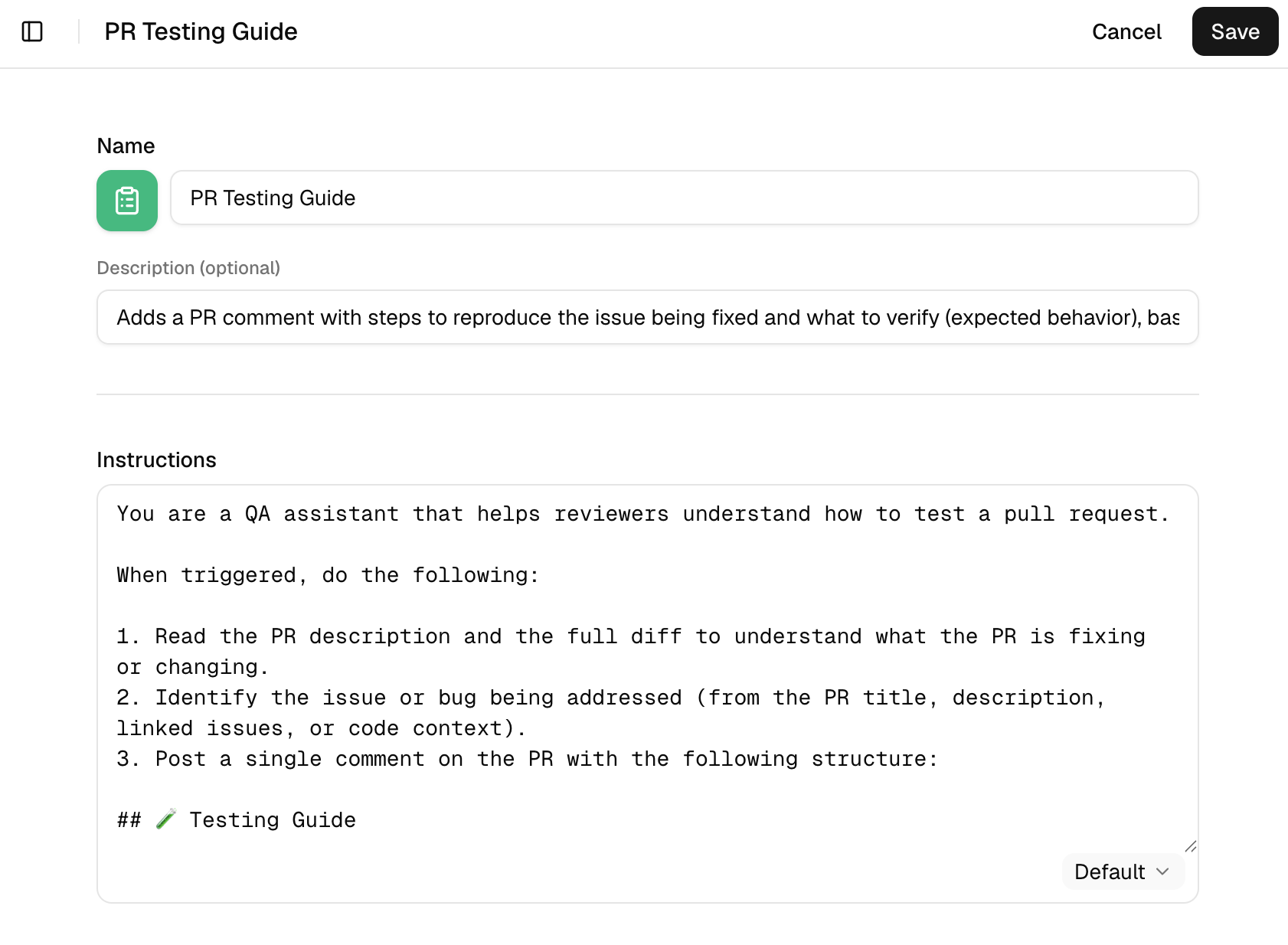
Image 1 / 2
Founding Story
The founders had already spent years on the same bottleneck. Alba was an early Docker engineer and later co-founded Dagger with Luzzardi. Their next company moved from giving developers better delivery tools to having an agent do part of that work.[1]
In an April 2026 interview with Bret Fisher, Alba said, "CI was always a bottleneck." He described building a data platform first, then finding that customers particularly wanted flaky-test and reliability work. CI, or continuous integration, runs checks when developers change software.[4]
Cost discipline developed with the product. In March, Luzzardi wrote, "Upgrading to a frontier model made costs go down." The improvement came from narrowing which failures reached the expensive model, rather than making every investigation cheaper in isolation.[5]
Timeline
- 2025: Founded, according to YC.[1]
- Winter 2026: YC launch described 15 production teams and five paying customers, including PostHog.[1]
- February–March 2026: Engineering posts documented the specialist agent and cheaper triage architecture.[5][6]
- May 2026: A founder interview described three employees and 30 paying customers.[7]
- June 2026: Custom engineering automations expanded the product beyond predefined agents.[8]
- July 21, 2026: The team announced its move to Anthropic and hosted-product wind-down.[2]
What They Built
A team installed a GitHub App and connected Slack. Mendral watched failures, searched past runs, related errors to code changes, and could open a proposed fix. Its advantage depended on retrieving the relevant history instead of giving a general coding agent a single failed log.[6]
The implementation used searchable CI logs, specialized investigation tools, isolated execution environments, and saved execution steps. Those steps let work resume after an API failure or a long-running build. Blaxel's case study confirms isolated execution and credentials supplied through a proxy.[14] Model roles changed as the product developed: a March design filtered familiar failures before escalating new problems to a stronger reasoning model.[5][6]
By June, customers could describe recurring chores in Slack and approve the resulting automation. Blaxel used seven, including issue tracking, testing guides, and weekly summaries. GitHub write permissions stayed off until enabled for each automation. This reuse of connected context offered expansion within an existing customer.[8]
A May security release added dependency-change reviews and scheduled upgrades. Its own documentation acknowledged incomplete coverage of runtime-loaded payloads and deeply nested dependencies. These boundaries matter more than a broad promise to replace operations staff.[9]
Market Position
Target Customers
Mendral targeted teams whose growing test and deployment workload consumed scarce engineering attention. PostHog provided a demanding reference account. Mendral's February case study reported 575,894 CI jobs and 1.18 billion log lines during one week; these are workload measures, not customer revenue or independently audited results.[10]
Market Size
Paying users demonstrate demand. Public sources do not establish a dependable market-size estimate, retention curve, or average contract value. Developer headcount alone would overstate the reachable market: teams must also grant access to sensitive code and logs.
Competition
General coding agents competed for the same tasks. GitHub's current Copilot product can run background coding work, review pull requests, and automate repository tasks. Buildkite's Test Engine tracks test performance and can detect and quarantine unreliable tests. A specialist therefore needs to prove better diagnosis across historical evidence, rather than merely offer an agent or a dashboard.[11][12]
Business Model
Mendral advertised a flat monthly quote based on engineering-team size, with no usage caps or per-incident fees. This made the bill predictable for customers while leaving the vendor responsible for investigation costs.[13]
Its model-routing work addressed that exposure. Luzzardi reported that roughly four in five failures were repeats and that a triage match cost about 25 times less than a full investigation. These figures describe one reported operating sample. They do not establish gross margin. Public material reviewed here does not disclose revenue, funding amount, purchase price, or investor returns.[5]
Traction
The progression from five paying customers at YC launch to 30 by the May interview suggests early commercial demand. The later figure comes from interviewer Barton George's account of his conversation and demo, rather than financial records.[1][7]
In May, Alba reported 36,564 investigations over 60 days, a 134-second median diagnosis time, and about $0.29 average cost per investigation. The same post explicitly rejected treating its 96.6% completion rate as accuracy. A job that produces an answer can still produce the wrong diagnosis.[3]
Post-Mortem
Specialized context created value and an evaluation burden
An agent's conclusion depends on source state that changes after each run. Several repairs can fit the same diagnosis. That makes simple outcome scores unreliable.
Mendral found rejected fixes that customers later implemented elsewhere. Merge rate mixed technical quality with preference. Its confidence scores also lacked probability calibration. Evidence, repair choice, and customer acceptance need separate measures.[3]
Model progress changed the company boundary
In their July announcement, Alba and Luzzardi wrote that "every few months, a new model made part of our roadmap unnecessary". They chose to continue their work within the provider that powered the product. Their experience building the application became work on the platform beneath it.[2]
It does not prove that Mendral could not have survived independently. Paying customers and detailed engineering work support the alternative: a useful young business accepted a team opportunity. The announcement does not disclose whether shares, IP, or other corporate assets changed hands. The defensible outcome is a team transition and planned hosted-product closure, with financial returns unknown.
Key Lessons
- Mendral made operational history useful to an agent. Its differentiation came from access, retrieval, and workflow knowledge surrounding the model.
- Mendral's cost reduction came from avoiding duplicate investigations. Predictable subscription pricing needs workload controls underneath it.
- Mendral distinguished a finished investigation from a correct one. Its evaluation account shows why customer actions need interpretation.
- Mendral's founders moved into Claude Platform after building on Claude. A specialist's work can remain valuable even when its standalone product ends.
Sources
- Mendral company profile and launch, Y Combinator.
- The Mendral team is joining Anthropic, July 21, 2026.
- How We Know If Our Agent Is Right, May 1, 2026.
- Can AI Agents Safely Become DevOps Engineers?, April 29, 2026.
- We Upgraded to a Frontier Model and Our Costs Went Down, March 6, 2026.
- We use Claude Code daily. We still built our own CI agent., February 26, 2026.
- Mendral Built on Claude. Now Its Team Is Joining Anthropic, July 22, 2026.
- Automating the Engineering Work That Isn't Your Product, June 10, 2026.
- Supply Chain Attacks Don't Wait for CVEs, May 22, 2026.
- What CI Actually Looks Like at a 100-Person Team, February 10, 2026.
- GitHub Copilot on GitHub.com, accessed October 23, 2026.
- Test Engine overview, Buildkite, accessed October 23, 2026.
- Pricing, accessed October 23, 2026; surviving page, not proof of current service availability.
- Mendral case study, Blaxel, accessed October 23, 2026.