Overview
Oculus made convincing virtual reality available to developers before it could make virtual reality convenient for consumers. That sequence helped it assemble software support and attract Facebook. Its later move from a PC accessory to an all-in-one headset addressed a different problem: the work required to use it. Facebook announced the acquisition in March 2014 and completed it that July. The product lineage continues through Meta Quest. [1] [2]
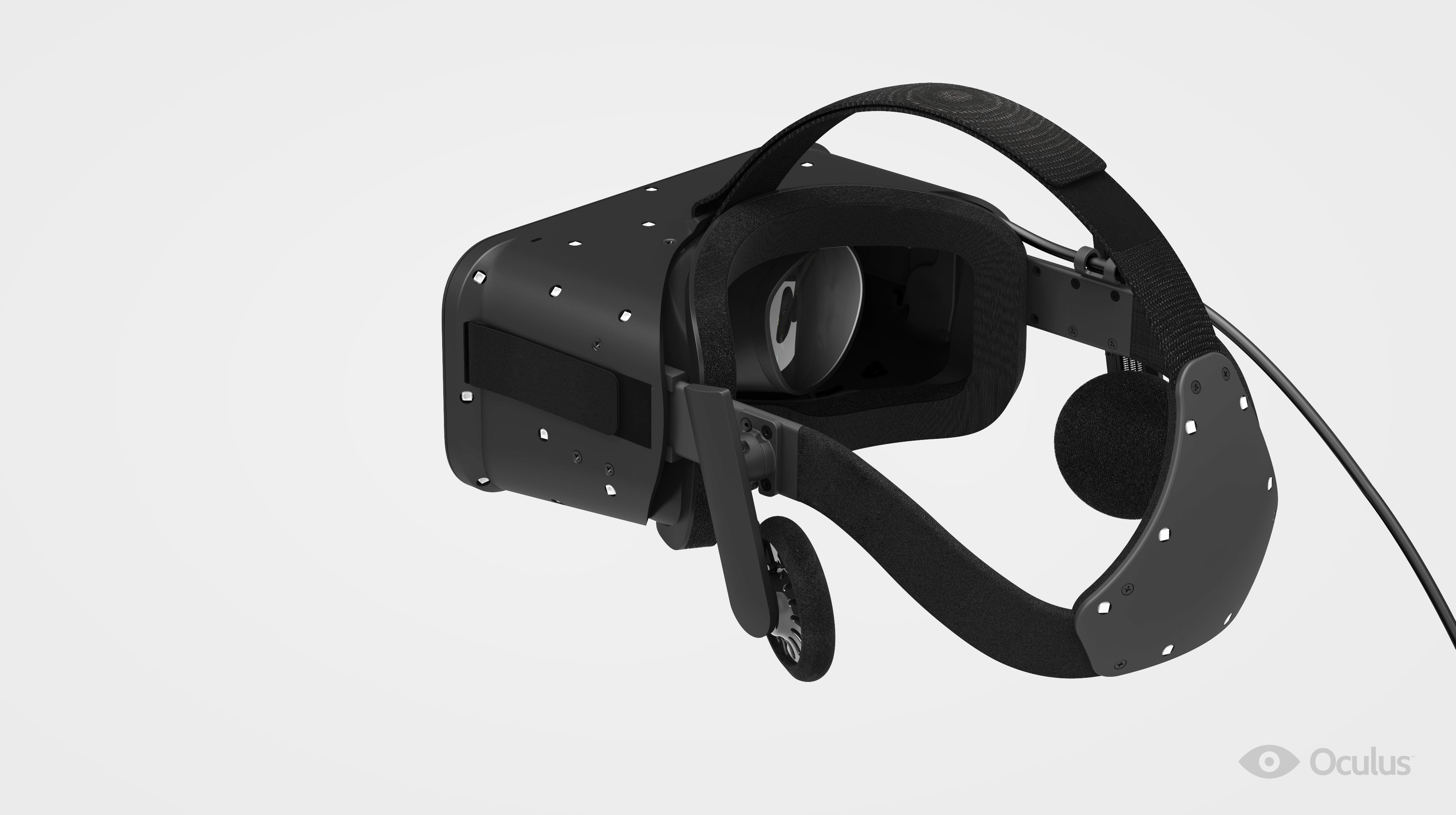
Image 1 / 1
The founder lesson concerns two kinds of proof. A powerful demonstration can recruit talent, developers and capital. A repeatable consumer product also needs reliable tracking, suitable input, useful software and tolerable setup. Oculus advanced each, but the evidence does not establish a profitable standalone headset business.
A prototype recruited a company
Palmer Luckey built headsets as a hobbyist. Smithsonian's contemporary profile describes how Brendan Iribe, Nate Mitchell and Michael Antonov agreed to form a company with him in 2012. Their experience in game technology complemented his hardware work. John Carmack's early interest helped the prototype reach the games industry; he later became chief technology officer. The attraction was a usable experience assembled from increasingly capable components, rather than a finished consumer appliance. [3] [4]
Kickstarter turned that interest into a developer audience. Its August–September 2012 campaign collected $2,437,429 from 9,522 backers against a $250,000 target. The campaign explicitly described a developer kit. These were pledged dollars and backers, not consumer revenue or a measure of sustained use. [5]
Selling developers early hardware had a practical purpose. Content makers could experiment while the headset improved. By the acquisition announcement, Oculus had received more than 75,000 development-kit orders. Facebook presented that developer interest as an asset and described ambitions beyond games. [1]
Venture capital followed: a $75 million Series B arrived in December 2013. [6] Investor Chris Dixon's acquisition-day account framed Facebook's backing as a way to accelerate the ecosystem. That was an investment thesis about a future computing platform, rather than evidence that headset economics were already settled. [7]
The hard part was the room
Luckey's retrospective interview, recorded in October 2025 and published in October 2026, describes why tracking took years. Glass, moving curtains, other people and ceiling fans complicated the software's attempt to locate the headset. Ordinary homes introduced conditions absent from controlled demos. His account supports a clear engineering lesson: a working laboratory demonstration leaves substantial product work unresolved. [8]
The Samsung relationship also combined product distribution with component access. Samsung announced Gear VR in September 2014, using the Galaxy Note 4 and Oculus technology. [9] In the later interview, Luckey says Oculus designed hardware and software for Gear VR to obtain the displays it needed from Samsung. This is a founder's retrospective account; the public launch announcement independently establishes the partnership, but not every private negotiating detail. [8]
The consumer Rift arrived in March 2016 at $599, with an external sensor, headphones and an Xbox controller. Touch controllers followed in December. That separation mattered because tracked hands enabled different interactions from a gamepad. Meta's later history names Robo Recall, SUPERHOT VR and Arizona Sunshine among the resulting experiences. [10]
The system also required a suitable PC. Quest changed that package. Oculus's developer documentation describes an all-in-one headset with onboard tracking cameras, room-scale movement and tracked controllers, launching in May 2019 at $399. Developers still faced mobile computing constraints, but buyers no longer needed a separate PC or external trackers. [11]
The official introduction also promised compatible inputs and development tools across Rift and Quest. Preserving developers' work while reducing customers' setup burden was a sensible platform choice. It connected hardware simplification to software supply. That mechanism is an interpretation of the announced compatibility strategy, not a measured explanation of every Quest sale. [12]
Ownership changed the scale of the bet
Facebook's announcement valued the transaction at approximately $2 billion, with a further contingent earn-out. Its filing confirms the July closing. These are acquisition terms, not Oculus revenue. [1] [2]
The original leaders did not all stay. Facebook confirmed Luckey's departure in March 2017. Iribe announced his departure in October 2018. Their exits establish organizational change; they do not establish that the product stopped. The public statements leave important details of individual departure decisions unresolved. [13] [14]
Facebook also settled the ZeniMax intellectual-property dispute in December 2018; the terms were undisclosed. [20]
Account policy created a more direct customer problem. UploadVR documented Quest 2 buyers who could not use their headsets after Facebook account verification failures in October 2020. These reports establish affected customers, not the incidence across all buyers. Meta introduced a separate account system in 2022, removing the required Facebook login. The lesson is concrete: attaching hardware access to another service's account enforcement creates an additional failure path. Better optics cannot repair that dependency. [21] [22]
Meta's financial reporting illustrates the difference between a substantial product category and a self-funding platform. For the year ended December 31, 2025, Reality Labs reported $2.207 billion in revenue and a $19.193 billion operating loss, in US dollars. The segment includes virtual and augmented reality hardware, software and content. These figures cannot isolate the original Oculus business, Quest margins, or the acquisition's return. They do establish that Meta still funded the broader effort at a scale far beyond its reported sales. [15]
A weaker explanation would blame every difficulty on ownership. The original hardware's setup and tracking constraints predated the acquisition. A different overreach would treat the acquisition price as proof of eventual mass adoption. Oculus solved important product problems, while the parent's much broader platform ambition required a separate economic test.
Outcome and evolution
As checked on November 5, 2026, Meta's US store lists Quest 3S from $349.99 and Quest 3 from $599.99. These current listed prices differ from their earlier launch prices. Oculus's historical website and product names therefore should not be read as evidence of company shutdown. [16]
The next form factor remains an announced product. Meta's September 2026 developer announcement says VR Glasses will ship in spring 2027, using the same operating system, store and SDKs, with eyes and hands as primary input. Its device comparison distinguishes these glasses and their compute puck from all-in-one Quest headsets. [17] [18]
Support also changes within the installed base. Meta's November 2 announcement gives Quest 2 and Quest Pro a final feature release in March 2027, with security patches through the end of that year. Existing apps, purchases and cross-play continue. Developers must therefore manage overlapping hardware generations, rather than assume a single replacement date. [19]
Timeline
- 2012: The Rift Kickstarter funds a developer kit. [5]
- 2014: Facebook announces and completes the acquisition; Samsung announces Gear VR. [2] [9]
- 2016: Consumer Rift and then Touch controllers ship. [10]
- 2019: Quest removes the separate PC and external tracking requirement. [11]
- 2026: Meta sells Quest 3/3S and announces VR Glasses for spring 2027. [16] [17]